
Inicio > Sociedad y ciencias sociales > Sociedad y cultura: general > Il sostentamento dei tribali attraverso la zootecnia in Tripura, India
Il sostentamento dei tribali attraverso la zootecnia in Tripura, India

Il sostentamento dei tribali attraverso la zootecnia in Tripura, India

Bipasha Paul / Sukanta Biswas

123,33 €
IVA incluido
Disponible
Editorial:
KS OmniScriptum Publishing
Año de edición:
2026
Materia
Sociedad y cultura: general
ISBN:
9786209543685
123,33 €
IVA incluido
Disponible

Selecciona una librería:

  • Librería Samer Atenea
  • Librería Aciertas (Toledo)
  • Kálamo Books
  • Librería Perelló (Valencia)
  • Librería Elías (Asturias)
  • Donde los libros
  • Librería Kolima (Madrid)
  • Librería Proteo (Málaga)

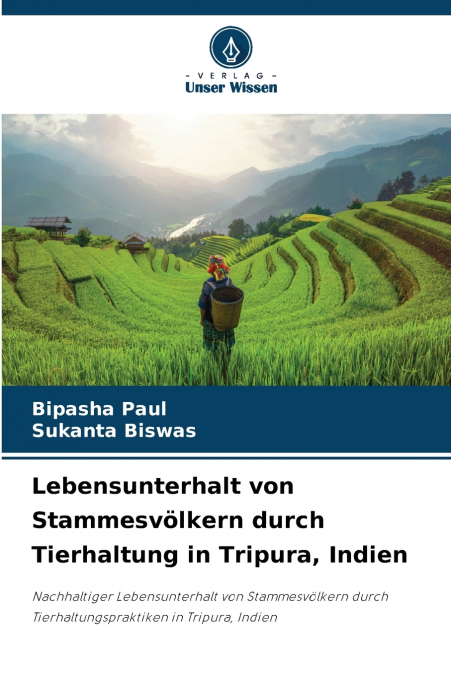
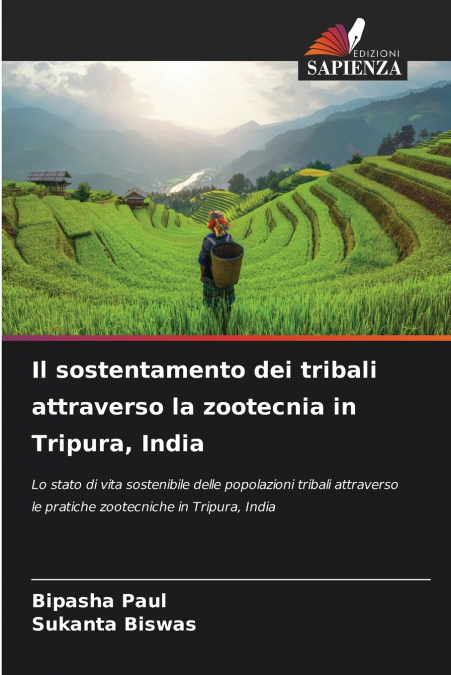
L’India conta oltre 698 comunità tribali, che comprendono 104 milioni di persone (l’8,20% della popolazione), che vivono principalmente in regioni isolate e sottosviluppate. I mezzi di sussistenza tribali sono diversi, orientati alla comunità e non definiti dai moderni concetti di lavoro o reddito in contanti. Uno studio condotto a Tripura ha valutato lo stato di sostentamento delle famiglie tribali impegnate nell’allevamento degli animali, concentrandosi sulla conoscenza, sugli atteggiamenti e sull’adozione di pratiche migliorate. Sono stati selezionati quattro blocchi a predominanza tribale - Ganganagar, Chowmanu, Nalchar e Charilam - e i dati sono stati raccolti da 120 intervistati scelti casualmente utilizzando un programma di interviste pre-testato e analizzati tramite SPSS 25.0. I risultati hanno rivelato che l’esposizione ai mass media, la partecipazione all’estensione, l’atteggiamento positivo nei confronti dell’allevamento da latte e l’adozione di pratiche migliorate hanno significativamente migliorato la sicurezza dei mezzi di sussistenza. Gli intervistati tribali hanno mostrato un forte interesse per l’allevamento da latte a causa del suo reddito e dei benefici per la salute. Lo studio evidenzia la necessità di affrontare vincoli quali gli elevati costi di produzione e la mancanza di una guida esperta, esortando i politici e le agenzie di divulgazione a rafforzare i sistemi di sostegno per lo sviluppo sostenibile dei mezzi di sussistenza tribali nel Tripura.


Artículos relacionados

  • The Gandhian Iceberg
    Chris D Moore-Backman
    The Gandhian Iceberg presents a bold, new interpretation of Gandhian nonviolence from the rare perspective of an author who is equal parts writer, scholar, and frontlines practitioner. The book faces the current crisis of climate change and the intensification of social unrest around the world, and calls for a new convergence of serious, spiritually-rooted US nonviolence activi...
    Disponible

    11,52 €

  • Contemporary Developments in Child Protection
    Nigel Parton
    Volume 1 "Policy Changes and Challenges" takes as its central theme the ongoing and challenging issues which child protection agencies have to address and the policy and practice initiatives that are developed to try and address these. The volume includes papers on: the relationship between the decline in the rate of ‘unnatural’ deaths and the growth of concern about child abus...
  • Diversity in Information Technology Education
    Goran Trajkovski
    ...
  • Model-Driven Software Development
    Model-driven software development (MDSD) drastically alters the software development process, characterized by a high degree of innovation and productivity. However, quality assurance application in the domain of software models and model-driven software development is still in an emergent phase. Model-Driven Software Development: Integrating Quality Assurance provides in-depth...
  • Evidence-Based Practice in Nursing Informatics
    Andrew Chasin
    Because of the constant advances and dynamics within the nascent field of nursing informatics, many nurses struggle in practice as they continue to try and apply habitual communication practices in the new environment without any critical reflection on, and adaptation of, those practices. Evidence-Based Practice in Nursing Informatics: Concepts and Applications serves as a valu...
  • Actor-Network Theory and Technology Innovation
    Arthur Tatnall
    About 25 years ago, the first developments of ANT (Actor-Network Theory) took place, but it wasn’t until much later that researchers began to take it seriously. In the late 1990s, ANT began to take hold in the scientific community as a new and exciting approach to socio-technical research and social theory. Actor-Network Theory and Technology Innovation: Advancements and New Co...

Otros libros del autor

  • Moyens de subsistance des populations tribales grâce à l’élevage à Tripura (Inde)
    Bipasha Paul / Sukanta Biswas
    L’Inde compte plus de 698 communautés tribales, représentant 104 millions de personnes (8,20 % de la population), vivant pour la plupart dans des régions isolées et sous-développées. Les moyens de subsistance des tribus sont diversifiés, axés sur la communauté et ne sont pas définis par des concepts modernes d’emploi ou de revenus monétaires. Une étude réalisée à Tripura a éval...
    Disponible

    124,64 €

  • Lebensunterhalt von Stammesvölkern durch Tierhaltung in Tripura, Indien
    Bipasha Paul / Sukanta Biswas
    In Indien gibt es über 698 Stammesgemeinschaften mit 104 Millionen Menschen (8,20 % der Bevölkerung), die größtenteils in isolierten und unentwickelten Regionen leben. Der Lebensunterhalt der Stämme ist vielfältig, gemeinschaftsorientiert und nicht durch moderne Vorstellungen von Arbeitsplätzen oder Geldeinkommen definiert. Eine Studie in Tripura untersuchte den Lebensunterhalt...
    Disponible

    123,32 €

  • Środki do życia plemion poprzez hodowlę zwierząt w Tripurze w Indiach
    Bipasha Paul / Sukanta Biswas
    Indie mają ponad 698 społeczności plemiennych, obejmujących 104 miliony ludzi (8,20% populacji), żyjących głównie w odizolowanych i niezagospodarowanych regionach. Źródła utrzymania plemion są zróżnicowane, zorientowane na społeczność i nie są definiowane przez nowoczesne koncepcje pracy czy dochodów pieniężnych. W badaniu przeprowadzonym w Tripura oceniano poziom środków utrzy...
    Disponible

    123,33 €

  • Meios de subsistência das populações tribais através da criação de animais em Tripura, Índia
    Bipasha Paul / Sukanta Biswas
    A Índia tem mais de 698 comunidades tribais, compreendendo 104 milhões de pessoas (8,20% da população), vivendo principalmente em regiões isoladas e subdesenvolvidas. Os meios de subsistência tribais são diversos, orientados para a comunidade e não são definidos por conceitos modernos de empregos ou rendimentos monetários. Um estudo realizado em Tripura avaliou a situação de su...
    Disponible

    123,34 €

  • Livelihood of Tribals through Animal Husbandry in Tripura, India
    Bipasha Paul / Sukanta Biswas
    India has over 698 tribal communities, comprising 104 million people (8.20% of the population), mostly living in isolated and undeveloped regions. Tribal livelihoods are diverse, community-oriented, and not defined by modern concepts of jobs or cash income. A study in Tripura assessed the livelihood status of tribal households engaged in animal husbandry, focusing on knowledge,...
    Disponible

    120,83 €