 Librería Samer Atenea
 Librería Aciertas (Toledo)
 Kálamo Books
 Librería Perelló (Valencia)
 Librería Elías (Asturias)
 Donde los libros
 Librería Kolima (Madrid)
 Librería Proteo (Málaga)
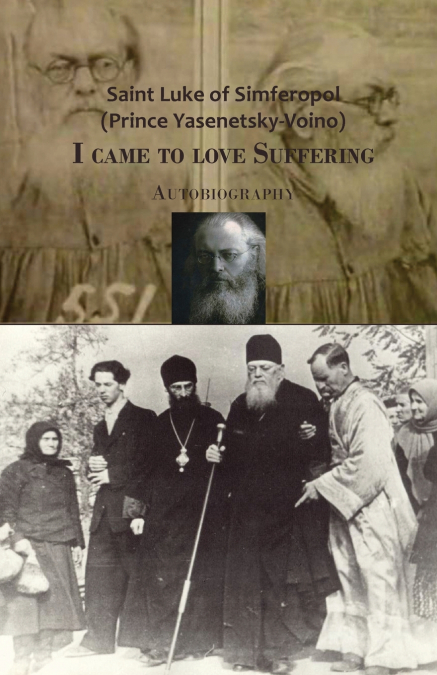
The author of this book, Saint Luke the Confessor (his worldly name was Valentin Yasenetsky-Voyno), is a Russian saint of the twentieth century. He was born on April 27, 1877 in Kerch, Crimea and fell asleep in the Lord on June 11, 1961 in Simferopol, Crimea. Canonized by the Ukrainian Orthodox Church (Moscow Patriarchate) in November 1995. He was a descendent of a Belarusian-Polish impoverished princely family, and he was archbishop of the Russian Orthodox Church and at the same time a prominent physician, surgeon, inventor, scientist, writer and painter.The title of this book is a quote from Saint Luke’s letter to his eldest son Mikhail. The full sentence is: 'I began to love suffering that so amazingly purifies the soul.'During the severe trials of the Russian Church, when the communists had come to power in the country and were engaged in a methodical genocide of the clergy, Innocenty, Bishop of Tashkent, asked him to become a priest. Valentin Yasenetsky accepted this request and received priestly ordination, with the bishop describing his future mission in the words of the Holy Apostle Paul: 'not to baptize, but to evangelize.' (1Cor 1:17)Over the years, after the death of his beloved wife, he took monastic vows and was named after the holy Evangelist Luke; then he was ordained a bishop. After many prosecutions by the Soviet authorities and convictions on false grounds (including false testimonials from some colleagues, students and friends, as well as false reports, elicited by the secret police) and an exile for many years to Siberia, above the Arctic Circle, he was eventually released and he ended his days as Archbishop of Simferopol and Crimea. Throughout all the trials, he remained true to his Russian Orthodox faith and principles, and continued his work as a doctor and scientist, despite the blindness that struck him in the last years of his life.Publisher