Librería Samer Atenea
 Kálamo Books
 Librería Elías (Asturias)
 Librería Kolima (Madrid)
 Librería Proteo (Málaga)
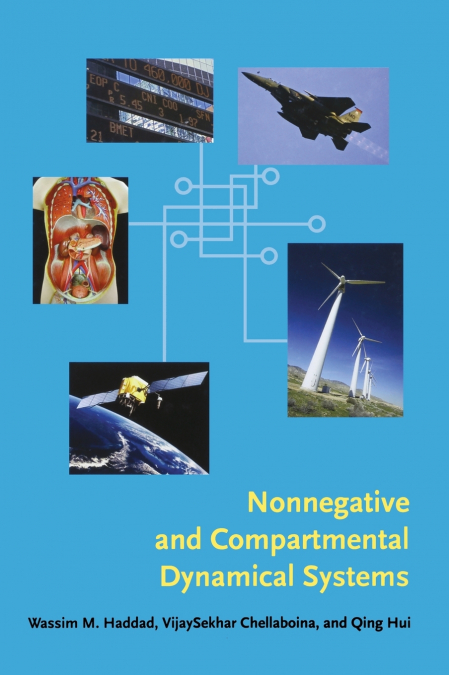
This research investigated hybrid control strategies for rapid satellite pointing. First, a detailed computer simulation model of AFIT’s SIMSAT satellite simulator was constructed. Control strategies were developed to enable the system to perform large-angle, 3-axis slewing maneuvers using a combination of both thrusters and reaction wheels. To handle the non-linear model, a State Dependent Riccati Equation controller was programmed and successfully controlled the computer-modeled satellite for any given slewing maneuver. A simpler PD controller was then programmed and demonstrated on the computer simulation of SIMSAT, using a combination of thruster and reaction wheel control inputs for large-angle single axis maneuvers and for small angles using three-axis control. There was good agreement between the experimentally obtained maneuver results and those produced with the computer simulation model for the single-axis case. Lastly, the trade-off between settling time and thruster fuel is discussed, as well as the variation of gains required to achieve maximum performance for a desired slew.This work has been selected by scholars as being culturally important, and is part of the knowledge base of civilization as we know it. This work was reproduced from the original artifact, and remains as true to the original work as possible. Therefore, you will see the original copyright references, library stamps (as most of these works have been housed in our most important libraries around the world), and other notations in the work.This work is in the public domain in the United States of America, and possibly other nations. Within the United States, you may freely copy and distribute this work, as no entity (individual or corporate) has a copyright on the body of the work.As a reproduction of a historical artifact, this work may contain missing or blurred pages, poor pictures, errant marks, etc. Scholars believe, and we concur, that this work is important enough to be preserved, reproduced, and made generally available to the public. We appreciate your support of the preservation process, and thank you for being an important part of keeping this knowledge alive and relevant.