
Horn, or The Counterside of Media

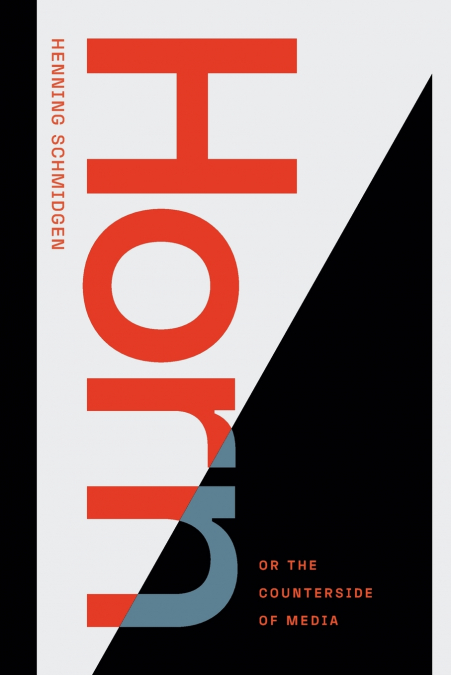
Horn, or The Counterside of Media

Henning Schmidgen

36,39 €
IVA incluido
Disponible
Editorial:
Duke University Press
Año de edición:
2022
Materia
Estudios mediáticos
ISBN:
9781478017721
36,39 €
IVA incluido
Disponible

Selecciona una librería:

  • Librería Samer Atenea
  • Librería Aciertas (Toledo)
  • Kálamo Books
  • Librería Perelló (Valencia)
  • Librería Elías (Asturias)
  • Donde los libros
  • Librería Kolima (Madrid)
  • Librería Proteo (Málaga)

We regularly touch and handle media devices. At the same time, media devices such as body scanners, car seat pressure sensors, and smart phones scan and touch us. In Horn, Henning Schmidgen reflects on the bidirectional nature of touch and the ways in which surfaces constitute sites of mediation between interior and exterior. Schmidgen uses the concept of 'horn'-whether manifested as a rhinoceros horn or a musical instrument-to stand for both natural substances and artificial objects as spaces of tactility. He enters into creative dialogue with artists, scientists, and philosophers, ranging from Salvador Dalí, William Kentridge, and Rebecca Horn to Sigmund Freud, Walter Benjamin, and Marshall McLuhan, who plumb the complex interplay between tactility and technological and biological surfaces. Whether analyzing how Dalí conceived of images as tactile entities during his 'rhinoceros phase' or examining the problem of tactility in Thomas Pynchon’s The Crying of Lot 49, Schmidgen reconfigures understandings of the dynamic phenomena of touch in media.


Artículos relacionados

  • Impact of Communication and the Media on Ethnic Conflict
    Throughout the world, cultural and racial clashes remain a major hurdle to development and progress. Though some areas are experiencing successful intercultural communications which pave the way for peaceful negotiations, there are still many regions experiencing severe turmoil. Impact of Communication and the Media on Ethnic Conflict focuses on both the positive and negative o...
  • The Game to Show the Games
    Morgan Wick
    ESPN collects hundreds of millions of dollars in rights fees from cable subscribers, before selling a single advertisement. In The Game to Show the Games, Morgan Wick exposes how this lucrative revenue stream and the competition between media conglomerates has become a billion-dollar boon for sports leagues across the nation and the world, and how this has shaken up the rest o...
    Disponible

    9,42 €

  • Exploring the Benefits of Creativity in Education, Media, and the Arts
    The use of imagination can lead to greater outcomes in problem solving, innovation, and critical thinking. By providing access to creative outlets, productivity increases in schools, businesses, and other professional settings. Exploring the Benefits of Creativity in Education, Media, and the Arts is a pivotal reference source for the latest scholarly research on the stimulatio...
  • Celebrity, Pedophilia, and Ideology in American Culture
    Jason Lee
    Celebrity, Pedophilia, and Ideology in American Culture reveals the connections between rapacious capitalism and the rape of children. The twenty chapters, which span the analysis of childhood, celebrity culture, important books and films on pedophilia and violence, post-9/11 theology and public rhetoric, and killing for fame, in an interrelated fashion cover intrinsically impo...
  • Researching Digital Media and Society
    Moa Eriksson Krutrök / Simon Lindgren
    ...
    Disponible

    86,42 €

  • Researching Digital Media and Society
    Moa Eriksson Krutrök / Simon Lindgren
    ...

Otros libros del autor

  • Hermann von Helmholtz
    Henning Schmidgen
    Wie schnell fühlt und denkt der Mensch? Wie lange dauert es, bis eine Schmerzempfindung vom Fuß bis ins Gehirn transportiert wird? Wie viel Zeit braucht ein visueller Eindruck, um bewusst wahrgenommen zu werden? Hermann von Helmholtz hat die Beantwortung dieser Fragen im 19. Jahrhundert auf eine neue Grundlage gestellt. 1850 gelang es Helmholtz zum ersten Mal, die Fortpflanzung...
    Disponible

    35,97 €

  • Horn, or The Counterside of Media
    Henning Schmidgen
    We regularly touch and handle media devices. At the same time, media devices such as body scanners, car seat pressure sensors, and smart phones scan and touch us. In Horn, Henning Schmidgen reflects on the bidirectional nature of touch and the ways in which surfaces constitute sites of mediation between interior and exterior. Schmidgen uses the concept of 'horn'-whether manifes...