Inicio > Sociedad y ciencias sociales > Educación pedagogía > Handbook of Taiwanese Romanization
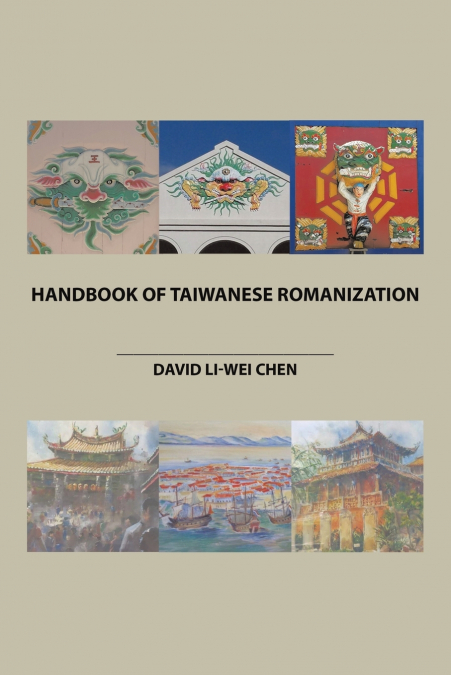
Handbook of Taiwanese Romanization

Handbook of Taiwanese Romanization

David Li-Wei Chen

13,47 €
IVA incluido
Disponible
Editorial:
Authors’ Tranquility Press
Año de edición:
2022
Materia
Educación pedagogía
ISBN:
9781959197348
13,47 €
IVA incluido
Disponible

Selecciona una librería:

  • Librería Samer Atenea
  • Kálamo Books
  • Librería Elías (Asturias)
  • Librería Kolima (Madrid)
  • Librería Proteo (Málaga)

Taiwanese and the closely related Amoy Hokkien dialects are collectively the most widely spoken dialects of the Hokkien group. The Hokkien along with distantly related Teochew are among the most widely spoken non-Mandarin Chinese languages around the world alongside Cantonese, Hakka, and Shanghainese. Mandarin Chinese is still most widely spoken of all, and most written and spoken Chinese instruction is in Standard Mandarin. Each Chinese language/dialect uses Chinese characters and has a set of rules for pronunciation based on the context of how each character is used. However, with the estimated eight thousand to fifty thousand Chinese characters that do exist, there are still many colloquial terms where the given language’s syntax for Chinese characters do not fit how they are spoken. Additionally, unique to each Chinese language/dialect group exists coined Chinese characters that are specific to the respective group. In such situations, Romanization is a more feasible alternative to written Chinese characters in learning spoken language because it helps preserve not only spoken language grammar but also colloquial terms that may not be currently be expressed in written Chinese form. The Handbook of Taiwanese Romanization focuses on the phonology of Taiwanese and Amoy Hokkien. It covers five Taiwanese Romanization methods used in currently available Taiwanese language materials for English, Japanese, and Mandarin 'Chinese' speakers. This book is for the native Taiwanese speakers who live overseas and are unfamiliar with Chinese characters but want to learn how to express their mother tongue through reading and writing. It is also a tool to aid native speakers in teaching their own children. This book focuses on Taiwanese and Amoy Hokkien but provides a foundation in phonics and tones that can be applied to other Hokkien dialects.

Artículos relacionados

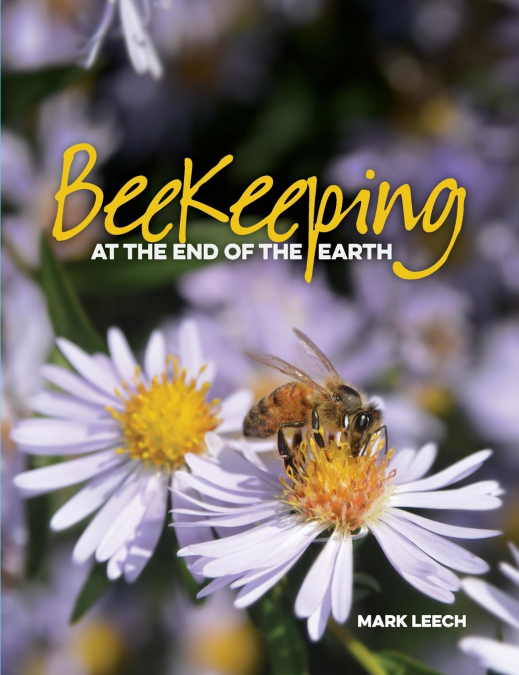
  • Beekeeping At The End Of The Earth
    Mark David Leech
    Beekeeping at the End of the Earth, an essential read for learning about beekeeping in a cool temperate climate with a focus on Tasmania our island home.  One hundred beekeepers one hundred different ways to keep bees.Beekeeping At The End Of The Earth is a practical insight into cool climate beekeeping with a focus on Tasmania, our island home.Richly illustrated with unique di...
    Disponible

    45,16 €

  • Be the One for Kids
    Ryan Sheehy
    One person can make a difference.That person can be you. “I want to show others that one person can make the difference in a child’s life. I want all educators, parents, coaches, and everyone in between to know they have power to Be the One for Kids.” —Ryan Sheehy If you ever feel like you’re all alone or think that no one gets you, just imagine how your students feel. Kids wan...
    Disponible

    27,99 €

  • Handbook of Research on E-Learning Standards and Interoperability
    As the e-learning industry continues to expand and the methods and tools necessary to create and maintain content and infrastructure applications become more complicated, there is an inherent need for these applications to interoperate and exchange data in order to better support the needs of learners and educators. Handbook of Research on E-Learning Standards and Interoperabil...
  • Teaching in the Knowledge Society
    Antonio Cartelli
    ...
  • Enhancing Learning Through Human Computer Interaction
    Elspeth McKay
    ...
  • Learning Objects for Instruction
    Pamela Taylor Northrup
    ...

Otros libros del autor

  • Handbook of Taiwanese Romanization
    David Li-Wei Chen
    Taiwanese and the related Amoy Hokkien dialect are the most widely spoken Hokkien dialects. Hokkien, along with the related Teochew, is among the most widely spoken non-Mandarin Chinese languages overseas along with Cantonese, Hakka, and Shanghainese. However, most spoken and written Chinese language instruction is in standard Mandarin. Each Chinese language uses Chinese charac...
    Disponible

    23,41 €