
Guyana

Guyana

Guyana

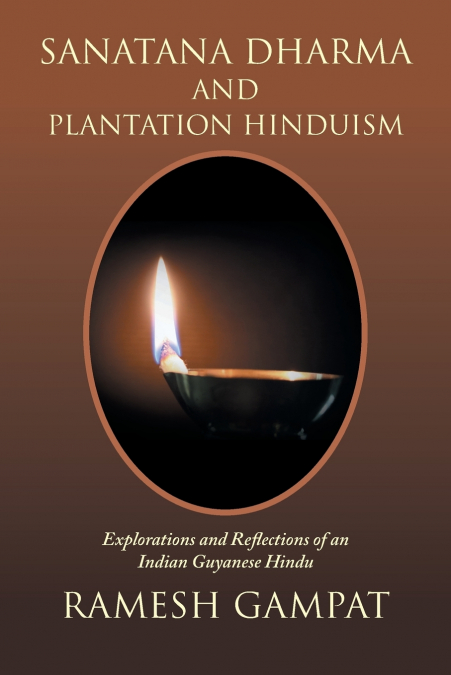
Ramesh Gampat

20,38 €
IVA incluido
Disponible
Editorial:
Xlibris
Año de edición:
2015
Materia
Historia
ISBN:
9781503546332
20,38 €
IVA incluido
Disponible

Selecciona una librería:

  • Librería Samer Atenea
  • Librería Aciertas (Toledo)
  • Kálamo Books
  • Librería Perelló (Valencia)
  • Librería Elías (Asturias)
  • Donde los libros
  • Librería Kolima (Madrid)
  • Librería Proteo (Málaga)

'It is common knowledge that slavery and indenture were characterized by long hours of physical labor, restriction of movement and other basic human freedoms, and severe punishment for violations of draconian labor laws. Less well known is the fact that nutrition was very deficient and a range of infectious diseases maimed, debilitated and killed on a large scale.   In trying to narrow the knowledge gap with respect to Guyana, Ramesh Gampat shows that extremely poor sanitary conditions, awful hygiene and malnutrition hastened widespread infections and created a vicious cycle. The British protected its own soldiers, officials and colonists by establishing a medical enclave that lasted until Emancipation in 1838. Former slaves were then “quarantined” to neglected and decaying villages and Indians to plantations. Concern with health conditions appeared only during periods of epidemics and even then it was essentially for the protection of Europeans. Colonial medicine opened the way for stereotyping, labeling, racialization of disease, neutralization of potential leaders in the struggle for justice, and crystallization of the view that Europeans were superior to Blacks and Indians. Shorter stature and shorter life expectancy are good indications that slaves and indentured immigrants fared considerably less well than Europeans.   Several infectious diseases sickened and fell Blacks and Indians, including malaria and undefined fevers, pneumonia and bronchitis, diarrhea and enteritis, tuberculosis, pneumonia and hookworm. The conquest of malaria in the early 1950s accelerated the epidemiological transition from communicable to chronic noncommunicable diseases, and today NCDs account for some three-quarters of all deaths in Guyana. Malaria has reemerged, fueled by a gold boom that consumes huge amounts of mercury. The potentially adverse public health consequences of this relatively new dynamic, the combined trio, have been neglected. '


Artículos relacionados

  • Raising Freedom's Banner
    Paul Harris
    World wide history of peaceful street demonstrations from their earliest beginning in eighteenth century England to their use throughout the world in the twenty-first century. Describes why some demonstration movements succeeded and others failed. Contrasts demonstrations within the law with civil disobedience demonstrations. Describes Peterloo, the Chartists, the Suffragettes,...
    Disponible

    23,59 €

  • Waipi’o Valley
    Jeffrey L. Gross
    Waipi’o Valley: A Polynesian Journey from Eden to Eden recounts the remarkable migrations of the Polynesians across a third of the circumference of the earth. Their amazing journey began from Kalana i Hau’ola, the biblical “Garden of Eden” located along the shore of the Persian Gulf, extended to the Indus River Valley of ancient Vedic India, to Egypt where some ancestors of the...
  • Floralia
    June Rainsford Butler
    A century characterized by a growing interest in science, the opportunity for travel, and leisure for gardening furnishes the setting for Butler’s book. The rise of landscape gardening in England is traced, and the origin and history of its most famous gardens are given. The close relation between England and America in the field of horticulture is also discussed.Originally pub...
    Disponible

    61,20 €

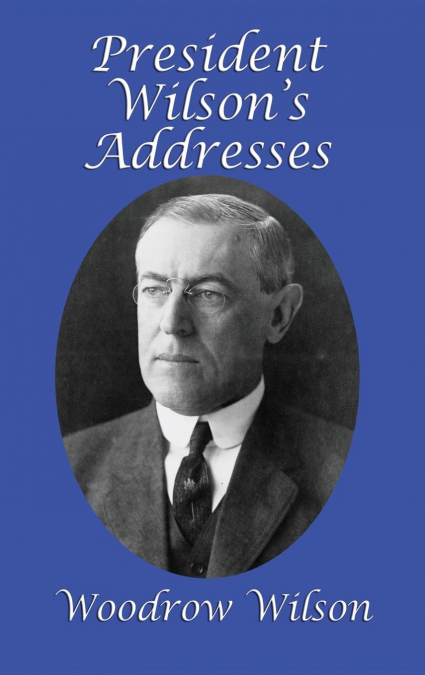
  • President Wilson’s Addresses
    Woodrow Wilson
    'These addresses of President Woodrow Wilson are almost entirely concerned with political affairs, and more specifically with defining Americanism. Yet they also show that even as he moved from academia to the heights of politics, Wilson retained something of the teacher’s interest in showing the relation between specific instances and the general forms of thought or action of ...
  • The Story of my Life
    John Albert Macy
    The Story of My Life, is Helen Keller’s autobiography detailing her early life, especially her experiences with Anne Sullivan. The book is dedicated to inventor Alexander Graham Bell. The dedication reads, 'To ALEXANDER GRAHAM BELL Who has taught the deaf to speak and enabled the listening ear to hear speech from the Atlantic to the Rockies, I dedicate this Story of My Life.' ...
  • The Story of My Life Vol. 6 Spanish Passions
    Giacomo Casanova
    Casanova was an Italian adventurer and author from the Republic of Venice. His autobiography, Histoire de ma vie (Story of My Life), is regarded as one of the most authentic sources of the customs and norms of European social life during the 18th century. He has become so famous for his often complicated and elaborate affairs with women that his name is now synonymous with 'wom...

Otros libros del autor

  • The Guyanese FX Market Modern Discourses and Controversies
    Ramesh Gampat
    Ramesh Gampat stands out as the first analyst to consolidate recent statistics on Guyana’s burgeoning oil economy. His work is essential reading for anyone engaged in public debate and policy regarding the dynamics of the local foreign exchange market, fiscal and public debt policies, and exchange rate management. Students and general readers will appreciate the accessible intr...
    Disponible

    35,92 €

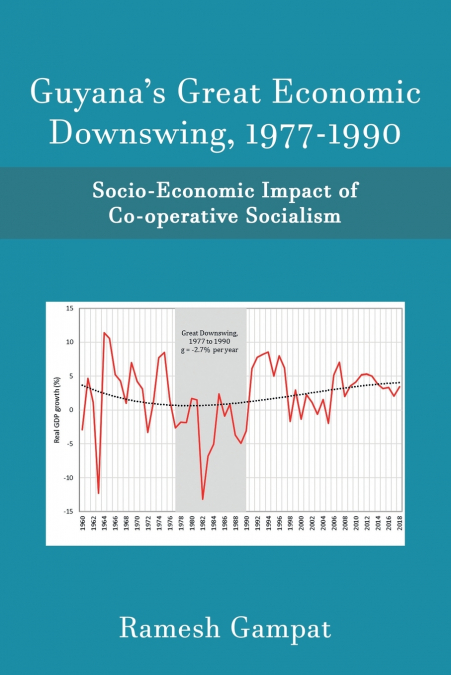
  • Guyana’s Great Economic Downswing, 1977-1990
    Ramesh Gampat
    Much of Guyana’s 20th century history was defined by the PNC dictatorship and the political and economic wreckage it left behind. In 'Guyana’s Great Economic Downswing, 1977 to 1990', Dr Ramesh Gampat presents a comprehensive study of these specific years when the national economy contracted by 2.7 percent annually. He explores the multiple facets of the country’s political tri...
    Disponible

    37,41 €

  • Sanatana Dharma and Plantation Hinduism (Second Edition Volume 2)
    Ramesh Gampat
    Christian Missionaries worked hard to convert immigrants. Their first order of business was to denigrate Hinduism, designate Hindus as heathen, and disparage their culture, food and even attire. Immigrants stubbornly resisted, led by the tiny educated elite, including Brhmaas whom we call Brahmins. Conversion was a failure at least up to the end of the 19th century but picked...
    Disponible

    14,06 €

  • Sanatana Dharma and Plantation Hinduism (Second Edition Volume 1)
    Ramesh Gampat
    Christian Missionaries worked hard to convert immigrants. Their first order of business was to denigrate Hinduism, designate Hindus as heathen, and disparage their culture, food and even attire. Immigrants stubbornly resisted, led by the tiny educated elite, including Brhmaas whom we call Brahmins. Conversion was a failure at least up to the end of the 19th century but picked...
    Disponible

    17,43 €

  • Sanatana Dharma and Plantation Hinduism
    Ramesh Gampat
    The share of Hindus in Guyana’s Indian population declined from 83.5 percent in 1880 to 62.8 percent in 2012. Yet even a casual observer would conclude that Guyanese Hindus, at home and in the diaspora, are a very religious people. Many of us do a jhandi or havan once annually; others do the more elaborate and costlier yajña, where everyone is welcome, once or twice in their li...
    Disponible

    26,67 €

  • Guyana
    Ramesh Gampat
    ...
    Disponible

    20,63 €