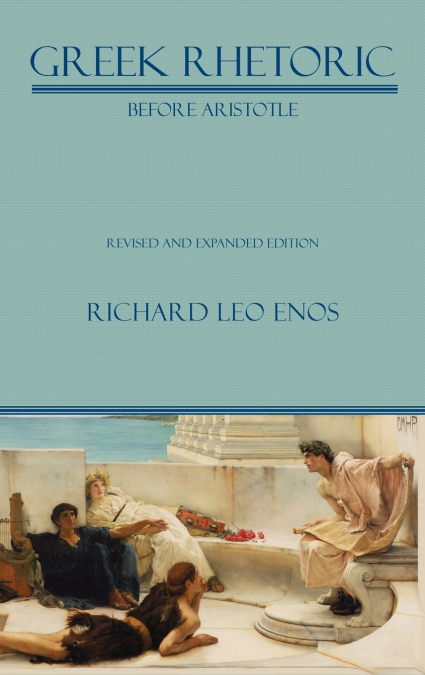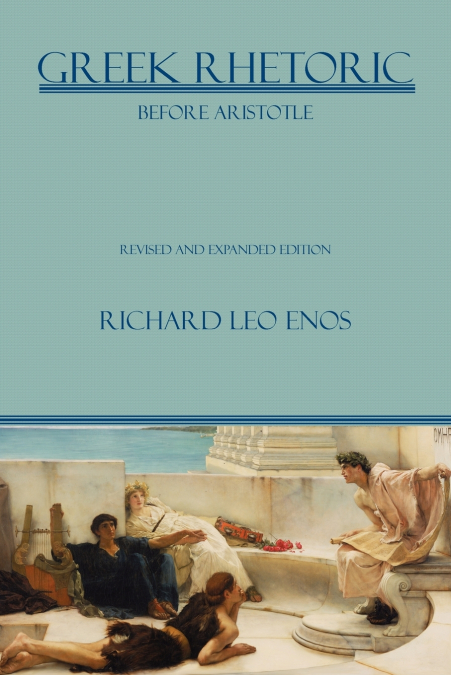

Greek Rhetoric Before Aristotle

Greek Rhetoric Before Aristotle

Greek Rhetoric Before Aristotle

Richard Leo Enos

40,63 €
IVA incluido
Disponible
Editorial:
Parlor Press
Año de edición:
2011
Materia
Filosofía occidental: antigua, hasta c. 500
ISBN:
9781602352124
40,63 €
IVA incluido
Disponible

Selecciona una librería:

  • Librería Samer Atenea
  • Librería Aciertas (Toledo)
  • Kálamo Books
  • Librería Perelló (Valencia)
  • Librería Elías (Asturias)
  • Donde los libros
  • Librería Kolima (Madrid)
  • Librería Proteo (Málaga)

Recent archaeological discoveries, coupled with long-lost but now available epigraphical evidence, and a more expansive view of literary sources, provide new and dramatic evidence of the emergence of rhetoric in ancient Greece. Many of these artifacts, gathered through onsite fieldwork in Greece, are analyzed in this revised and expanded edition of GREEK RHETORIC BEFORE ARISTOTLE. This new evidence, along with recent developments in research methods and analysis, reveal clearly that long before Aristotle’s Rhetoric, long before rhetoric was even stabilized into formal systems of study in Classical Athens, nascent, pre-disciplinary 'rhetorics' were emerging throughout Greece. These newly acquired resources and research procedures demonstrate that oral and literate rhetoric emerged not only because of intellectual developments and the refinement of technologies that facilitated communication but also because of social, political and cultural forces that nurtured rhetoric’s growth and popularity throughout the Hellenic world. GREEK RHETORIC BEFORE ARISTOTLE offers insights into the mentalities forming and driving expression, revealing, in turn, a great deal more about the relationship of thought and expression in Antiquity. A more expansive understanding of these pre-disciplinary manifestations of rhetoric, in all of their varied forms, enriches the history and the nature of classical rhetoric as a formalized discipline. | RICHARD LEO ENOS is Professor and holder of the Lillian Radford Chair of Rhetoric and Composition at Texas Christian University. His research concentration is in classical rhetoric with an emphasis in the relationship between oral and written discourse. He is past president of the American Society for the History of Rhetoric (1980-1981) and the Rhetoric Society of America (1990-1991). He received the RSA George E. Yoos Award Distinguished Service and was inducted as an RSA Fellow in 2006. He is the founding editor of ADVANCES IN THE HISTORY OF RHETORIC and the editor (with David E. Beard) of ADVANCES IN THE HISTORY OF RHETORIC: THE FIRST SIX YEARS (2007, Parlor Press). He is also the author of ROMAN RHETORIC: REVOLUTION AND THE GREEK INFLUENCE, Revised and Expanded Edition (2008, Parlor Press). | LAUER SERIES IN RHETORIC AND COMPOSITION, edited by Catherine Hobbs, Patricia Sullivan, Thomas Rickert, and Jennifer Bay.


Artículos relacionados

  • The Nature of Things
    Lucretius Lucretius
    De rerum natura (On the Nature of Things) is a 1st century BC didactic poem by the Roman poet and philosopher Lucretius with the goal of explaining Epicurean philosophy to a Roman audience. Lucretius presents the principles of atomism; the nature of the mind and soul; explanations of sensation and thought; the development of the world and its phenomena; and explains a variety o...
  • Pompeii
    Fergus Mason
    Pompeii was one of most advanced cities of its time; it had a complex water system, gymnasium, and an amphitheater. Despite it's advancements, there was one thing it wasn't ready for: Mount Vesuvius—the volcano that led to its ultimate doom.  The 79 AD eruption of Mount Vesuvius was one of the worst disasters in all of European history. In a near instant, over 15,000 p...
    Disponible

    10,36 €

  • Middle Platonism and Neoplatonism, Volume 1
    Stephen Gersh
    'It is generally agreed that those types of philosophy that are loosely called ’Platonic’ and ’Neoplatonic’ played a crucial role in the history of European culture during the centuries between antiquity and the Renaissance. However, until now no scholar has attempted to describe the evolution of these forms of thought in a single comprehensive academic study.' So writes Stephe...
  • Middle Platonism and Neoplatonism, Volume 2
    Stephen Gersh
    It is generally agreed that those types of philosophy that are loosely called 'Platonic' and 'Neoplatonic' played a crucial role in the history of European culture during the centuries between antiquity and the Middle Ages. However, until now no scholar has attempted to describe the evolution of these forms of thought in a single comprehensive academic study. Middle Platonism a...
  • Porphyry’s Commentary on Ptolemy’s Harmonics
    Andrew Barker
    ...
    Disponible

    77,17 €

  • The Roots of Platonism
    John Dillon
    ...
    Disponible

    25,29 €

Otros libros del autor

  • Greek Rhetoric Before Aristotle
    Richard Leo Enos
    Recent archaeological discoveries, coupled with long-lost but now available epigraphical evidence, and a more expansive view of literary sources, provide new and dramatic evidence of the emergence of rhetoric in ancient Greece. Many of these artifacts, gathered through onsite fieldwork in Greece, are analyzed in this revised and expanded edition of GREEK RHETORIC BEFORE ARISTOT...
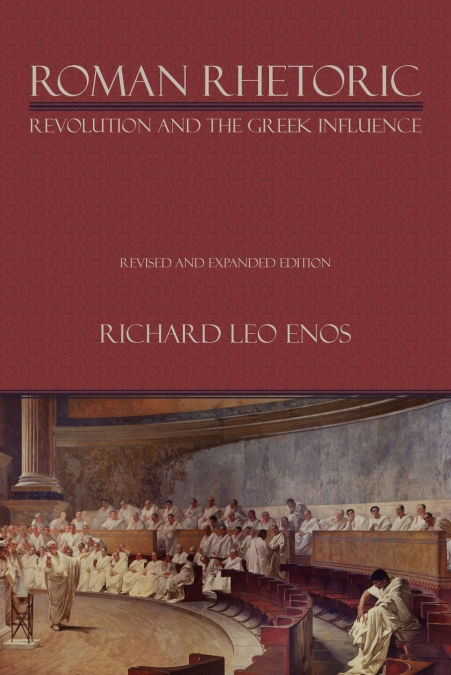
  • Roman Rhetoric
    Richard Leo Enos
    Greek and Roman traditions dominate classical rhetoric. Conventional historical accounts characterize Roman rhetoric as an appropriation and modification of Greek rhetoric, particularly the rhetoric that flourished in fifth and fourth centuries BCE Athens. However, the origins, nature and endurance of this Greco-Roman relationship have not been thoroughly explained. ROMAN RHETO...
    Disponible

    38,26 €