 Librería Samer Atenea
 Kálamo Books
 Librería Elías (Asturias)
 Librería Kolima (Madrid)
 Librería Proteo (Málaga)
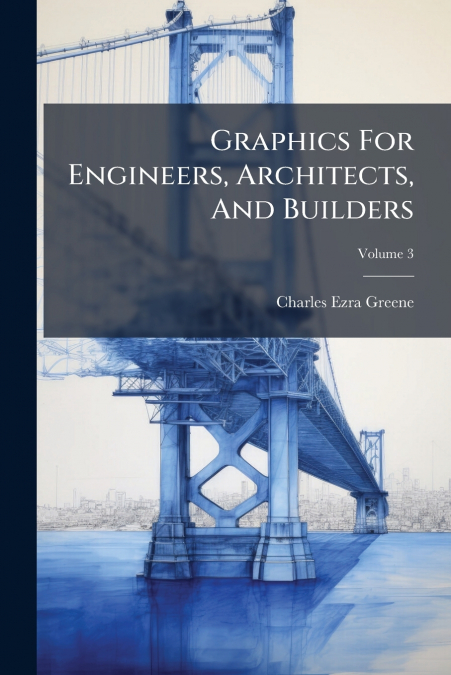
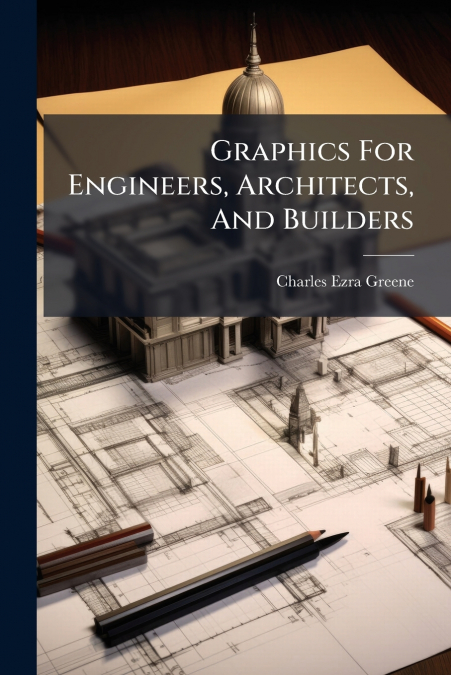
'Graphics For Engineers, Architects, And Builders: Arches' by Charles Ezra Greene is a detailed guide to the principles and practices of technical drawing, specifically focusing on the design and construction of arches. This book serves as an essential resource for students and professionals in engineering, architecture, and construction, offering comprehensive insights into the graphical methods used to represent and analyze structural elements. Greene’s work covers various aspects of arch design, providing a thorough understanding of the geometrical and mathematical foundations necessary for creating accurate and effective technical drawings. With clear explanations and illustrative examples, this book is invaluable for anyone looking to master the art of graphical communication in the context of engineering and architectural projects. This book is a classic resource for understanding and applying graphical techniques in the field.This work has been selected by scholars as being culturally important, and is part of the knowledge base of civilization as we know it. This work was reproduced from the original artifact, and remains as true to the original work as possible. Therefore, you will see the original copyright references, library stamps (as most of these works have been housed in our most important libraries around the world), and other notations in the work.This work is in the public domain in the United States of America, and possibly other nations. Within the United States, you may freely copy and distribute this work, as no entity (individual or corporate) has a copyright on the body of the work.As a reproduction of a historical artifact, this work may contain missing or blurred pages, poor pictures, errant marks, etc. Scholars believe, and we concur, that this work is important enough to be preserved, reproduced, and made generally available to the public. We appreciate your support of the preservation process, and thank you for being an important part of keeping this knowledge alive and relevant.