 Librería Samer Atenea
 Kálamo Books
 Librería Elías (Asturias)
 Librería Kolima (Madrid)
 Librería Proteo (Málaga)
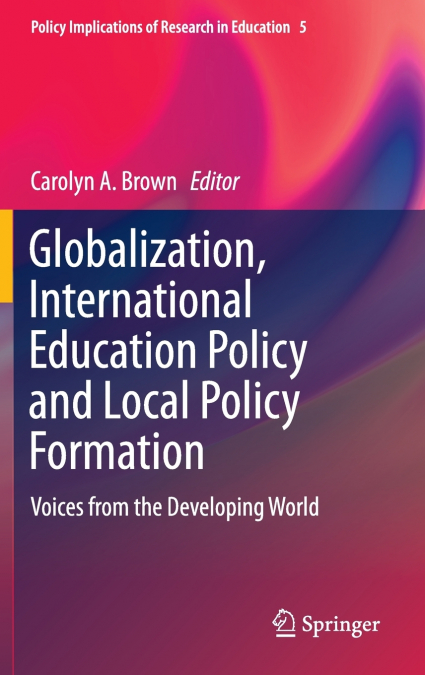
This edited volume focuses on how international education policy, set by international policymakers and donors, influences local education policy in developing countries. The book’s primary purpose is to give voice to scholars from developing countries and regions around the world by inviting them to explore how the international policy, invariably linked to international aid, influences education policy formation and implementation in their country or region and how this influence does or does not meet the local cultural, social, economic, and political needs. A relatively recent and small body of research and commentary supports a discourse that questions how well international education policy mandates such as Education For All serve the needs of developing countries. The intent of this book is to advance this discourse by giving voice to local scholars who observe and study the donor process.The book will be divided into two sections: the first section will set the stage for the discussions in the second section by providing theoretical and historical context for international education policy. As a framework for understanding, the book adopts the position that international policy does not have either the ability or the intent to serve the widely diverse needs of development around the world. International education policy has been formed, historically, by wealthy nations and agencies dominated by Western theoretical paradigms. In recent years, donor countries have made an effort to collaborate with developing countries in developing international education policy goals; however, this collaboration has been limited. Following establishment of the context of international education policy, section II of the book provides a forum for scholars from around the world to openly discuss and critique the impact of international policy on education in their country or region.