 Librería Samer Atenea
 Kálamo Books
 Librería Elías (Asturias)
 Librería Kolima (Madrid)
 Librería Proteo (Málaga)
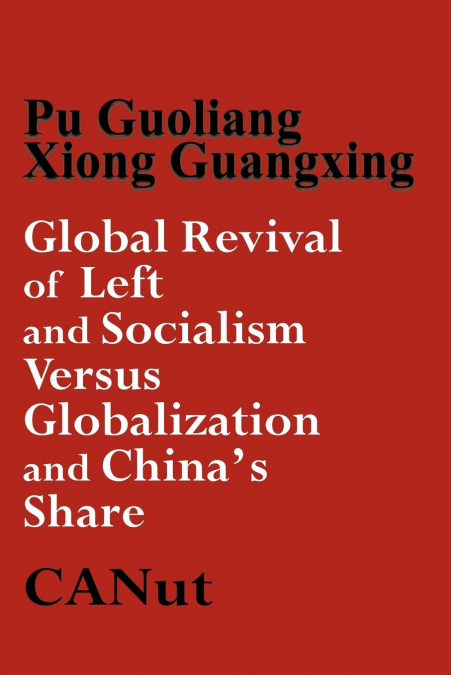
This book is the result of a research sub-topic, titled as 'The Relations of the Two Systems and China's Foreign Strategies in the Process of Globalization in the Post-Cold War Era'. The main research project topic was 'International Political Economy and China's Diplomatic Strategies in the Era of Globalization' (Project 211) undertaken by Renmin University of China. This Research had started in 2003 with group members from World Socialism Research Institute, School of International Studies under Renmin University of China. Globalism is a new objective trend motivated by capitalism and poses important and new challenges to both capitalism and socialism since its vigorous development in 1990s. Its content, modes, prospects and relation to capitalism and socialism has been a major pressing and controversial issue debated between and among socialist movements. It demands a creative renewal of ideas and the socialist mode of development and also prepares new conditions in which socialism can flourish. The last two decades of the 20th century recorded dramatic and radical changes in capitalism, the world political configuration and especially the world socialist and left movement. As the main part of the world socialist movement, the countries struggling for the cause of a socialist and communist future fell into grave setbacks and diverse forms of crises and many of them could not cure the deeply rooted problems posed in their development and construction efforts. One major root of the problem had been the relationship of socialist construction to existing capitalism and its realistic capabilities. Some countries through trial, error and tortuous efforts opened a brand new mode of socialist construction and a new type of engagement with external capitalism contrasting the previous mode of socialist construction. This transformation-with variations in time, pace and other characteristics-was generally carried out gradually and cautiously. This was called reform and opening up in China, Vietnam and Cuba. As compared to the previous mode-under their sovereignty-they have been allowing a certain degree of external capitalism in their territories and have adjusted the ideological and political superstructure to the whole new mode of socialist construction and reform. The socialist and left movement in the rest of the world had greatly reflected developments in the socialist countries since the establishment of the first socialist power in 1917. And since diverse modes of socialist movements have continued to co-exist in the world socialist movement-most of the time-unable to bridge the differences and severe conflicts. Even socialist countries have had severe ideological, national and international disputes. After the collapse of Soviet Union and many other socialist countries in Eastern Europe, nearly all schools of world socialist movements and thoughts suffered an unprecedented setback or difficulties and have paid with high losses. Many socialist parties and left movements were dissolved and some were unable to resist capitalist arrogance arising after the 'victory' of capitalism won without battle. The shiny aspect of capitalist development had seemed unmatchable and ideas about its demise had lost its relevance. Thanks to intrinsic development of motive forces inherent in socialist reality and its subjects, things have started to change and signs of recovery, rectification, re-exploration, reform and revival have soon started to emerge and even recorded some important achievements in many parts of the world. Many important schools including (social) democratic socialism, autonomous socialism-Trotskyism, new-left, green-left, post-Marxist left, Western and Eastern communism and critical-Western Marxist thought have scored certain remarkable achievements. 3