
GIS For Biologists

GIS For Biologists

GIS For Biologists

Colin D MacLeod

47,55 €
IVA incluido
Disponible
Editorial:
Pictish Beast Publications
Año de edición:
2015
Materia
Biologia, ciencias de la vida
ISBN:
9781909832176
Páginas:
296
47,55 €
IVA incluido
Disponible

Selecciona una librería:

  • Librería Samer Atenea
  • Librería Aciertas (Toledo)
  • Kálamo Books
  • Librería Perelló (Valencia)
  • Librería Elías (Asturias)
  • Donde los libros
  • Librería Kolima (Madrid)
  • Librería Proteo (Málaga)

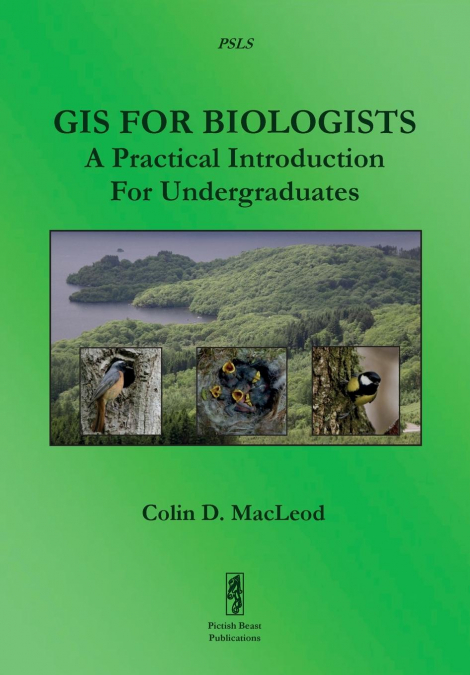
This book provides a user-friendly and practical introduction for undergraduates to the use of Geographic Information Systems (GIS) in biological research. Unlike most other books about using GIS, this information is specifically presented in a biological context and it is divided into two sections.The first section provides just enough background information to allow the novice biological GIS user to get started with GIS without getting too bogged down in the theory behind it or making some of the most common mistakes made by beginners. It covers areas such as what GIS is, why GIS is useful in biology, the basics of GIS, common concepts and terms in GIS, how data are contained in a GIS, useful information about what to think about before starting a GIS project and how to break down and translate ecological tasks into the language of GIS. This information is all provided in easy-to-read and non-technical language, with specific reference to its application in biological research.The second section, which constitutes the main body of the book, consists of six practical exercises accompanied by detailed instruction sets. The first four exercises introduce the novice biological GIS user to basic, but important, GIS skills, such as making a map, creating new feature data layers, creating raster data layers and joining together data from different data layers. The final two consist of case studies of how GIS can be used to answer real biological research questions. Each of these exercises represents a stand-alone GIS lesson which can be completed either on its own or as part of a practical session for an undergraduate class. In addition, each exercise focuses on a different area of biology, such as tropical ornithology, epidemiology, marine biology and rainforest ecology, and on a different part of the world, including the Amazon rainforest, a Scottish field station, Mount Mabu in northern Mozambique, the North Atlantic Ocean and the USA. Instructions for each exercise are provided for both the leading commercial GIS package (ESRI’s ArcGIS® 10.3 software) and the leading freely available open-source GIS software (QGIS 2.8.3, also known as Quantum GIS), meaning that this book can be used to learn, or teach, how to use of GIS in biological research, regardless of the availability of commercial software licences. Taken together, the two sections of this book provide the perfect primer to show undergraduates, and other novice GIS users, how useful GIS can be in biological research, why it is rapidly becoming a key skill in many areas of biology, and how start in using it.The PSLS series of books uses Task-Oriented Learning (TOL) to teach the practical application of research skills to the life sciences. This involves demonstrating how these skills can be used in the specific circumstances in which they are likely to be required, rather than concentrating on teaching theoretical frameworks or on teaching skills in a generic or abstract manner. By seeing how the similar processes are used to achieve a variety of different goals within a specific field, it becomes easier for the reader to identify the general rules behind the practical application of these processes and, therefore, to transfer them to novel situations they may encounter in the future.

Artículos relacionados

  • Viral Replication Complexes
    Viruses are obligate intracellular parasites that need to co-opt a living cell’s machinery for replication. At the heart of the viral replication machinery are the nucleic acid polymerases, which are responsible for efficiently copying the viral genome. This process must often be coordinated with other viral processes, including protein translation and viral packaging. The poly...
  • Advances in Flavivirus Research
    The flaviviruses are composed almost entirely of arthropod-borne viruses, a subset of which are responsible for millions of cases of human disease each year. Among these viruses are dengue virus—a scourge throughout the tropical regions of Asia and the Americas; yellow fever virus—the “original” hemorrhagic fever virus; and the recently emerged Zika virus. While the flaviviruse...
    Disponible

    51,85 €

  • Brain Asymmetry of Structure and/or Function
    Lesley J. Rogers / Lesley JRogers
    This edited book brings together research reports on the asymmetry of brain function in various species, including humans, dogs, birds, lizards and bees. As shown in a wide range of species, and, as we now know, not solely in humans, the left and right sides of the brain process information in different ways and control different responses or patterns of behaviour. Since this d...
    Disponible

    51,71 €

  • Fungal Pigments
    With the impact of globalization in research trends, the search for healthier life styles, the increasing public demand for natural, organic, and ‘clean labelled’ products, as well as the growing global market for natural colorants in economically fast-growing countries all over the world, filamentous fungi started to be investigated as readily available sources of chemically d...
    Disponible

    43,80 €

  • The Epithelialto- Mesenchymal Transition ( EMT ) in Cancer
    Joëlle Roche
    The epithelial-to-mesenchymal transition (EMT) is a highly dynamic process with multiple transitional states, by which epithelial cells can convert into a mesenchymal phenotype. This process involves loss of cellular adhesion and cellular polarity, and an improvement in migratory and invasive properties. It occurs during normal embryonic development, tissue regeneration, organ ...
    Disponible

    67,86 €

  • The Biology and Treatment of Myeloid Leukaemias
    There has been an observed decrease in the global mortality from cancer, mostly atributable to improved, particularly early, detection and prevention. For many carcinomas and leukaemias in adults, once the disease has reached a certain stage there are no therapies that are able to erradicate the cancer cells and cure patients. There has been progress in the treatment of acute m...
    Disponible

    51,85 €

Otros libros del autor

  • An Introduction To Species Distribution Modelling (SDM) Using QGIS And R
    Colin D MacLeod
    This workbook is a companion volume to GIS For Biologists: A Practical Introduction For Undergraduates. It is designed to augment the information on using GIS in biological research provided in that book, as a result, it assumes that the reader already as some level of familiarity with GIS. In addition, it has been specially written based around free-to-access, open source soft...
    Disponible

    36,83 €