Geodätische Berechnungsmethoden (Standard-BASIC)

Geodätische Berechnungsmethoden (Standard-BASIC)

Günther Stegner

73,07 €
IVA incluido
Disponible
Editorial:
Springer Nature B.V.
Año de edición:
1984
Materia
Ingeniería: general
ISBN:
9783528043346
73,07 €
IVA incluido
Disponible

Selecciona una librería:

  • Librería Samer Atenea
  • Librería Aciertas (Toledo)
  • Kálamo Books
  • Librería Perelló (Valencia)
  • Librería Elías (Asturias)
  • Donde los libros
  • Librería Kolima (Madrid)
  • Librería Proteo (Málaga)

Die Geodasie ist von jeher eine Fachrichtung, in der die Losung der Aufgaben auf mathe­ matischen Grundlagen beruht. So scheint es auch nicht verwunderlich, daB seit der fruhe­ sten Entwicklung von Taschenrechnern und Mikrocomputern Vermessungsingenieure diese Hilfsmittel zur Losung ihrer Aufgaben verwendet haben. Die Entwicklung geodatischer Rechenpraxis kann seit etwa 1970, abgesehen von der Anwendung von GroBrechenanlagen, in zwei Entwicklungsphasen eingeteilt werden: 1971 erscheint mit dem HP-35 der erste leistungsfahige technisch-wissenschaftliche Taschenrechner auf dem Markt, dem 1974 als erster programmierbare Taschenrechner der HP-65 folgt. Die erste Phase der Entwicklung fiihrte von Berechnungen mit mechanischer Rechen­ maschine und Funktionstafeln iiber den Taschenrechner zum programmierbaren Taschen­ rechner bzw. Tischrechner mit externer Programmspeicherung (wie z. B. HP 9100, HP-65). Die Arbeitsweise, manuelle Dateneingabe, Abarbeitung der Rechenformeln nach bekann­ ten Verfahren und Aufschrieb bzw. Ausdruck der Berechnungsergebnisse im Registrier­ kassenformat, hat sich in der ersten Entwicklungsphase nicht verandert. Lediglich muBten Kenntnisse in dem maschinenspezifischen Programmiercode erworben werden. Der Rechenaufwand muBte weiterhin gering gehalten werden, und der Gebrauch von Naherungslosungen und Formeln war sinnvoll. Die Entwicklung der Mini-und Mikrocomputer brachte Datenverarbeitung an den Arbeits­ platz des Benutzers. Die parallel laufende Entwicklung geodatischer Instrumente ver­ langte nach Modifikation der bisherigen Arbeitsweisen und Verfahren. Diese zweite Entwicklungsphase erfordert von den Bearbeitern umfangreiche Datenverarbeitungs­ kenntnisse. Neben der Beherrschung hoherer Programmiersprachen sind auch Kenntnisse in Methoden und Techniken von Entwurf, Implementierung und Dokumentation umfang­ reicher Programmsysteme notwendig.

Artículos relacionados

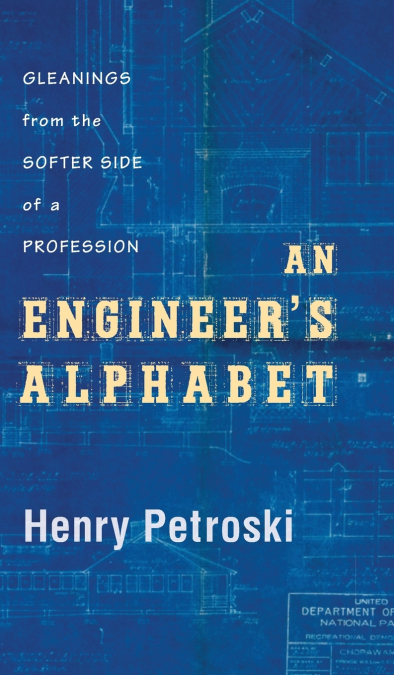
  • An Engineer’s Alphabet
    Henry Petroski
    ...
  • Conduct of Vessels Underway
    Captain Mehrdad Behforouzi
    This book results from sailing for 25 years at sea at different ranks, including 15 years of command and more than 20 years of teaching in maritime universities, colleges, and simulators. Lack of knowledge and misinterpretation of the rules are the reasons for Most collisions at sea. The author tried to interpret the rules of the road practically to be understandable both in th...
    Disponible

    87,94 €

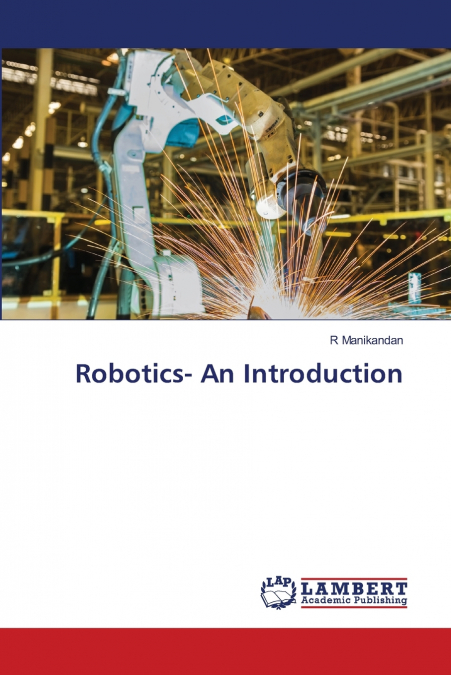
  • Robotics- An Introduction
    R Manikandan
    In this book the principles and basic concepts of Robotics and its components are briefed. The readers will understand the design and implementation of robot applications and their relationship to other automated technologies. The basis of machine vision and its application in robotics are briefed. The concept of end effectors, basic programming in Robots and a few real time ap...
    Disponible

    75,58 €

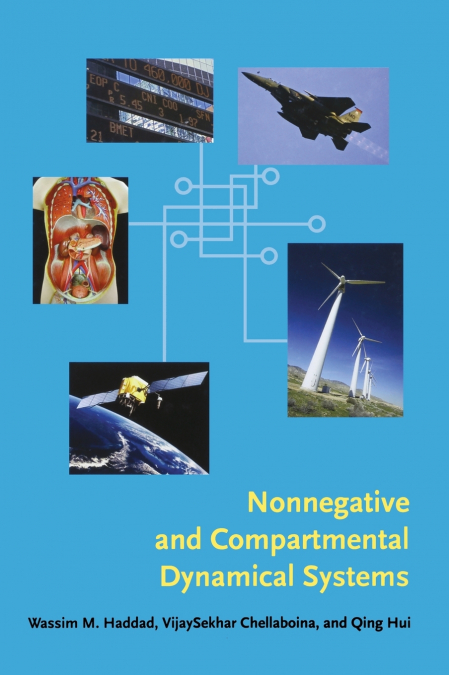
  • Nonnegative and Compartmental Dynamical Systems
    Qing Hui / VijaySekhar Chellaboina / Wassim M. Haddad
    This comprehensive book provides the first unified framework for stability and dissipativity analysis and control design for nonnegative and compartmental dynamical systems, which play a key role in a wide range of fields, including engineering, thermal sciences, biology, ecology, economics, genetics, chemistry, medicine, and sociology. Using the highest standards of exposition...
  • Steady Aircraft Flight and Performance
    N. Harris McClamroch
    This undergraduate textbook offers a unique introduction to steady flight and performance for fixed-wing aircraft from a twenty-first-century flight systems perspective. Emphasizing the interplay between mathematics and engineering, it fully explains the fundamentals of aircraft flight and develops the basic algebraic equations needed to obtain the conditions for gliding flight...
  • Capacidade Do Fungo Pleurotus Ostreatus (Cogumelo Shimeji) Na Biorremediação De Solos Contaminados Com Chumbo (Pb)
    Duilio Pereira
    O Uso De Biorremediação Está Ganhando Interesse, E O Objetivo Da Presente Investigação É Usar O Fungo Pleurotus Ostreatus Para Remediar Solos Contaminados Com Chumbo (Pb) E Serragem Como Um Complemento, Um Nutriente Que Permite Maior Eficiência E Velocidade De Crescimento. Para Delinear Esta Pesquisa, Foram Testados Três Repetições E Três Tratamentos E Unidade De Uma Placa Como...
    Disponible

    11,96 €