
Genome-Based Diagnostics

Genome-Based Diagnostics

AA.VV

31,72 €
IVA incluido
Disponible
Editorial:
National Academies Press
Año de edición:
2012
Materia
Servicios de primeros auxilios y de auxiliares sanitarios
ISBN:
9780309253949
31,72 €
IVA incluido
Disponible

Selecciona una librería:

  • Librería Desdémona
  • Librería Samer Atenea
  • Librería Aciertas (Toledo)
  • Kálamo Books
  • Librería Perelló (Valencia)
  • Librería Elías (Asturias)
  • Donde los libros
  • Librería Kolima (Madrid)
  • Librería Proteo (Málaga)

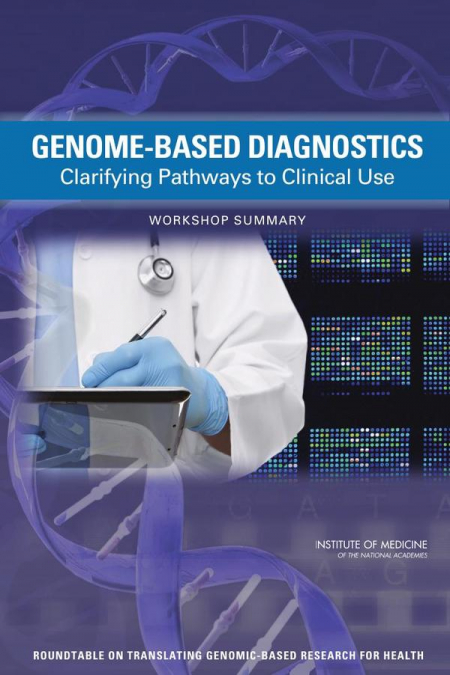
The sequencing of the human genome and the identification of associations between specific genetic variants and diseases have led to an explosion of genomic-based diagnostic tests. These tests have the potential to direct therapeutic interventions, predict risk or onset of disease, or detect residual disease. As research progresses and an increasing number of associations are found, further tests will be developed that can aid in providing personalized treatment options for patients. However, the adoption of genomic diagnostic tests by health care providers has been limited due to a lack of evidence regarding the clinical utility of many tests. Health funders and practitioners lack the data necessary to distinguish which tests can improve practice or the clinical settings in which tests will provide the greatest value. The Roundtable on Translating Genomic-Based Research for Health held a workshop in November 2010 to determine what evidence is needed and how it is viewed by different stakeholders in order to develop genomic diagnostic tests of clinical value.Genome-Based Diagnostics summarizes the presentations and discussions that took place throughout the workshop. Two presentations, in particular, sparked extensive discussion. One presentation proposed that all genomic diagnostic tests be reviewed and approved by the Food and Drug Administration. The other observed that venture capitalists are no longer investing substantially in the development of genomic diagnostic tests because of a lack of clarity surrounding regulatory and reimbursement pathways. Both presentations suggested the need for major changes in the systems used to develop, regulate, and reimburse genomic diagnostic tests. The report also presents the perspectives of different stakeholders in the development of genomic diagnostic tests. Each stakeholder group has a different set of needs and issues of importance, yet commonalities among them are apparent, such as the need to put patients and health outcomes at the center of discussion and action.

Artículos relacionados

  • Primeros auxilios. MF0272.
    Olga Martín Villaoslada
    Puede solicitar gratuitamente las soluciones a todas las actividades en el email tutor@tutorformacion.esCapacidades que se adquieren con este Manual:- Identificar las características de la asistencia como primer interviniente.- Aplicar técnicas de valoración inicial según el protocolo establecido accediendo al accidentado de forma oportuna y generando un entorno seguro.- Aplica...
    Disponible

    32,19 €

  • Direct-to-Consumer Genetic Testing
    Today, scores of companies, primarily in the United States and Europe, are offering whole genome scanning services directly to the public. The proliferation of these companies and the services they offer demonstrate a public appetite for this information and where the future of genetics may be headed; they also demonstrate the need for serious discussion about the regulatory en...
    Disponible

    35,31 €

  • Incorporating Occupational Information in Electronic Health Records
    Each year in the United States, more than 4,000 occupational fatalities and more than 3 million occupational injuries occur along with more than 160,000 cases of occupational illnesses. Incorporating patients’ occupational information into electronic health records (EHRs) could lead to more informed clinical diagnosis and treatment plans as well as more effective policies, inte...
    Disponible

    31,72 €

  • Cognitive Rehabilitation Therapy for Traumatic Brain Injury
    Traumatic brain injury (TBI) may affect 10 million people worldwide. It is considered the ’signature wound’ of the conflicts in Iraq and Afghanistan. These injuries result from a bump or blow to the head, or from external forces that cause the brain to move within the head, such as whiplash or exposure to blasts. TBI can cause an array of physical and mental health concerns and...
    Disponible

    58,19 €

  • Health IT and Patient Safety
    IOM’s 1999 landmark study To Err is Human estimated that between 44,000 and 98,000 lives are lost every year due to medical errors. This call to action has led to a number of efforts to reduce errors and provide safe and effective health care. Information technology (IT) has been identified as a way to enhance the safety and effectiveness of care. In an effort to catalyze its i...
    Disponible

    43,63 €

  • A Research Strategy for Environmental, Health, and Safety Aspects of Engineered Nanomaterials
    The nanotechnology sector, which generated about $225 billion in product sales in 2009, is predicted to expand rapidly over the next decade with the development of new technologies that have new capabilities. The increasing production and use of engineered nanomaterials (ENMs) may lead to greater exposures of workers, consumers, and the environment, and the unique scale-specifi...
    Disponible

    51,48 €