 Librería Samer Atenea
 Kálamo Books
 Librería Elías (Asturias)
 Librería Kolima (Madrid)
 Librería Proteo (Málaga)
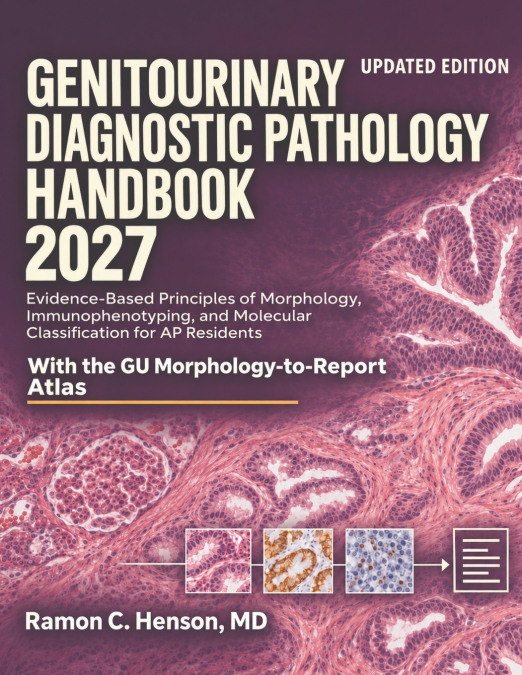
Move From Slide Pattern to a Defensible Sign-Out Genitourinary specimens compress difficult morphology, evolving classifications, and high-stakes reporting decisions into a small diagnostic space. This handbook gives AP residents a specimen-centered route from the first microscopic pattern to a focused differential, an economical ancillary workup, and a report that communicates grade, stage, and uncertainty clearly. Coverage spans kidney, urinary tract, prostate, testis, penis, adrenal gland, cytology, hereditary syndromes, treatment effects, and contemporary molecular entities. The GU Morphology-to-Report Atlas reinforces each chapter with repeatable checkpoints that connect visual evidence to final report language. Inside, You Will Learn How To Build specimen-aware differentials from architecture, cytology, stromal response, and anatomic compartment before ordering stains Separate renal tumor families with morphology-led immunopanels and molecular tests chosen to answer a defined diagnostic branch Grade and stage urothelial carcinoma while recognizing divergent differentiation, variant morphology, invasion mimics, and treatment effects Interpret prostate biopsies and prostatectomy specimens with disciplined pattern assignment, Grade Group logic, and reporting-ready qualifiers Resolve testicular and paratesticular lesions using age, site, germ cell markers, sex cord-stromal features, and somatic-type transformation clues Integrate urine cytology, limited tissue, frozen section, and digital workflows without allowing technical artifacts to outrun the evidence Translate hereditary clues, molecular classification, and synoptic data elements into concise diagnoses and useful comments Keep it beside the microscope for the cases in which a plausible label is not enough and every interpretive step must support the final sign-out.