
Genetic Mosaics and Cell Differentiation

Genetic Mosaics and Cell Differentiation

W. J. Gehring

66,09 €
IVA incluido
Disponible
Editorial:
Springer Nature B.V.
Año de edición:
2014
Materia
Zoología y ciencias animales
ISBN:
9783662219522
66,09 €
IVA incluido
Disponible

Selecciona una librería:

  • Librería Samer Atenea
  • Librería Aciertas (Toledo)
  • Kálamo Books
  • Librería Perelló (Valencia)
  • Librería Elías (Asturias)
  • Donde los libros
  • Librería Kolima (Madrid)
  • Librería Proteo (Málaga)

The relationship of cell lineage and differentiation is one of the most intriguing problems in developmental biology. In most higher organisms, the analysis of the cell lineage has to rely on indirect methods. Only in the most suitable systems, like the nematodes, can the pattern of cell division be determined by direct observation under the microscope. In cases where this is not possible, the fate of the cells has to be examined by using cell markers. Most suitable for this purpose are genetic markers, provided that they do not interfere with the developmental pathway to be studied. However, suitable genetic markers and techniques for generating genetic mosaics are available in a few organisms only. Therefore, this volume is largely concerned with Drosophila and the mouse, which have been studied most extensively. In 1929 STURTEVANT introduced the analysis of gynandromorphs into devel­ opmental genetics. However, this important contribution remained largely unnoticed until the late sixties, when the potential of this technique for deter­ mining embryonic fate maps and the number of primordial cells was exploited, and the methodology extended to the mapping of mutational foci. Mitotic recombination was demostrated by STER:-< in 1936, who realized the potential of this technique for the analysis of cell lineage and pattern formation. The usefulness of this method was substantially increased by the discovery of FRIESEN that mitotic recombination can be induced by x-irradiation. This allows the induction of mosaicism at any stage of development.

Artículos relacionados

  • Animaltown
    Urban space constitutes a place where people and animals live together in close proximity with each other, creating changing landscapes of co-existence, conflict, mutual dependencies and exploitation. The medieval animals found in the articles of Animaltown: Beasts in Medieval Urban Space, appear in text and image, as well as archaeological find materials in the form of butcher...
    Disponible

    109,24 €

  • Pleasurable Kingdom
    Jonathan Balcombe
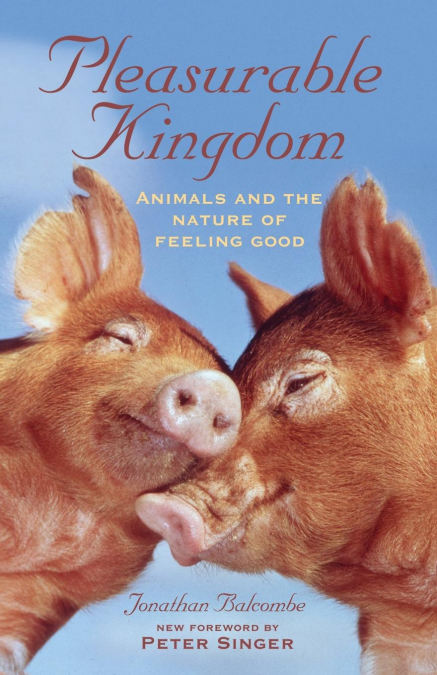
    Pleasurable Kingdom presents new evidence that animals--like humans--enjoy themselves. From birds to baboons, insects to iguanas, animals feel good thanks to play, sex, touch, food, anticipation, comfort, aesthetics, and more. Combining rigorous evidence, elegant argument and amusing anecdotes, leading animal behavior researcher Jonathan Balcombe shows that the possibility of p...
    Disponible

    18,96 €

  • SECOND NATURE
    Jonathan Balcombe
    ...
    Disponible

    16,52 €

  • Experimental Zoology
    Manisha R Gejage / Ramesh M Gejage
    The goal of the book is to present the practical knowledge of Zoology. Animal diversity, venomous and non-venomous snakes, study of birds, brain of fowl and hyoid apparatus, sclerotic plates, pecten and collumella of fowl, scales of fishes, biochemical tests, activity of salivary amylase, estimation of total protein and lipid, DNA isolation and estimation of uric acid are given...
  • TOXICOLOGY
    M A SUBRAMANIAN
    In an era defined by burgeoning human populations, rampant industrialization, cutting-edge technological progress, and expanding urban landscapes, the integrity of our natural environment faces unprecedented challenges. The relentless march of progress has ushered in a flood of chemicals, seeping into the very fabric of our ecosystems and posing insidious threats to biological ...
    Disponible

    23,69 €

  • Leaders in Animal Behavior
    Donald Dewsbury / Lee Drickamer
    ...
    Disponible

    64,68 €