Gaining Currency

Gaining Currency

Eswar S. Prasad

68,93 €
IVA incluido
Consulta disponibilidad
Editorial:
Oxford University Press
Año de edición:
2016
Materia
Economía internacional
ISBN:
9780190631055

Selecciona una librería:

  • Librería Samer Atenea
  • Librería Aciertas (Toledo)
  • Kálamo Books
  • Librería Perelló (Valencia)
  • Librería Elías (Asturias)
  • Donde los libros
  • Librería Kolima (Madrid)
  • Librería Proteo (Málaga)

In Gaining Currency, leading China scholar Eswar S. Prasad describes how the renminbi (RMB) is taking the world by storm and explains its role in reshaping global finance. This book sets the recent rise of the RMB, China’s currency since 1949, against a sweeping historical backdrop. China issued the world’s first paper currency in the 7th century. In the 13th century, Kublai Khan issued the first-ever currency to circulate widely despite not being backed by commodities or precious metals. China also experienced some of the earliest episodes of hyperinflation currency wars. Gaining Currency reveals the interconnections linking China’s growing economic might, its expanding international influence, and the rise of its currency. If China plays its cards right by adopting reforms that put its economy and financial markets on the right track, the RMB could rival even the euro and the Japanese yen. Prasad shows, however, that while China has successfully adopted a unique playbook for promoting the RMB, many pitfalls lie ahead for its economy and currency that could limit the RMB’s ascendance. The Chinese leadership is pursuing financial liberalization and limited market-oriented reforms, but it has unequivocally repudiated political, legal, and institutional reforms. Therefore, Prasad argues, while the RMB is likely to become a significant reserve currency, it will not attain 'safe haven' status as a currency to which investors turn during crises. In short, the hype predicting the RMB’s inevitable rise to global dominance is overblown. Gaining Currency makes a compelling case that, for all its promise, the RMB does not pose a serious challenge to the U.S. dollar’s dominance in international finance.
Artículos relacionados

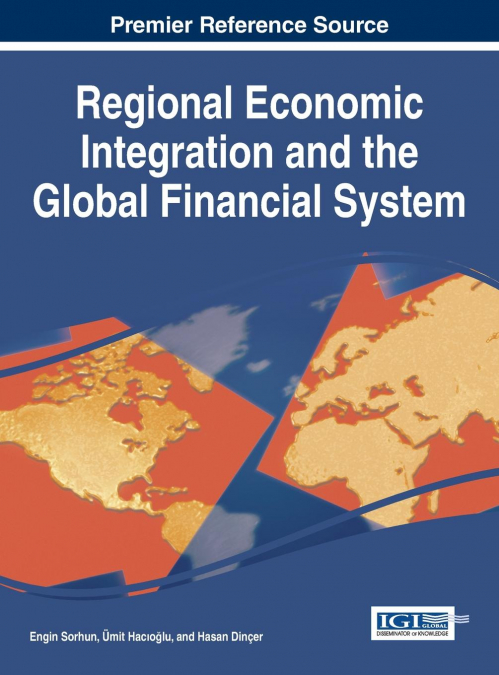
  • Regional Economic Integration and the Global Financial System
    Engin Sorhun / Hasan Dinçer / Unit Hacioglu
    In theory, regionalism and globalization are intended to be viewed as two separate concepts. However, as long as the approaches complement each other, considering these paradigms in tandem can have significantly positive effects on the overall status of the world economy. Regional Economic Integration and the Global Financial System addresses recent trends in regional integrati...
  • Handbook of Research on Impacts of International Business and Political Affairs on the Global Economy
    The growth of global commerce depends on many different factors and strategies in order for multinational corporations to efficiently compete and thrive in the international marketplace. In addition to business strategies, corporations must also be aware of political affairs that may impact their global economic status. The Handbook of Research on Impacts of International Busin...
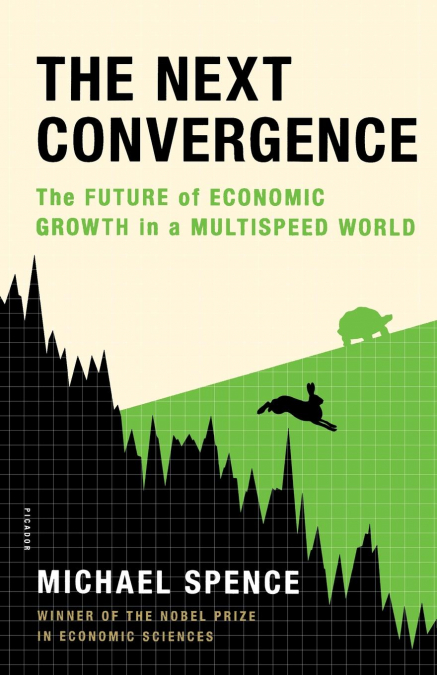
  • NEXT CONVERGENCE
    MICHAEL SPENCE
    ...
    Disponible

    17,21 €

  • Interest and Prices
    Michael Woodford
    With the collapse of the Bretton Woods system, any pretense of a connection of the world’s currencies to any real commodity has been abandoned. Yet since the 1980s, most central banks have abandoned money-growth targets as practical guidelines for monetary policy as well. How then can pure 'fiat' currencies be managed so as to create confidence in the stability of national unit...
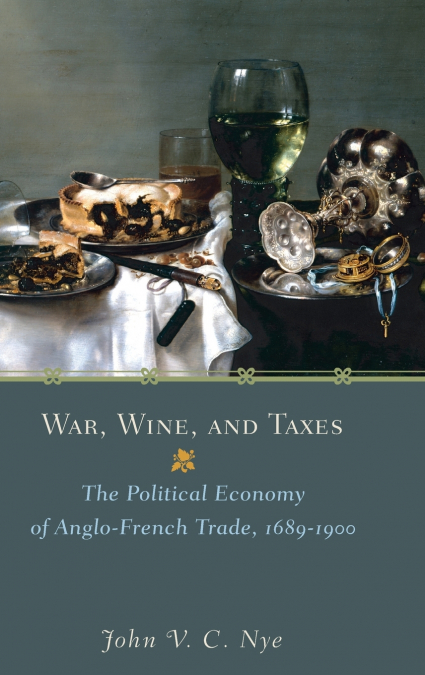
  • War, Wine, and Taxes
    John V.C. Nye
    In War, Wine, and Taxes, John Nye debunks the myth that Britain was a free-trade nation during and after the industrial revolution, by revealing how the British used tariffs-notably on French wine-as a mercantilist tool to politically weaken France and to respond to pressure from local brewers and others. The book reveals that Britain did not transform smoothly from a mercantil...
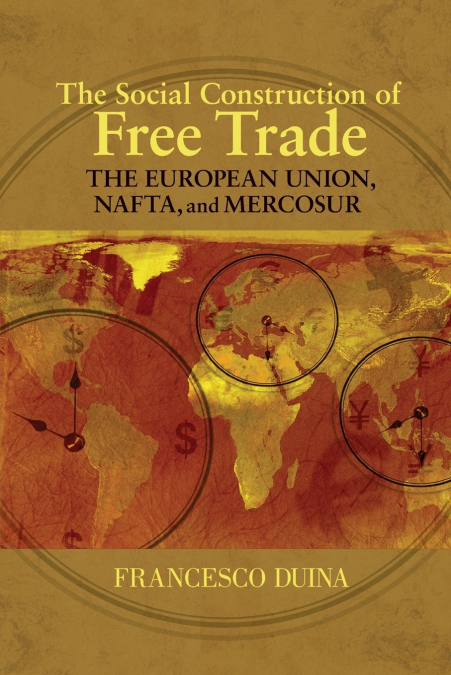
  • The Social Construction of Free Trade
    Francesco Duina
    This book offers a compelling new interpretation of the proliferation of regional trade agreements (RTAs) at the end of the twentieth century. Challenging the widespread assumption that RTAs should be seen as fundamentally similar economic initiatives to pursue free trade, Francesco Duina proposes that the world is reorganizing itself into regions that are highly distinctive an...
    Disponible

    54,25 €

Otros libros del autor

  • The Dollar Trap
    Eswar S. Prasad
    Why the dollar is-and will remain-the dominant global currencyThe U.S. dollar’s dominance seems under threat. The near collapse of the U.S. financial system in 2008-2009, political paralysis that has blocked effective policymaking, and emerging competitors such as the Chinese renminbi have heightened speculation about the dollar’s looming displacement as the main reserve curren...
    Disponible

    35,55 €