Fuzzy Cognitive Maps

Fuzzy Cognitive Maps

Michael Glykas

210,56 €
IVA incluido
Disponible
Editorial:
Springer Nature B.V.
Año de edición:
2012
Materia
Inteligencia artificial
ISBN:
9783642263989
210,56 €
IVA incluido
Disponible

Selecciona una librería:

  • Librería Samer Atenea
  • Librería Aciertas (Toledo)
  • Kálamo Books
  • Librería Perelló (Valencia)
  • Librería Elías (Asturias)
  • Donde los libros
  • Librería Kolima (Madrid)
  • Librería Proteo (Málaga)

This important edited volume is the first such book ever published on fuzzy cognitive maps (FCMs). Professor Michael Glykas has done an exceptional job in bringing together and editing its seventeen chapters. The volume appears nearly a quarter century after my original article 'Fuzzy Cognitive Maps' appeared in the International Journal of Man-Machine Studies in 1986. The volume accordingly reflects many years of research effort in the development of FCM theory and applications-and portends many more decades of FCM research and applications to come. FCMs are fuzzy feedback models of causality. They combine aspects of fuzzy logic, neural networks, semantic networks, expert systems, and nonlinear dynamical systems. That rich structure endows FCMs with their own complexity and lets them apply to a wide range of problems in engineering and in the soft and hard sciences. Their partial edge connections allow a user to directly represent causality as a matter of degree and to learn new edge strengths from training data. Their directed graph structure allows forward or what-if inferencing. FCM cycles or feedback paths allow for complex nonlinear dynamics. Control of FCM nonlinear dynamics can in many cases let the user encode and decode concept patterns as fixed-point attractors or limit cycles or perhaps as more exotic dynamical equilibria. These global equilibrium patterns are often 'hidden' in the nonlinear dynamics. The user will not likely see these global patterns by simply inspecting the local causal edges or nodes of large FCMs.

Artículos relacionados

  • Artificial Cognition Systems
    ...
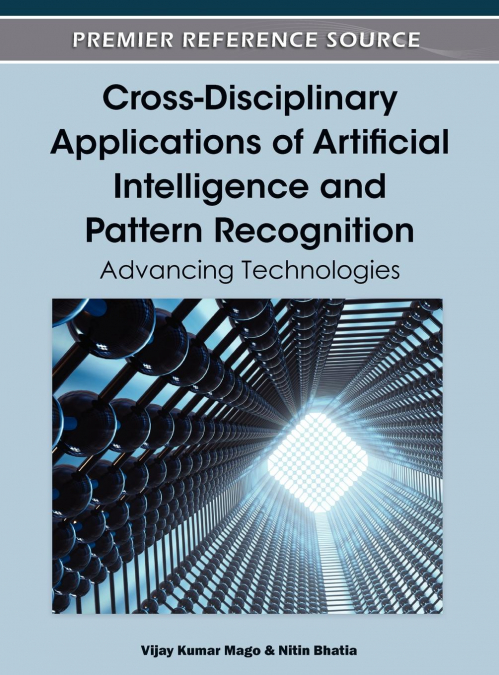
  • Cross-Disciplinary Applications of Artificial Intelligence and Pattern Recognition
    Vijay Kumar Mago
    The need for intelligent machines in areas such as medical diagnostics, biometric security systems, and image processing motivates researchers to develop and explore new techniques, algorithms, and applications in this evolving field. Cross-Disciplinary Applications of Artificial Intelligence and Pattern Recognition: Advancing Technologies provides a common platform for researc...
  • Emerging Applications of Natural Language Processing
    Over the last few years, the area of Natural Language Processing has drastically grown in recognition, not only within the research and development community, but also with industry professionals. As NLP continues to be discussed and researched, certain areas continue to grow and mature. As a result, the need for advanced research and information is in high demand. Emerging App...
  • Androids, Cyborgs, and Robots in Contemporary Culture and Society
    Steven John Thompson
    Mankind’s dependence on artificial intelligence and robotics is increasing rapidly as technology becomes more advanced. Finding a way to seamlessly intertwine these two worlds will help boost productivity in society and aid in a variety of ways in modern civilization. Androids, Cyborgs, and Robots in Contemporary Culture and Society is an essential scholarly resource that delve...
  • Deep Learning Innovations and Their Convergence With Big Data
    The expansion of digital data has transformed various sectors of business such as healthcare, industrial manufacturing, and transportation. A new way of solving business problems has emerged through the use of machine learning techniques in conjunction with big data analytics. Deep Learning Innovations and Their Convergence With Big Data is a pivotal reference for the latest sc...
  • Computational Psychoanalysis and Formal Bi-Logic Frameworks
    Giuseppe Iurato
    Computational psychoanalysis is a new field stemming from Freudian psychoanalysis. The new area aims to understand the primary formal structures and running mechanisms of the unconscious while implementing them into computer sciences. Computational Psychoanalysis and Formal Bi-Logic Frameworks provides emerging information on this new field which uses psychoanalysis and the unc...

Otros libros del autor

  • Business Process Management
    Michael Glykas
    Business Process Management (BPM) has been in existence for decades. It uses, complements, integrates and extends theories, methods and tools from other scientific disciplines like: strategic management, information technology, managerial accounting, operations management etc. During this period the main focus themes of researchers and professionals in BPM were: business pro...
    Disponible

    206,78 €

  • Business Process Management
    Michael Glykas
    Business Process Management (BPM) has been in existence for decades. It  uses, complements, integrates and extends theories, methods and tools from  other scientific disciplines like: strategic management, information technology, managerial accounting, operations management etc. During this period the main focus themes of researchers and professionals...