
Inicio > Sociedad y ciencias sociales > Sociología y antropología > Antropología > Frührömische Tierknochen aus der Neuen Residenz in Salzburg
Frührömische Tierknochen aus der Neuen Residenz in Salzburg

Frührömische Tierknochen aus der Neuen Residenz in Salzburg

Benjamin Wimmer

185,30 €
IVA incluido
Disponible
Editorial:
British Archaeological Reports (Oxford) Ltd
Año de edición:
2026
Materia
Antropología
ISBN:
9781407364001
185,30 €
IVA incluido
Disponible

Selecciona una librería:

  • Librería Samer Atenea

  • Kálamo Books
  • Librería Elías (Asturias)
  • Librería Kolima (Madrid)
  • Librería Proteo (Málaga)

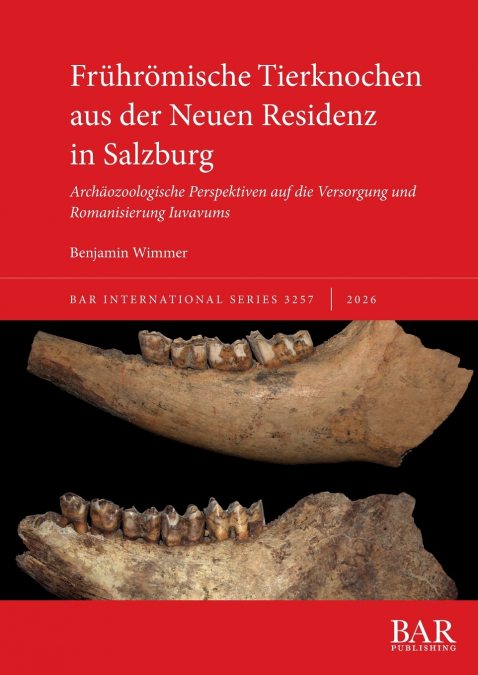
Die Siedlung Iuvavum (die heutige Stadt Salzburg in Österreich) war eines von wenigen urbanen Zentren in der römischen Provinz Noricum. Tierknochen aus den Schichten des ersten Jahrhunderts nach Christus im nördlichen Innenhof der „Neuen Residenz' ermöglichen eine detaillierte Beleuchtung der Tiernutzungs- und Versorgungsstrategien in einem zunehmenden urbanisierten Umfeld aus archäozoologischer Perspektive. In Kontinuität des eisenzeitlichen regionalen Musters überwiegen auch in frührömischer Zeit Reste von Rindern vor solchen von Schweinen und Schafen/Ziegen. Wildtiere spielten nur eine marginale Rolle in der Ernährung der Städter. Eine Zunahme von Rindern einer großen Bauform, Hunde und Pferde mit Körpergrößen, welche für die späte Eisenzeit noch ungewöhnlich waren, die Präsenz von Katzen, sowie ein nicht unbedeutender Anteil an Hausgeflügel weisen auf intensive Kontakte nach Süden. Auf einen Überblick zur Region und Fundstätte, eine Beschreibung der angewandten Methoden, sowie taphonomische Überlegungen folgen eine nach Tierarten gegliederte Analyse des Materials, sowie eine Synthese der Daten im regionalen Rahmen.The town of Iuvavum (the present-day city of Salzburg in Austria) was one of the few urban centres in the Roman province of Noricum. Faunal remains from layers dating to the 1st century AD in the northern courtyard of the 'Neue Residenz' permit a detailed zooarchaeological investigation of animal husbandry and supply strategies in an increasingly urbanised setting. Similar to the preceding Iron Age, cattle were the regionally predominant species in the Early Roman period. Pigs and sheep/goats played a substantial secondary role in feeding the town. Wild animals only contributed marginally to this endeavour. An increase in cattle of a large morphotype, dogs and horses of body sizes unusual for pre-Roman times, as well as the presence of cats and a non-negligible number of chickens indicate close contacts with the south. This book comprises an overview of the region and site, a description of the methods employed, and taphonomic considerations, followed by a species-by-species analysis, as well as a synthesis of the data within a regional framework.
Artículos relacionados

  • The jewish community in new england
    Keith Warwick
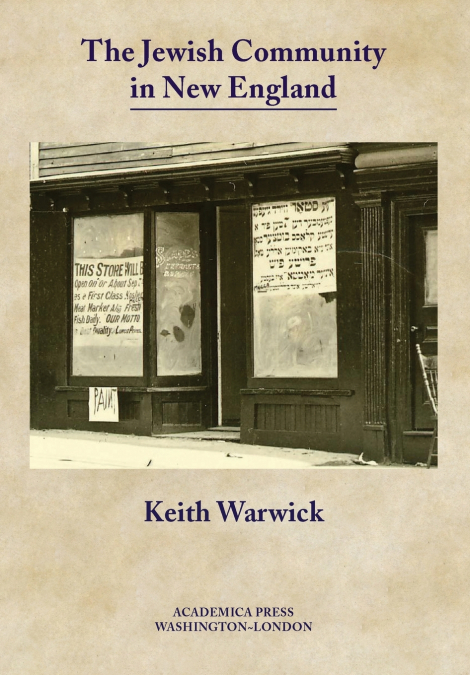
    The purpose of The Jewish Community in New England is to inform readers about the Jewish community in each of the six New England States: Rhode Island, Connecticut, Maine, Massachusetts, New Hampshire, and Vermont. Factual, inspirational, and poetic, it serves as a scholarly guide to institutions of Jewish life in this dynamic American region. Stocked with valuable information ...
  • Warfare in the Russian arctic
    Alexander K Nefedkin / Richard L Bland
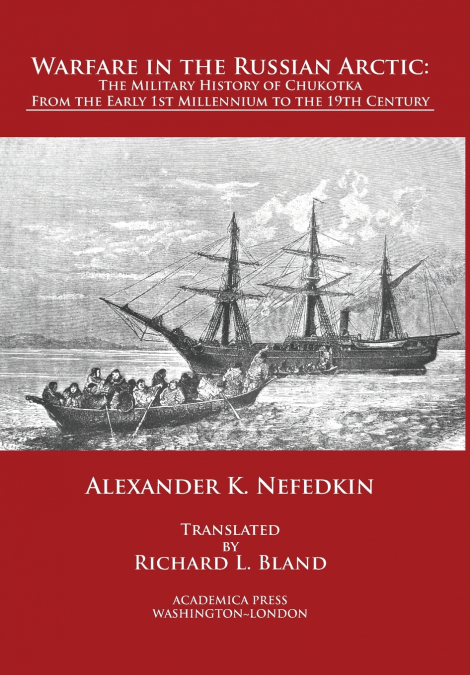
    Alexander Nefedkin’s highly original new book, translated by the noted American scholar Richard L. Bland, is devoted to the understudied topic of the military and military-political history of Chukotka, the far northeastern region of the Russian Federation, separated from Alaska by Bering Strait. This study is based on primary sources, including archaeological, folkloric, and d...
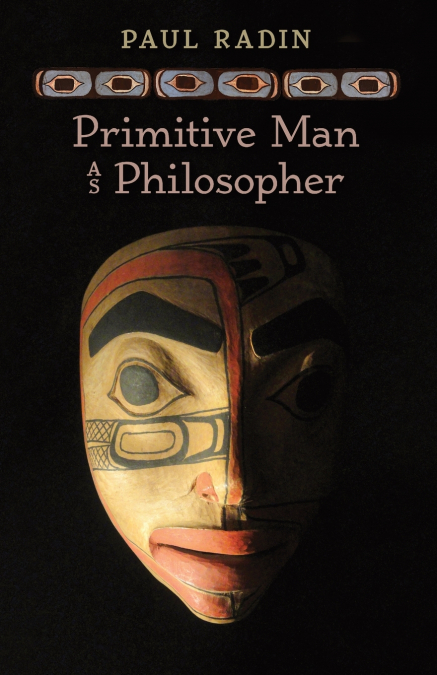
  • Primitive Man as Philosopher
    Paul Radin
    First published in 1927, Primitive Man as Philosopher represents a landmark in early anthropological studies. In this work, Paul Radin demonstrates the problematic nature of distinguishing between 'primitive' and 'civilized' cultures. He traces such ideas as the nature of Goodness and Truth, the meaning of life, and the reality of death across various cultures, highlighting how...
    Disponible

    26,72 €

  • The Economics of Population Growth
    Julian Lincoln Simon
    Comparison with stationary and very fast rates of population growth shows modern population grwoth to have long-run positive effects on the standards of living. This is Julian Simon’s contention, and he provides support for its validity in both more and less-developed countries. He notes that since each person constitutes a burden in the short run, whether population growth is ...
    Disponible

    167,62 €

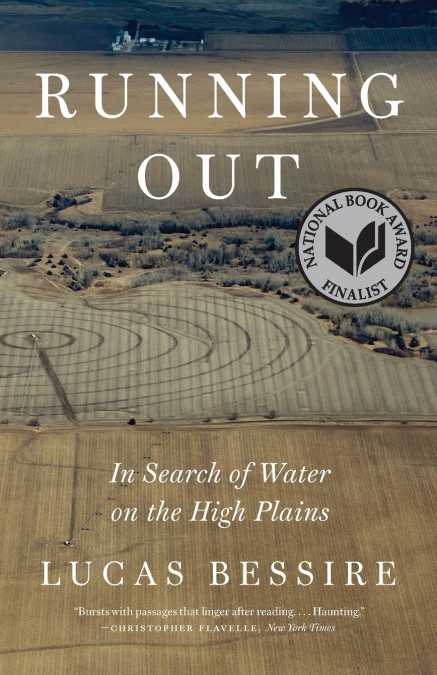
  • Running Out
    Lucas Bessire
    Finalist for the National Book AwardAn intimate reckoning with aquifer depletion in America’s heartlandThe Ogallala aquifer has nourished life on the American Great Plains for millennia. But less than a century of unsustainable irrigation farming has taxed much of the aquifer beyond repair. The imminent depletion of the Ogallala and other aquifers around the world is a defining...
    Disponible

    26,07 €

  • The Nation and Its Fragments
    Partha Chatterjee
    In this book, the prominent theorist Partha Chatterjee looks at the creative and powerful results of the nationalist imagination in Asia and Africa that are posited not on identity but on difference with the nationalism propagated by the West. Arguing that scholars have been mistaken in equating political nationalism with nationalism as such, he shows how anticolonialist nation...
    Disponible

    79,38 €