Inicio > Humanidades > Historia > Historia general y mundial > Franz Daniel Pastorius and Transatlantic Culture
Franz Daniel Pastorius and Transatlantic Culture

Franz Daniel Pastorius and Transatlantic Culture

Franz Daniel Pastorius and Transatlantic Culture

John Weaver

35,10 €
IVA incluido
Disponible
Editorial:
John Weaver
Año de edición:
2017
Materia
Historia general y mundial
ISBN:
9783000553080
35,10 €
IVA incluido
Disponible

Selecciona una librería:

  • Librería Samer Atenea
  • Librería Aciertas (Toledo)
  • Kálamo Books
  • Librería Perelló (Valencia)
  • Librería Elías (Asturias)
  • Donde los libros
  • Librería Kolima (Madrid)
  • Librería Proteo (Málaga)

This study provides a detailed introduction to Franz Daniel Pastorius in the context of his early life in Germany, delineating his bicultural perceptions and convictions as a jurist, classicist and radical social critic. It is based on his Pennsylvania correspondence, autobiographical writing, scholarship and poetry as well as documentary evidence and historical evaluation from innumerable German sources. Epigraphs from Pastorius’ writing and scholarship provide reflective commentary and highlight many of his intriguing epigrams and poems. A prologue describes Pastorius’ father Melchior Adam and his search for salvation in Hapsburg Europe. Chapter One examines contradictory approaches to Pastorius as a pious  and  pragmatic immigrant and scholar-poet, and portrays the Franconian and German culture of his youth, indicating historical reasons for his conversion to Lutheran Pietism in 1679 and his emigration in 1683.Chapter Two describes Pastorius’ childhood and youth, noting the vitality of his community and family life, and his disciplined growth from childhood spontaneity to an identity anticipating adult responsibilities as a Lutheran burgomaster’s son in the free imperial city of Windsheim. The chapter identifies tensions involving authoritarianism and latent resistance to authority especially in Pastorius’ Gymnasium schooling and in the complex relationship of father and son. Chapter Three traces his student career at Nürnberg and other German universities (1668-76), studying philosophy, language and law, and attaining a doctorate in civil and canon law. This academic milieu in the baroque era reveals learned compulsions related to the tensions of his upbringing. The chapter notes his courtly delights and cultural attainments as well as their social costs, and examines Pastorius’ commentary, including poetry and commonplace entries on esthetic pleasures, and satire and criticism epitomized in Gospel references to rich Dives and the beggar Lazarus. A detailed description of his mature poetry of flirtation and sensuality augments his fervent social criticism.Chapter Four presents Pastorius’ adult experience of Europe and America, describing the start of his law career during two years of strife in Windsheim (1677-79), when his family and friends helped to suppress a popular insurrection against abuses of oligarchic rule. It examines the complicity and guilt that led him to reject the home and community he dearly loved, and to join the learned Lutheran Pietists of Frankfurt am Main, and it describes the baroque tensions he continued to encounter as he practiced law in Frankfurt and the Palatinate and toured Europe (1679-83). His predictions of a European Armageddon (1683-84), reflecting these tensions, are explained on several levels, including the destructive potential of the era of the Thirty Years’ War and the 1688 Palatine Devastation. The chapter analyzes Pastorius’ reports and letters from Pennsylvania, in which he piously urges humane reforms and pragmatically describes the economy, politics and society of the province, often focusing on the Lenni Lenape or Delaware Indians. It examines his opposition to black slavery and to the exploitation of Native Americans (and related criticism of European cultural imperialism in India) as well as his praise of material and ethical satisfactions in the New World. This context illumines his personal maturation in Pennsylvania, a diverse and evolving culture with secular influences of neoclassicism and the Enlightenment.The study as a whole reflects Franconian and European culture through the prism of Pastorius’ Pennsylvania writings. Overall, his unique perspective provides a fresh critique of contemporaneous society, religion and politics.More at http://www.pastorius.info
Artículos relacionados

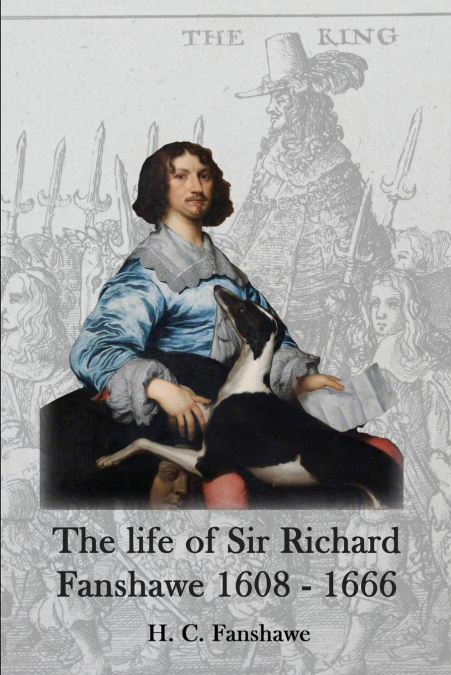
  • The life of Sir Richard Fanshawe, 1608 - 1666
    H C Fanshawe
    Sir Richard Fanshawe (1608-1666), was a diplomat, poet and linguist. As Ambassador to Spain and Portugal he negotiated the marriage of Charles II and Catherine of Braganza. He was also acclaimed for his poetry and his translations of Latin and European works such as the Lusiads by Luis de Camoes and Il Pastor Fido (the Faithful Shepherd) by Giovanni Battista Guarini. Sir Richar...
    Disponible

    17,51 €

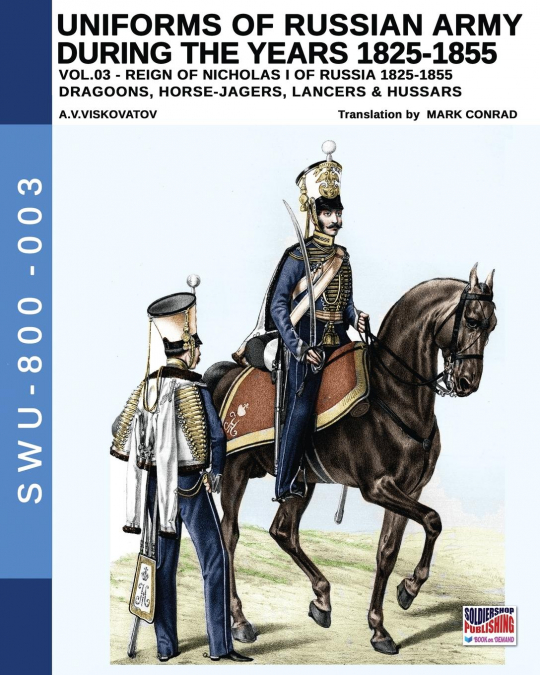
  • Uniforms of Russian Army during the years 1825-1855. Vol. 3
    Aleksandr Vasilevich Viskovatov / Mark Conrad
    This volume is related to the Russian Army during the zar Nicolas Ist era, and are about the uniforms cavalry in use from 1825 to 1855. Compiled at Saint Petersburg during the year from 1837 and 1851, the Historical Description of the Clothing and Arms of the Russian Army has had an enormous impact and great importance for the study on the history of Russian costume and uniform...
    Disponible

    52,04 €

  • Archaeology and Entomology in the Eastern Mediterranean
    Eva Panagiotakopulu
    ...
    Disponible

    74,97 €

  • Luoghi e Architetture della Transizione
    Maria Antonietta Breda
    I sistemi difensivi di confine e la protezione antiaerea nelle città. Storia conservazione riuso / Border defense system and air raid protection in the cities. History conservation reuseThis book collects the papers presented at the Second International Congress on Conoscenza e valorizzazione delle opere militari moderne - Knowledge and development of modern military structures...
    Disponible

    139,91 €

  • Le mura di Bergamo e l’esercito veneto fra 500 e 600
    Luca Stefano Cristini
    Correva l'Anno del Signore 1590. Così scriveva un soddisfatto e pago Alvise Grimani, l'allora comandante veneto della piazza di Bergamo, al termine dei lavori di realizzazione degli oltre cinque chilometri di mura porte e bastioni : 'La città è tutta serrata con baluardi e i suoi membri quasi tutti terrapienati, compite le piazze, i parapetti e le traverse per coprirsi ...
    Disponible

    36,31 €

  • Psychology of Revolution
    Gustave Lebon
    The present age is not merely an epoch of discovery; it is also a period of revision of the various elements of knowledge. Having recognised that there are no phenomena of which the first cause is still accessible, science has resumed the examination of her ancient certitudes, and has proved their fragility. To-day she sees her ancient principles vanishing one by one. ...

Otros libros del autor

  • Bounce Back Better
    John Weaver
    GET THE DREAD OUT OF YOUR HEAD!Speak to the freak of our adversary the devil, who presents a lot of noise trying to disrupt our poise. Each day we must speak victory over our lives, in the worst of any situation, declaring the promises of God according to God’s unfailing Word. Speaking the authenticated Word of God in faith will release his divine favor to win every spiritual b...
    Disponible

    10,68 €

  • Emmaus
    John Weaver
    This book is about discipleship and is a witness to God’s grace; seeing God in others and in creation; learning about God through church, scientific discovery, and theological education; preaching and pastoring; journeying with others; and teaching and exploring life and the world through theological reflection. The post-resurrection account of Jesus meeting two disciples on th...
    Disponible

    19,67 €

  • Emmaus
    John Weaver
    This book is about discipleship and is a witness to God’s grace; seeing God in others and in creation; learning about God through church, scientific discovery, and theological education; preaching and pastoring; journeying with others; and teaching and exploring life and the world through theological reflection. The post-resurrection account of Jesus meeting two disciples on th...
  • Technology, Management and the Evangelical Church
    John Weaver
    This book explores the technological innovations and management practices of evangelical Christian religions. Beginning from the late 19th century, the author examines the evangelical church’s increasing appropriation of business practices from the secular world as solutions to organizational problems. He notes especially the importance of the church growth movement and the ...
    Disponible

    93,48 €

  • The History of the Mimes and Pantomimes, With an Historical Account of Several Performers in Dancing, ... To Which Will be Added, a List of the Modern Entertainments That Have Been Exhibited on the En
    John Weaver
    The 18th century was a wealth of knowledge, exploration and rapidly growing technology and expanding record-keeping made possible by advances in the printing press. In its determination to preserve the century of revolution, Gale initiated a revolution of its own: digitization of epic proportions to preserve these invaluable works in the largest archive of its kind. Now for the...
  • Anatomical and Mechanical Lectures Upon Dancing. Wherein Rules and Institutions for That art are Laid Down and Demonstrated. As They Were Read at the Academy in Chancery Lane. By John Weaver,
    John Weaver
    The 18th century was a wealth of knowledge, exploration and rapidly growing technology and expanding record-keeping made possible by advances in the printing press. In its determination to preserve the century of revolution, Gale initiated a revolution of its own: digitization of epic proportions to preserve these invaluable works in the largest archive of its kind. Now for the...