Jean-Jacques Rousseau / Philip Dormer Stanhope Chesterfield (Ea
 Librería Samer Atenea
 Kálamo Books
 Librería Elías (Asturias)
 Librería Kolima (Madrid)
 Librería Proteo (Málaga)
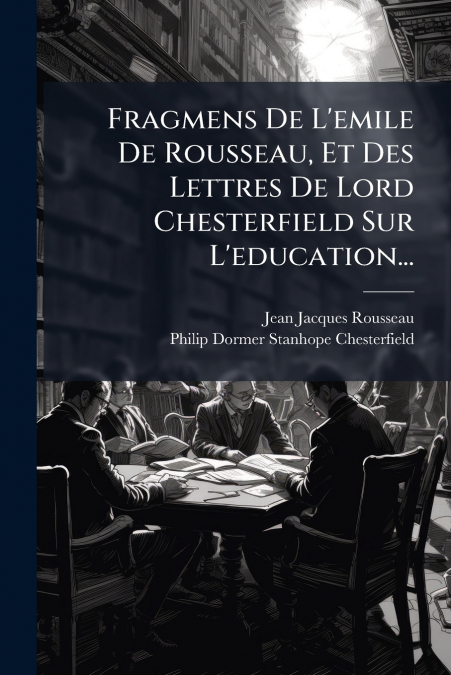
Fragmens De L’emile De Rousseau, Et Des Lettres De Lord Chesterfield Sur L’education... presents excerpts from Jean-Jacques Rousseau’s seminal work, 'Émile, or On Education,' alongside selections from Lord Chesterfield’s letters on education. This volume offers a comparative glimpse into two distinct yet influential philosophies of education prevalent in the 18th century. Rousseau’s 'Émile' advocates for a naturalistic approach to education, emphasizing the importance of cultivating a child’s innate potential through experience and freedom. Lord Chesterfield’s letters, on the other hand, provide practical advice on social graces, diplomacy, and the art of worldly success. Together, these fragments offer a rich tapestry of Enlightenment thought on the formation of character and intellect, inviting readers to consider the diverse paths to cultivating well-rounded individuals.This work has been selected by scholars as being culturally important, and is part of the knowledge base of civilization as we know it. This work was reproduced from the original artifact, and remains as true to the original work as possible. Therefore, you will see the original copyright references, library stamps (as most of these works have been housed in our most important libraries around the world), and other notations in the work.This work is in the public domain in the United States of America, and possibly other nations. Within the United States, you may freely copy and distribute this work, as no entity (individual or corporate) has a copyright on the body of the work.As a reproduction of a historical artifact, this work may contain missing or blurred pages, poor pictures, errant marks, etc. Scholars believe, and we concur, that this work is important enough to be preserved, reproduced, and made generally available to the public. We appreciate your support of the preservation process, and thank you for being an important part of keeping this knowledge alive and relevant.