 Librería Samer Atenea
 Kálamo Books
 Librería Elías (Asturias)
 Librería Kolima (Madrid)
 Librería Proteo (Málaga)
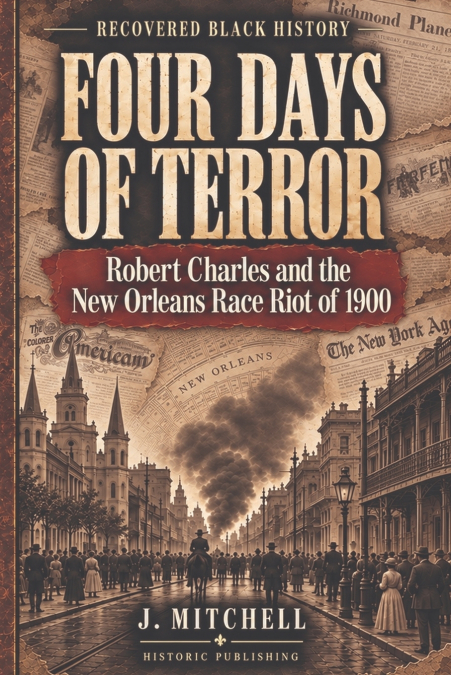
Four days. A disputed police encounter. A manhunt. A city overtaken by racial violence.In July 1900, New Orleans entered four days of crisis after a late-night encounter between police and Robert Charles, a Black laborer and advocate of Black emigration. Gunfire left Charles and a police officer wounded. Hours later, two officers were dead, Charles was on the run, and authorities launched a citywide search.But the hunt for one armed man quickly became something larger.White crowds gathered, armed themselves, and attacked Black residents who had no connection to Charles or the shootings. Streetcar passengers, workers, families, and people simply trying to reach their homes became targets. Homes were attacked, residents were wounded and killed, and the violence eventually reached the Thomy Lafon School, an important institution for Black children. On July 27, police finally located Charles on Saratoga Street, where a prolonged siege ended with his death and the abuse of his body by members of the crowd.Four Days of Terror reconstructs the crisis through the surviving historical record rather than through legend. Drawing on Ida B. Wells-Barnett’s Mob Rule in New Orleans, contemporary newspaper accounts, public records, and later scholarship, J. Mitchell examines not only what happened, but how the story was reported, remembered, disputed, and sometimes forgotten.The book does not reduce Robert Charles to either hero or villain. Nor does it erase the officers and civilians he killed. Instead, it asks harder questions: Who held legal authority? Who received protection? Why were uninvolved Black residents punished for another man’s actions? Whose testimony was believed? And why did some victims remain at the margins of public memory for more than a century?Part of the Recovered Black History series, this concise, source-driven history includes a detailed chronology, profiles of key people, extensive notes, and an essay explaining where the historical sources agree, where they conflict, and what remains unresolved.