
Fotoprotezione nelle piante

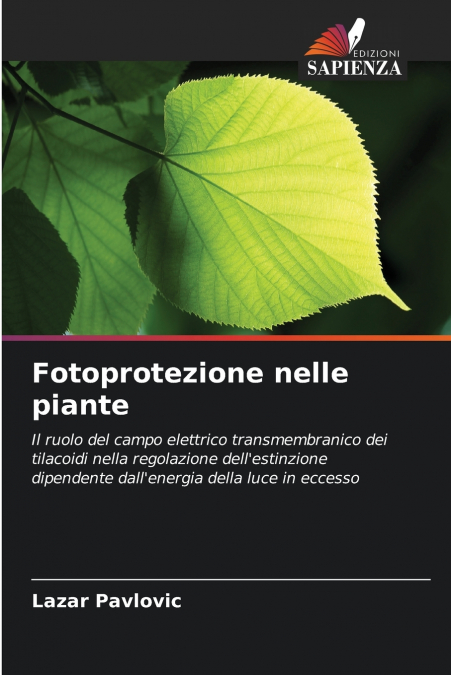
Fotoprotezione nelle piante

Lazar Pavlovic

119,59 €
IVA incluido
Disponible
Editorial:
KS OmniScriptum Publishing
Año de edición:
2025
Materia
Biologia, ciencias de la vida
ISBN:
9786208935894
119,59 €
IVA incluido
Disponible

Selecciona una librería:

  • Librería Samer Atenea
  • Librería Aciertas (Toledo)
  • Kálamo Books
  • Librería Perelló (Valencia)
  • Librería Elías (Asturias)
  • Donde los libros
  • Librería Kolima (Madrid)
  • Librería Proteo (Málaga)

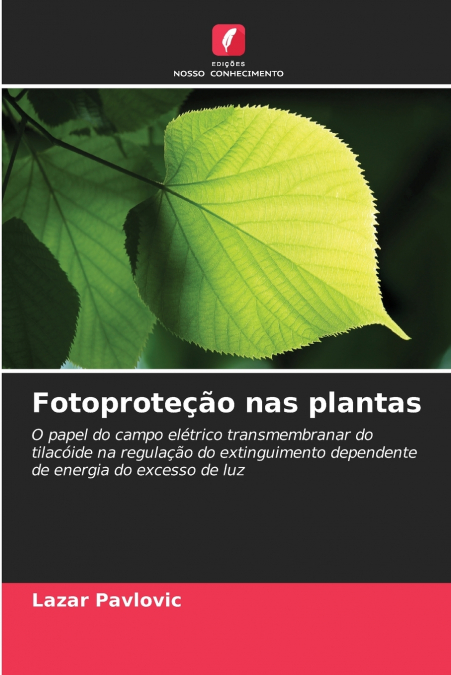
Le piante, come tutti gli organismi fotosintetici, dipendono dall’energia luminosa assorbita dal sole per la sopravvivenza, la crescita e la riproduzione. Periodicamente, le piante assorbono luce a livelli che superano la fotosintesi efficiente in condizioni di luce relativamente limitate. La luce in eccesso deve essere convertita in calore per ridurre al minimo lo stress luminoso e il fotodanneggiamento. L’estinzione non fotochimica dipendente dall’energia (qE) è un meccanismo di difesa biochimico che converte efficacemente la luce in eccesso in calore e limita gli effetti dello stress luminoso a breve termine. Come viene regolata questa estinzione dipendente dall’energia e quali sono i principali fattori coinvolti? L’autore, il dottor Lazar Pavlovic, fornisce una panoramica delle attuali conoscenze scientifiche sull’argomento. Presenta quindi una ricerca originale che è stata pubblicata in parte e indaga il ruolo del campo elettrico attraverso la membrana tilacoidale del cloroplasto e altri fattori che regolano il qE. I risultati di questo lavoro hanno implicazioni dirette sugli sforzi di selezione applicata per migliorare la produzione di biomassa nelle colture alimentari e non alimentari. Il libro è rivolto a biochimici vegetali, selezionatori di colture e altri professionisti nel campo delle scienze vegetali.

Artículos relacionados

  • Viral Replication Complexes
    Viruses are obligate intracellular parasites that need to co-opt a living cell’s machinery for replication. At the heart of the viral replication machinery are the nucleic acid polymerases, which are responsible for efficiently copying the viral genome. This process must often be coordinated with other viral processes, including protein translation and viral packaging. The poly...
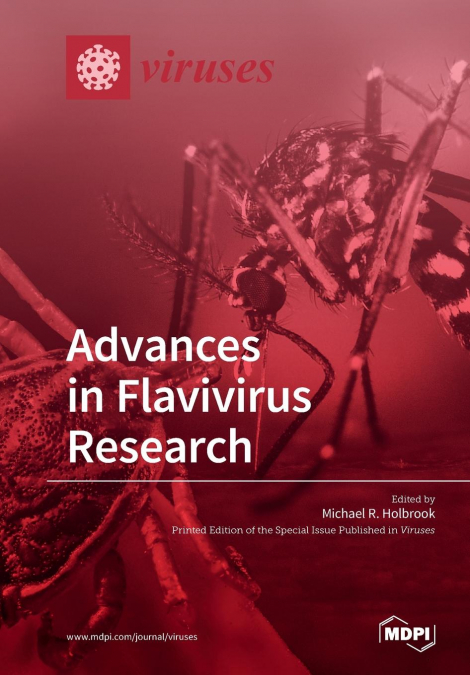
  • Advances in Flavivirus Research
    The flaviviruses are composed almost entirely of arthropod-borne viruses, a subset of which are responsible for millions of cases of human disease each year. Among these viruses are dengue virus—a scourge throughout the tropical regions of Asia and the Americas; yellow fever virus—the “original” hemorrhagic fever virus; and the recently emerged Zika virus. While the flaviviruse...
    Disponible

    51,85 €

  • Brain Asymmetry of Structure and/or Function
    Lesley J. Rogers / Lesley JRogers
    This edited book brings together research reports on the asymmetry of brain function in various species, including humans, dogs, birds, lizards and bees. As shown in a wide range of species, and, as we now know, not solely in humans, the left and right sides of the brain process information in different ways and control different responses or patterns of behaviour. Since this d...
    Disponible

    51,71 €

  • Fungal Pigments
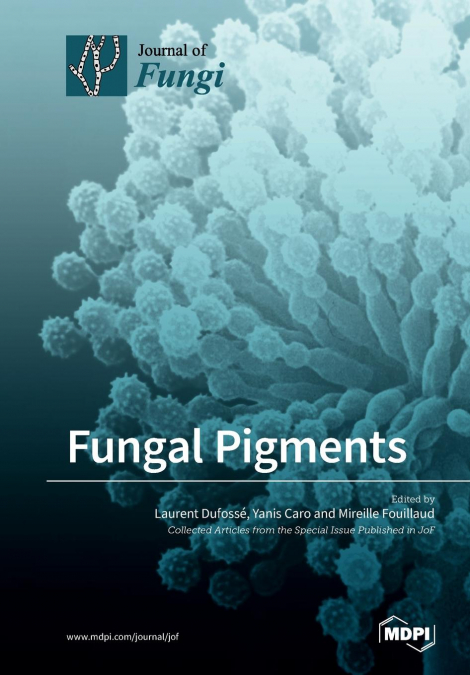
    With the impact of globalization in research trends, the search for healthier life styles, the increasing public demand for natural, organic, and ‘clean labelled’ products, as well as the growing global market for natural colorants in economically fast-growing countries all over the world, filamentous fungi started to be investigated as readily available sources of chemically d...
    Disponible

    43,80 €

  • The Epithelialto- Mesenchymal Transition ( EMT ) in Cancer
    Joëlle Roche
    The epithelial-to-mesenchymal transition (EMT) is a highly dynamic process with multiple transitional states, by which epithelial cells can convert into a mesenchymal phenotype. This process involves loss of cellular adhesion and cellular polarity, and an improvement in migratory and invasive properties. It occurs during normal embryonic development, tissue regeneration, organ ...
    Disponible

    67,86 €

  • The Biology and Treatment of Myeloid Leukaemias
    There has been an observed decrease in the global mortality from cancer, mostly atributable to improved, particularly early, detection and prevention. For many carcinomas and leukaemias in adults, once the disease has reached a certain stage there are no therapies that are able to erradicate the cancer cells and cure patients. There has been progress in the treatment of acute m...
    Disponible

    51,85 €

Otros libros del autor

  • Fotoproteção nas plantas
    Lazar Pavlovic
    As plantas, como todos os organismos fotossintéticos, dependem da energia luminosa absorvida do sol para sobreviver, crescer e se reproduzir. Periodicamente, as plantas absorvem luz em níveis que excedem a fotossíntese eficiente em condições de luz relativamente limitadas. O excesso de luz deve ser convertido em calor para minimizar o stress luminoso e os danos causados pela lu...
    Disponible

    119,59 €

  • Lichtschutz bei Pflanzen
    Lazar Pavlovic
    Pflanzen sind wie alle photosynthetischen Organismen für ihr Überleben, ihr Wachstum und ihre Fortpflanzung auf die von der Sonne absorbierte Lichtenergie angewiesen. In regelmäßigen Abständen absorbieren Pflanzen Licht in Mengen, die unter relativ begrenzten Lichtbedingungen die effiziente Photosynthese übersteigen. Überschüssiges Licht muss in Wärme umgewandelt werden, um Lic...
    Disponible

    119,57 €

  • Fotoprotekcja u roślin
    Lazar Pavlovic
    Rośliny, podobnie jak wszystkie organizmy fotosyntetyzujące, są uzależnione od energii świetlnej pochłanianej ze słońca, aby przetrwać, rosnąć i rozmnażać się. Okresowo rośliny pochłaniają światło na poziomach przekraczających wydajną fotosyntezę w stosunkowo ograniczonych warunkach świetlnych. Nadmiar światła musi zostać przekształcony w ciepło, aby zminimalizować stres świetl...
    Disponible

    119,59 €

  • Photoprotection chez les plantes
    Lazar Pavlovic
    Les plantes, comme tous les organismes photosynthétiques, dépendent de l’énergie lumineuse absorbée du soleil pour leur survie, leur croissance et leur reproduction. Périodiquement, les plantes absorbent de la lumière à des niveaux qui dépassent la photosynthèse efficace dans des conditions de lumière relativement limitées. L’excès de lumière doit être converti en chaleur afin ...
    Disponible

    119,58 €