
Inicio > Medicina > Otras ramas de la medicina > Farmacología > Fortschritte der Chemie Organischer Naturstoffe / Progress in the Chemistry of Organic Natural Products
Fortschritte der Chemie Organischer Naturstoffe / Progress in the Chemistry of Organic Natural Products

Fortschritte der Chemie Organischer Naturstoffe / Progress in the Chemistry of Organic Natural Products


65,22 €
IVA incluido
Disponible
Editorial:
Springer Nature B.V.
Año de edición:
2011
Materia
Farmacología
ISBN:
9783709171257
65,22 €
IVA incluido
Disponible

Selecciona una librería:

  • Librería Samer Atenea
  • Librería Aciertas (Toledo)
  • Kálamo Books
  • Librería Perelló (Valencia)
  • Librería Elías (Asturias)
  • Donde los libros
  • Librería Kolima (Madrid)
  • Librería Proteo (Málaga)

The cyanogenic glycosides, here defined as glycosidic derivatives of iX-hydroxynitriles, represent a rather limited class of natural products, which are widely distributed in the plant kingdom and, to a small ex­ tent, even in animals. A characteristic feature of these glycosides is their ability to release hydrocyanic acid on treatment with dilute acids or appropriate enzymes. The term 'cyanogenic' is used to designate this property, regardless of whether pure substances, plants, or animals, are serving as the source. In the latter cases the term 'cyanophoric' is occasionally employed synonymously. Cyanogenesis in plants was probably first discovered by SCHRADER in 1803 (Io3) working with bitter almonds. In 1830, ROBIQUET and BOUTRON-CHARLARD (IOO) succeeded in isolating the parent glycoside, namely amygdalin. Over the years, a total of 18 cyanogenic glycosides have been isolated and characterized more or less completely (Table I, p. 76). It will be noted that the majority of these compounds has been isolated in the era of classical organic chemistry and that progress in .discovering new compounds, not to mention new structural types, has been surprisingly slow. It is worth remembering here that the mechanism ·of cyanogenesis has been established only in the minority of known cyanogenic species. The cyanogenic glycosides have last been reviewed in 1958 by DILLE­ MANN (36). Since then, no complete reviews in this field have appeared. It is the purpose of the present article to survey the more recent ad­ vances and, hopefully, to stimulate continued interest in these interesting .compounds.
Artículos relacionados

  • Identification and Characterization of Antimicrobial Peptides with Therapeutic Potential
    Guangshun Wang
    Antimicrobial peptides are key defense molecules adopted by all life forms to prevent infection. They also have other beneficial effects such as boosting immune response, anticancer, and wound healing. The antiviral effects of antimicrobial peptides have laid the foundations for developing new agents to combat seasonal Flu, HIV-1, RSV, Zika, and Ebola. This eBook is constructed...
    Disponible

    67,96 €

  • Mind Maps of Clinical Research Basics
    Amrita Akhouri
    The concepts of Clinical Research have been depicted through mind maps in this book which makes the subject fundamentals very easy to understand and convenient to revise. The chapter on career in clinical research gives an insight into the main job roles currently known in this field along with the focus on how to build preparedness for job interviews. Hence, this book will be ...
    Disponible

    25,42 €

  • Marine Polysaccharides Volume 2
    Paola Laurienzo
    The field of marine polysaccharides is constantly evolving, due to progress in the discovery and production of new marine polysaccharides. Seaweed remains the most abundant source of polysaccharides, but recent advances in biotechnology have allowed the production of large quantities of polysaccharides from a variety of micro-algae, by controlling growth conditions and tailorin...
    Disponible

    75,84 €

  • Marine Polysaccharides Volume 3
    Paola Laurienzo
    The field of marine polysaccharides is constantly evolving, due to progress in the discovery and production of new marine polysaccharides. Seaweed remains the most abundant source of polysaccharides, but recent advances in biotechnology have allowed the production of large quantities of polysaccharides from a variety of micro-algae, by controlling growth conditions and tailorin...
    Disponible

    116,84 €

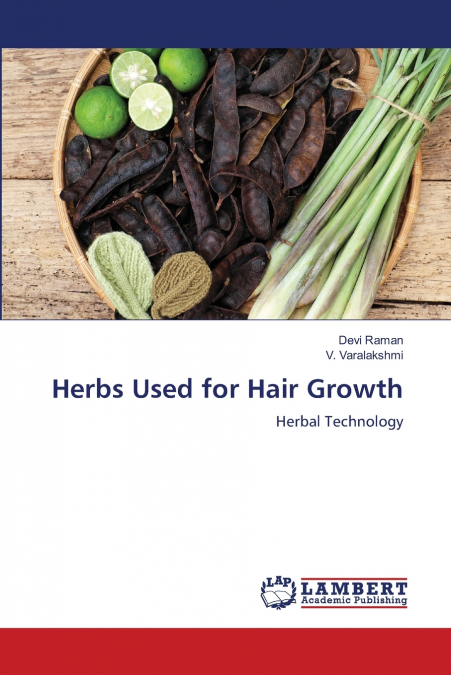
  • Herbs Used for Hair Growth
    Devi Raman / V. Varalakshmi
    Natural medicine has many benefits, from nourishing the scalp to stimulating hair follicles. Some popular herbs that aid hair growth include rosemary, ginseng, aloe vera, and fenugreek. Each plant has unique properties that help strengthen hair, prevent breakage, and promote growth, healthy growth. Of course, many herbs are popular for their beneficial effects in promoting hair...
    Disponible

    54,32 €

  • Novel Anti-proliferative Agents
    Valentina Onnis
    This Special Issue of Pharmaceuticals presented the recent findings on antiproliferative compounds and highlighted possible routes to discover new drugs used to treat cancer. In this Special Issue, different studies on kinase and methyltransferase-like proteins 3 inhibitors and compounds capable of altering the tumor microenvironment or acting at the mitotic stage of the cell c...