Inicio > Matemáticas y ciencia > Química > Química orgánica > Fortschritte der Chemie organischer Naturstoffe / Progress in the Chemistry of Organic Natural Products, Vol. 93
Fortschritte der Chemie organischer Naturstoffe / Progress in the Chemistry of Organic Natural Products, Vol. 93

Fortschritte der Chemie organischer Naturstoffe / Progress in the Chemistry of Organic Natural Products, Vol. 93

Mahendra Sahai

271,49 €
IVA incluido
Disponible
Editorial:
Springer Nature B.V.
Año de edición:
2012
Materia
Química orgánica
ISBN:
9783709111079
271,49 €
IVA incluido
Disponible

Selecciona una librería:

  • Librería Samer Atenea
  • Librería Aciertas (Toledo)
  • Kálamo Books
  • Librería Perelló (Valencia)
  • Librería Elías (Asturias)
  • Donde los libros
  • Librería Kolima (Madrid)
  • Librería Proteo (Málaga)

Lignans, by convention, are a group of natural products that are formed by linking two phenylpropanoid units (C C units) by oxidative coupling. Most importantly, in 6 3 a lignan, two (C C units) are bound through the central carbon of their side chains, 6 3 0 i. e. the 8 and 8 positions (1, 2). The occurrence of C C -dimers, linked at sites other 6 3 0 than the 8-8 positions, is also known and these compounds have been termed neolignans (3, 4). As these two groups of compounds have close structural as well as biosynthetic relationships, they are often associated together and incorporated under the general term 'lignan' (5). The diverse structural categorization of true lignans and of a few neolignans is presented in Fig. 1. Through the years, several review articles or books covering different facets of lignans, including their ch- istry (6, 7), biogenesis (8), synthesis (9), and biological activities (10) have been published. Enduring research for the investigation of secondary metabolites of plants has evidenced some compounds that are biogenetically related to true lignans or neolignans but bear some features not discerned in conventional lignans. These compounds or groups of compounds have been termed as 'non-conventional lignans', and include coumarinolignans, ?avonolignans, and stilbenolignans. The non-conventional lignans, like the conventional ones, have two C C units linked 6 3 together but have additional structural features to place them also under the category of coumarins, ?avonoids, or stilbenes.
Artículos relacionados

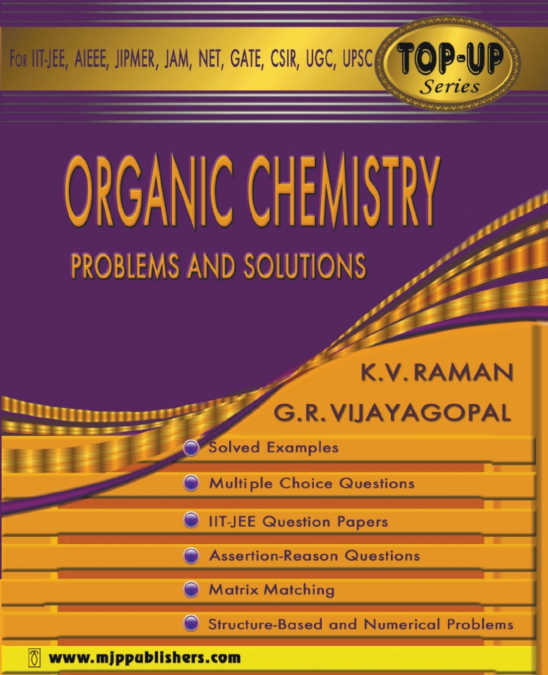
  • Organic Chemistry Problems and Solutions
    G.R. Vijayagopal / V. Raman K.
    In the competitive world of entrance examinations for premier engineering and medical institutions, mastering the art of problem-solving is crucial. This book serves as a beacon for students aiming to secure their places in prestigious institutions such as IITs, CSIR laboratories, IISc, and top medical colleges through examinations like IIT-JEE, AIEEE, JIPMER, JAM, CSIR, NET, G...
    Disponible

    46,17 €

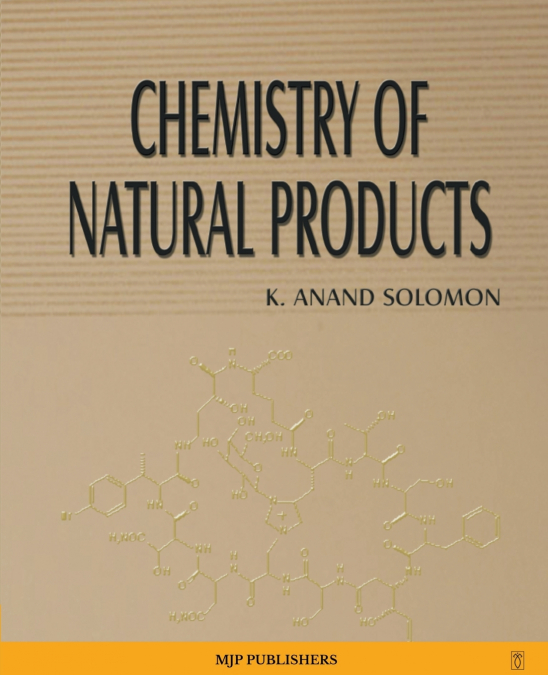
  • CHEMISTRY OF NATURAL PRODUCTS
    K. Anand Solomon
    'Chemistry of Natural Products' opens a window to the profound impact that natural products, derived from both plant and animal origins, have on human life. This book is meticulously crafted to illuminate the fascinating journey from the isolation and characterization of these natural compounds to understanding their biological and pharmacological activities. Aimed at students ...
    Disponible

    23,96 €

  • QUALITATIVE AND QUANTITATIVE ANALYSIS OF PHYTOCHEMICALS
    Mital Soni / Vijay Ram
    Kachchh district’s unique geographic features, situated near the Tropic of Cancer and encompassing one of Gujarat’s Gulfs, result in diverse environmental conditions throughout the year. The region, predominantly rural, is rich in traditional plant-based folk medicine, reflecting its high biodiversity and ecological value. Understanding the therapeutic potential of medicinal pl...
    Disponible

    54,25 €

  • The Emergence of Life
    Pier Luigi Luisi
    ...
  • Understanding Organic Reaction Mechanisms
    Adam Jacobs
    ...
    Disponible

    147,51 €

  • Synthese von (-) -Pyrenophorol, Bewertung von Heterozyklen gegen Krebs
    PERUGU EDUKONDALU
    Die Totalsynthese von (-)-Pyrenophorol mit hoher Enantioselektivität wurde durchgeführt, wobei die Stereozentren durch hydrolytische kinetische Jacobsen-Auflösung und asymmetrische Sharpless-Dihydroxylierung etabliert wurden und die Zyklisierung durch intermolekulare Mitsunobu-Zyklisierung erreicht wurde. Die Verbindung 90b mit der elektronenspendenden 3,4,5-Trimethoxygruppe am...
    Disponible

    84,90 €