 Librería Samer Atenea
 Kálamo Books
 Librería Elías (Asturias)
 Librería Kolima (Madrid)
 Librería Proteo (Málaga)
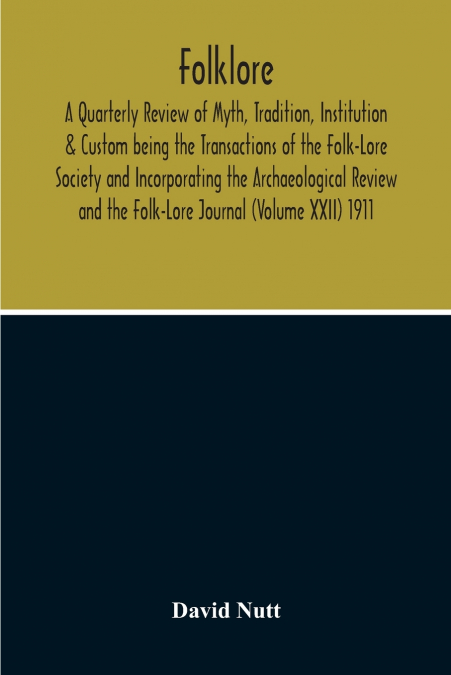
A living archive of belief and practice - where village lore meets scholarly method.Old myths, new scholarly eyes.Folklore: A Quarterly Review of Myth, Tradition, Institution & Custom (Volume XXII, 1911) gathers the Transactions of the Folk-Lore Society and incorporates material from the Archaeological Review and the Folk-Lore Journal, creating a landmark folklore society anthology and a myth and tradition review. The collection ranges from careful field notes and antiquarian observation to comparative essays that place local rites in a wider cultural map. Readers encounter studies of customs and rituals history, surveys of superstition and seasonal custom, and a broad folk beliefs collection that speaks to social habit as much as to belief. Designed for both readable interest and scholarly use, the volume supports academic folklore research while remaining a lively British folklore quarterly; it is equally useful to students of comparative mythology studies, local historians, and imaginative readers drawn to the textures of past lives.Out of print for decades and now republished by Alpha Editions. Restored for today’s and future generations. More than a reprint - a collector’s item and a cultural treasure. Beyond immediate interest, the volume is an important historical witness to early 20th century folklore practice and to Edwardian England culture: it records scholarly methods and popular concerns as they stood in 1911, and it charts the ways archaeology, philology and local enquiry intersected in contemporary research. For academic and amateur alike, this folk-lore journal volume functions as a durable reference for folklorists and as raw material for comparative mythology studies and archaeological review scholarship. Casual readers will be intrigued by vivid accounts of seasonal observance and community custom; classic-literature collectors will prize the authentic period tone and archival provenance. Republished with care, the book belongs on the shelves of public libraries, university departments and private collections that value primary sources in cultural history.