
Fluoride in Drinking Water

Fluoride in Drinking Water

AA.VV

68,59 €
IVA incluido
Disponible
Editorial:
National Academies Press
Año de edición:
2006
ISBN:
9780309101288
68,59 €
IVA incluido
Disponible

Selecciona una librería:

  • Librería Samer Atenea
  • Librería Aciertas (Toledo)
  • Kálamo Books
  • Librería Perelló (Valencia)
  • Librería Elías (Asturias)
  • Donde los libros
  • Librería Kolima (Madrid)
  • Librería Proteo (Málaga)

Most people associate fluoride with the practice of intentionally adding fluoride to public drinking water supplies for the prevention of tooth decay. However, fluoride can also enter public water systems from natural sources, including runoff from the weathering of fluoride-containing rocks and soils and leaching from soil into groundwater. Fluoride pollution from various industrial emissions can also contaminate water supplies. In a few areas of the United States fluoride concentrations in water are much higher than normal, mostly from natural sources. Fluoride is one of the drinking water contaminants regulated by the U.S. Environmental Protection Agency (EPA) because it can occur at these toxic levels. In 1986, the EPA established a maximum allowable concentration for fluoride in drinking water of 4 milligrams per liter, a guideline designed to prevent the public from being exposed to harmful levels of fluoride. Fluoride in Drinking Water reviews research on various health effects from exposure to fluoride, including studies conducted in the last 10 years.
Artículos relacionados

  • Agua, derechos humanos y gobernanzas
    Mauricio Madrigal Pérez
    Agua, derechos humanos y gobernanzas busca ampliar la comprensión del nexo entre estos tres elementos a partir de la integración de una serie de categorías transversales como la bioculturalidad, los conflictos ambientales y la democracia ambiental. Desde allí, formula un mecanismo de evaluación de la gobernanza del agua con el enfoque de los derechos humanos, un mecanismo que s...
    Disponible

    22,83 €

  • Spacecraft Water Exposure Guidelines for Selected Contaminants
    The International Space Station is a closed and complex environment, so some contamination of its internal atmosphere and water system is expected. To protect space crews from contaminants in potable and hygiene water, the National Aeronautics and Space Administration (NASA) requested that the National Research Council (NRC) provide guidance on how to develop water exposure gui...
    Disponible

    134,16 €

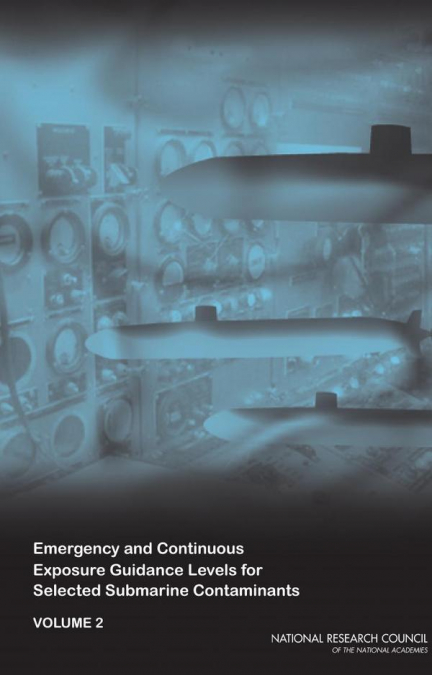
  • Emergency and Continuous Exposure Guidance Levels for Selected Submarine Contaminants
    U.S. Navy personnel who work on submarines are in an enclosed and isolated environment for days or weeks at a time when at sea. To protect workers from potential adverse health effects due to those conditions, the U.S. Navy has established exposure guidance levels for a number of contaminants. In this latest report in a series, the Navy asked the National Research Council (NRC)...
    Disponible

    82,16 €

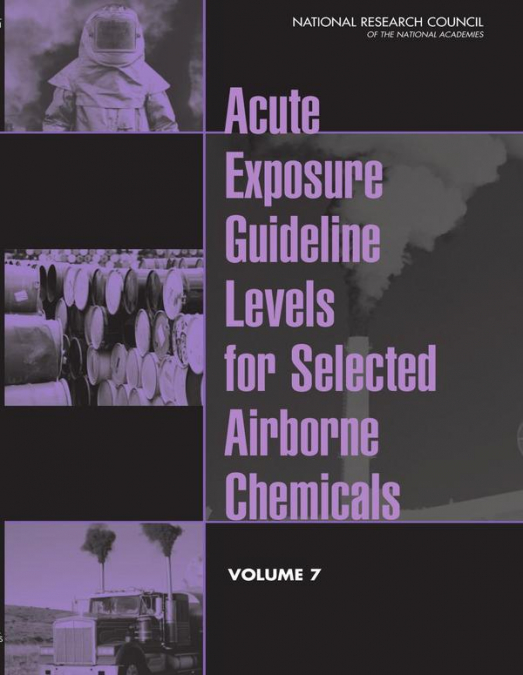
  • Acute Exposure Guideline Levels for Selected Airborne Chemicals
    This book is the seventh volume in the series Acute Exposure Guideline Levels for Selected Airborne Chemicals, and includes AEGLs for acetone cyanohydrin, carbon disulfide, monochloroacetic acid, and phenol. At the request of the Department of Defense, the National Research Council has reviewed the relevant scientific literature compiled by an expert panel and established Acute...
    Disponible

    65,00 €

  • Phthalates and Cumulative Risk Assessment
    People are exposed to a variety of chemicals throughout their daily lives. To protect public health, regulators use risk assessments to examine the effects of chemical exposures. This book provides guidance for assessing the risk of phthalates, chemicals found in many consumer products that have been shown to affect the development of the male reproductive system of laboratory ...
    Disponible

    57,15 €

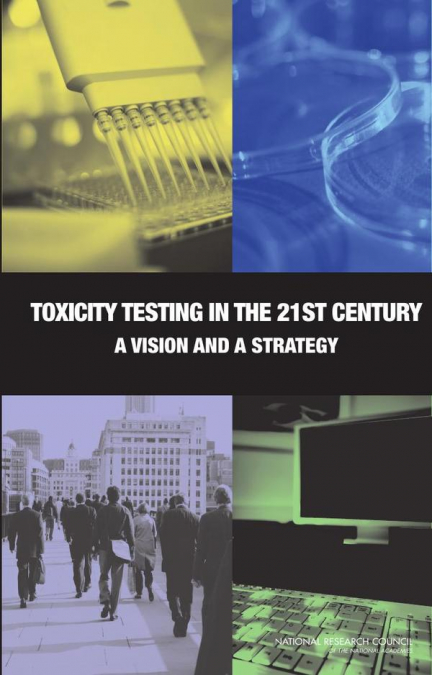
  • Toxicity Testing in the 21st Century
    Advances in molecular biology and toxicology are paving the way for major improvements in the evaluation of the hazards posed by the large number of chemicals found at low levels in the environment. The National Research Council was asked by the U.S. Environmental Protection Agency to review the state of the science and create a far-reaching vision for the future of toxicity te...
    Disponible

    44,67 €