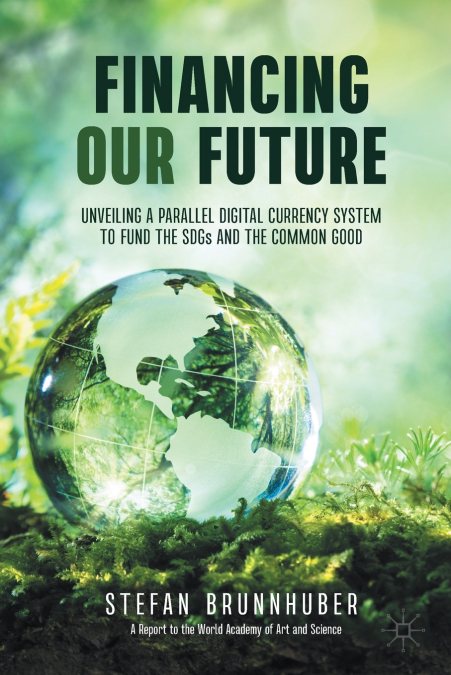

Financing Our Future

Financing Our Future

Stefan Brunnhuber

41,46 €
IVA incluido
Disponible
Editorial:
Springer Nature B.V.
Año de edición:
2022
Materia
Macroeconomía
ISBN:
9783030648282
41,46 €
IVA incluido
Disponible

Selecciona una librería:

  • Librería Desdémona
  • Librería Samer Atenea
  • Librería Aciertas (Toledo)
  • Kálamo Books
  • Librería Perelló (Valencia)
  • Librería Elías (Asturias)
  • Donde los libros
  • Librería Kolima (Madrid)
  • Librería Proteo (Málaga)

The monetary system is the indispensable missing link in the debate of sustainability, and whether the current financial system can handle these evolved needs. To date, the UN Sustainable Development Goals (SDGs) primarily have been financed either through the private sector, through conventional public sector taxes and fees, or through philanthropic commitment. Assuming a need of 4 to 5 trillion dollars annually in the 10 to 15 years left to finance our future, these conventional sources of finance are insufficient in terms of both the scale and speed of funding required to finance our future. Furthermore, the inherent instability of our financial system forces the world community to focus first and foremost on repairing and stabilizing the existing system.The development of cryptocurrencies using distributed ledger technologies (mainly blockchain) has prompted leading central banks to study the potential application of this approach to independently create purchasing power. In this vein, this book offers a new approach, namely introducing a parallel electronic currency specifically designed to finance global common goods and provide the resources necessary to achieve the SDGs. Furthermore, this mechanism would have a stabilizing effect on the existing monetary system.The book argues that one way this could be achieved is by giving central banks a modified monetary mandate to inject new liquidity into the system using a top-down approach. Alternatively, liquidity could come from corporate or communal initiatives with crypto- or communal currencies in a bottom-up approach. The author maintains that by issuing a blockchain-enabled parallel electronic currency earmarked for SDG-related projects and using other channels for monetary flow rather than the conventional ones, the future could be financed in a different manner. In the long run, abandoning our current monetary monoculture and introducing a monetary ecosystem would stabilize international financial markets, increase monetary regulatory efforts, reduce negative externalities, create a social Pareto optimum and stabilize democracies. This book presents, in the same spirit as Fritjof Capra’s The Tao of Physics, a Tao of finance-an outside-of-the-box approach to financing global common goods.
Artículos relacionados

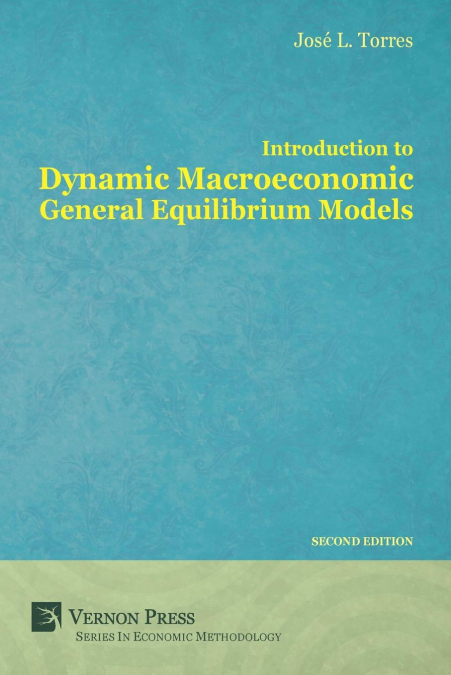
  • Introduction to Dynamic Macroeconomic General Equilibrium Models
    José Luis Torres Chacon
    This book offers an introductory step-by-step course in Dynamic Stochastic General Equilibrium modelling. Modern macroeconomic analysis is increasingly concerned with the construction, calibration and/or estimation and simulation of Dynamic General Equilibrium (DGE) models. The book is intended for graduate students as an introductory course to DGE modelling and for those econo...
    Disponible

    61,40 €

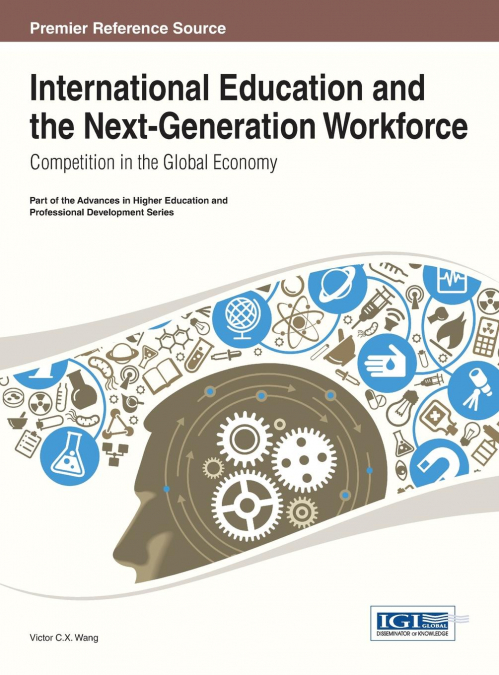
  • International Education and the Next-Generation Workforce
    Wei Wang
    Education is the first stage in developing a viable, dynamic, and long-lived global economy. Unfortunately, in times of economic hardship, educational programs, teacher salaries, and extracurricular opportunities are often the first to be cut. International Education and the Next-Generation Workforce: Competition in the Global Economy presents a detailed discussion of present e...
    Disponible

    236,17 €

  • Macroeconomic Policies of Developed Democracies
    Robert J Franzese Jr
    ...
    Disponible

    113,93 €

  • Macroeconomics in the 21st Century (Hardcover)
    Amon Bietritnau
    'Macroeconomics in the 21st Century' by Dr. Amon Bietritnau provides a comprehensive overview of macroeconomics, covering key topics such as economic indicators, aggregate demand and supply, fiscal and monetary policy, international trade, economic growth, and emerging issues. This concise guide offers valuable insights for students, professionals, and anyone interested in unde...
    Disponible

    39,63 €

  • End Of The Road
    Louis Holder
    This book is about the mismanagement of Western economies in pursuit of political power, which resulting devastation will have to be borne by future generations. The book establishes that postponement is no longer doable and lays out the hard choices ahead causing much misery and agony.Although not fully recognized because of masking by asset bubbles, which are spun/sold as in...
    Disponible

    16,42 €

  • The Darwin Economy
    Robert H. Frank
    What Charles Darwin can teach us about building a fairer societyWho was the greater economist-Adam Smith or Charles Darwin? The question seems absurd. Darwin, after all, was a naturalist, not an economist. But Robert Frank, New York Times economics columnist and best-selling author of The Economic Naturalist, predicts that within the next century Darwin will unseat Smith as the...
    Disponible

    22,42 €

Otros libros del autor

  • Financing for Development
    Stefan Brunnhuber
    This book provides a robust argument for an upgrade of the financial system to enable a more sustainable approach. The author argues that a new green Bretton Woods 2.0 will provide the agenda to transform our economy and our society, and a Green Transition plan is included in the book. ...
    Disponible

    92,79 €

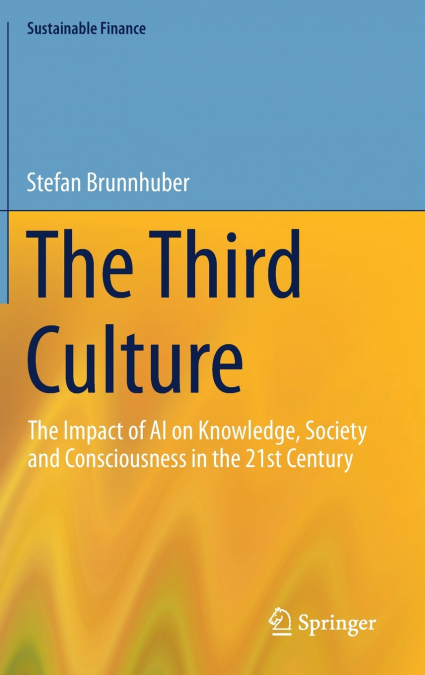
  • The Third Culture
    Stefan Brunnhuber
    We are currently witnessing the emergence of a ’third culture’, driven by unprecedented developments that are changing the playing field. These include advances in AI, big data analysis and robotics. The traditional ’two cultures’ view (S. P. Snow) distinguishes between the sciences and the humanities. The wisdoms these two cultures offer are separated from each other, with lit...
    Disponible

    97,48 €

  • Financing our Anthropocene
    Stefan Brunnhuber
    Development needs to meet the UN SDG have primarily been financed through private sector financing, conventional public sector funding and philanthropic commitment. These sources are not sufficient in scale and speed to meet the pressing finance needs. The world community is too busy repairing, stabilizing, and refunding the system to maintain the stability of the existing syst...
    Disponible

    160,33 €

  • Die Finanzierung unserer Zukunft
    Stefan Brunnhuber
    Das Geldsystem ist das unverzichtbare fehlende Glied in der Nachhaltigkeitsdebatte und die Frage, ob das derzeitige Finanzsystem diese neuen Anforderungen erfüllen kann. Bislang wurden die UN-Nachhaltigkeitsziele (SDGs) hauptsächlich entweder durch den privaten Sektor, durch herkömmliche Steuern und Gebühren des öffentlichen Sektors oder durch philanthropisches Engagement finan...
    Disponible

    42,70 €

  • Financing our Anthropocene
    Stefan Brunnhuber
    Development needs to meet the UN SDG have primarily been financed through private sector financing, conventional public sector funding and philanthropic commitment. These sources are not sufficient in scale and speed to meet the pressing finance needs. The world community is too busy repairing, stabilizing, and refunding the system to maintain the stability of the existing syst...
    Disponible

    48,59 €

  • Financing our Anthropocene
    Stefan Brunnhuber
    Development needs to meet the UN SDG have primarily been financed through private sector financing, conventional public sector funding and philanthropic commitment. These sources are not sufficient in scale and speed to meet the pressing finance needs. The world community is too busy repairing, stabilizing, and refunding the system to maintain the stability of the existing syst...
    Disponible

    158,97 €