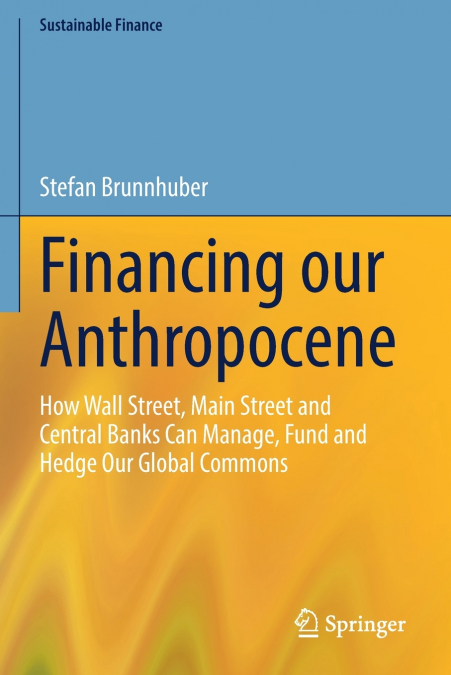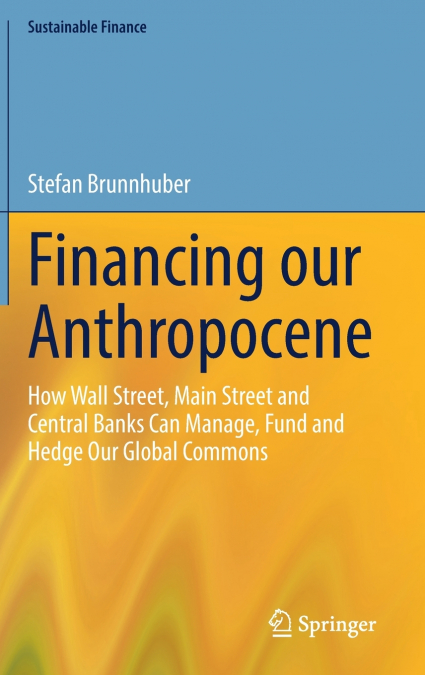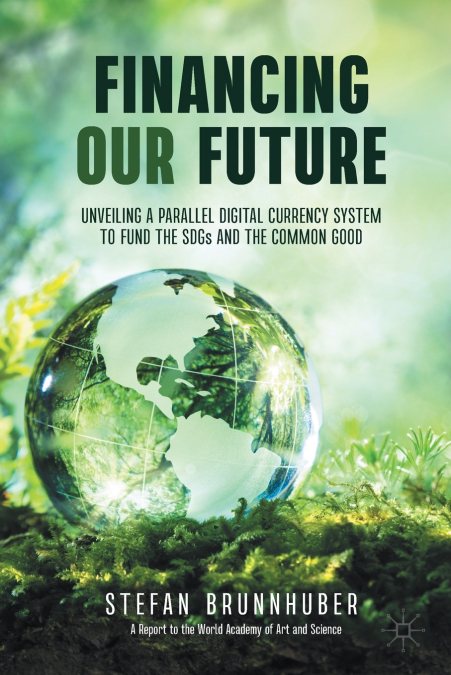

Die Finanzierung unserer Zukunft

Die Finanzierung unserer Zukunft

Stefan Brunnhuber

42,70 €
IVA incluido
Disponible
Editorial:
Springer Nature B.V.
Año de edición:
2023
Materia
Macroeconomía
ISBN:
9783031196249
42,70 €
IVA incluido
Disponible

Selecciona una librería:

  • Librería Desdémona
  • Librería Samer Atenea
  • Librería Aciertas (Toledo)
  • Kálamo Books
  • Librería Perelló (Valencia)
  • Librería Elías (Asturias)
  • Donde los libros
  • Librería Kolima (Madrid)
  • Librería Proteo (Málaga)

Das Geldsystem ist das unverzichtbare fehlende Glied in der Nachhaltigkeitsdebatte und die Frage, ob das derzeitige Finanzsystem diese neuen Anforderungen erfüllen kann. Bislang wurden die UN-Nachhaltigkeitsziele (SDGs) hauptsächlich entweder durch den privaten Sektor, durch herkömmliche Steuern und Gebühren des öffentlichen Sektors oder durch philanthropisches Engagement finanziert. Wenn man davon ausgeht, dass in den verbleibenden 10 bis 15 Jahren jährlich 4 bis 5 Billionen Dollar benötigt werden, um unsere Zukunft zu finanzieren, sind diese konventionellen Finanzierungsquellen sowohl in Bezug auf den Umfang als auch auf die Geschwindigkeit der Finanzierung unzureichend. Darüber hinaus zwingt die inhärente Instabilität unseres Finanzsystems die Weltgemeinschaft dazu, sich in erster Linie auf die Reparatur und Stabilisierung des bestehenden Systems zu konzentrieren.Die Entwicklung von Kryptowährungen unter Verwendung von Distributed-Ledger-Technologien (hauptsächlich Blockchain) hat führende Zentralbanken dazu veranlasst, die mögliche Anwendung dieses Ansatzes zur unabhängigen Schaffung von Kaufkraft zu untersuchen. In diesem Sinne bietet dieses Buch einen neuen Ansatz, nämlich die Einführung einer parallelen elektronischen Währung, die speziell für die Finanzierung globaler Gemeinschaftsgüter und die Bereitstellung der für die Verwirklichung der SDGs erforderlichen Ressourcen konzipiert ist. Darüber hinaus würde dieser Mechanismus eine stabilisierende Wirkung auf das bestehende Währungssystem haben.In dem Buch wird argumentiert, dass eine Möglichkeit, dies zu erreichen, darin besteht, den Zentralbanken ein modifiziertes geldpolitisches Mandat zu erteilen, um dem System mit einem Top-down-Ansatz neue Liquidität zuzuführen. Alternativ könnte die Liquidität durch Unternehmens- oder Gemeindeinitiativen mit Krypto- oder Gemeindewährungen in einem Bottom-up-Ansatz kommen. Der Autor vertritt die Ansicht, dass durch die Ausgabe einer Blockchain-fähigen elektronischen Parallelwährung, die für SDG-bezogene Projekte bestimmt ist, und durch die Nutzung anderer Kanäle für den Geldfluss anstelle der herkömmlichen Kanäle die Zukunft auf andere Weise finanziert werden könnte. Langfristig würde die Abkehr von unserer derzeitigen monetären Monokultur und die Einführung eines monetären Ökosystems die internationalen Finanzmärkte stabilisieren, die monetären Regulierungsbemühungen verstärken, negative externe Effekte reduzieren, ein soziales Pareto-Optimum schaffen und die Demokratien stabilisieren. In diesem Buch wird, ähnlich wie in Fritjof Capras Das Tao der Physik, ein Tao der Finanzen vorgestellt - ein unkonventioneller Ansatz zur Finanzierung globaler Gemeinschaftsgüter.
Artículos relacionados

  • Introduction to Dynamic Macroeconomic General Equilibrium Models
    José Luis Torres Chacon
    This book offers an introductory step-by-step course in Dynamic Stochastic General Equilibrium modelling. Modern macroeconomic analysis is increasingly concerned with the construction, calibration and/or estimation and simulation of Dynamic General Equilibrium (DGE) models. The book is intended for graduate students as an introductory course to DGE modelling and for those econo...
    Disponible

    61,40 €

  • International Education and the Next-Generation Workforce
    Wei Wang
    Education is the first stage in developing a viable, dynamic, and long-lived global economy. Unfortunately, in times of economic hardship, educational programs, teacher salaries, and extracurricular opportunities are often the first to be cut. International Education and the Next-Generation Workforce: Competition in the Global Economy presents a detailed discussion of present e...
    Disponible

    236,17 €

  • Macroeconomic Policies of Developed Democracies
    Robert J Franzese Jr
    ...
    Disponible

    113,93 €

  • Macroeconomics in the 21st Century (Hardcover)
    Amon Bietritnau
    'Macroeconomics in the 21st Century' by Dr. Amon Bietritnau provides a comprehensive overview of macroeconomics, covering key topics such as economic indicators, aggregate demand and supply, fiscal and monetary policy, international trade, economic growth, and emerging issues. This concise guide offers valuable insights for students, professionals, and anyone interested in unde...
    Disponible

    39,63 €

  • End Of The Road
    Louis Holder
    This book is about the mismanagement of Western economies in pursuit of political power, which resulting devastation will have to be borne by future generations. The book establishes that postponement is no longer doable and lays out the hard choices ahead causing much misery and agony.Although not fully recognized because of masking by asset bubbles, which are spun/sold as in...
    Disponible

    16,42 €

  • The Darwin Economy
    Robert H. Frank
    What Charles Darwin can teach us about building a fairer societyWho was the greater economist-Adam Smith or Charles Darwin? The question seems absurd. Darwin, after all, was a naturalist, not an economist. But Robert Frank, New York Times economics columnist and best-selling author of The Economic Naturalist, predicts that within the next century Darwin will unseat Smith as the...
    Disponible

    22,42 €

Otros libros del autor

  • Financing for Development
    Stefan Brunnhuber
    This book provides a robust argument for an upgrade of the financial system to enable a more sustainable approach. The author argues that a new green Bretton Woods 2.0 will provide the agenda to transform our economy and our society, and a Green Transition plan is included in the book. ...
    Disponible

    92,79 €

  • The Third Culture
    Stefan Brunnhuber
    We are currently witnessing the emergence of a ’third culture’, driven by unprecedented developments that are changing the playing field. These include advances in AI, big data analysis and robotics. The traditional ’two cultures’ view (S. P. Snow) distinguishes between the sciences and the humanities. The wisdoms these two cultures offer are separated from each other, with lit...
    Disponible

    97,48 €

  • Financing our Anthropocene
    Stefan Brunnhuber
    Development needs to meet the UN SDG have primarily been financed through private sector financing, conventional public sector funding and philanthropic commitment. These sources are not sufficient in scale and speed to meet the pressing finance needs. The world community is too busy repairing, stabilizing, and refunding the system to maintain the stability of the existing syst...
    Disponible

    160,33 €

  • Financing our Anthropocene
    Stefan Brunnhuber
    Development needs to meet the UN SDG have primarily been financed through private sector financing, conventional public sector funding and philanthropic commitment. These sources are not sufficient in scale and speed to meet the pressing finance needs. The world community is too busy repairing, stabilizing, and refunding the system to maintain the stability of the existing syst...
    Disponible

    48,59 €

  • Financing our Anthropocene
    Stefan Brunnhuber
    Development needs to meet the UN SDG have primarily been financed through private sector financing, conventional public sector funding and philanthropic commitment. These sources are not sufficient in scale and speed to meet the pressing finance needs. The world community is too busy repairing, stabilizing, and refunding the system to maintain the stability of the existing syst...
    Disponible

    158,97 €

  • Financing Our Future
    Stefan Brunnhuber
    The monetary system is the indispensable missing link in the debate of sustainability, and whether the current financial system can handle these evolved needs. To date, the UN Sustainable Development Goals (SDGs) primarily have been financed either through the private sector, through conventional public sector taxes and fees, or through philanthropic commitment. Assuming a need...
    Disponible

    41,46 €