 Librería Samer Atenea
 Kálamo Books
 Librería Elías (Asturias)
 Librería Kolima (Madrid)
 Librería Proteo (Málaga)
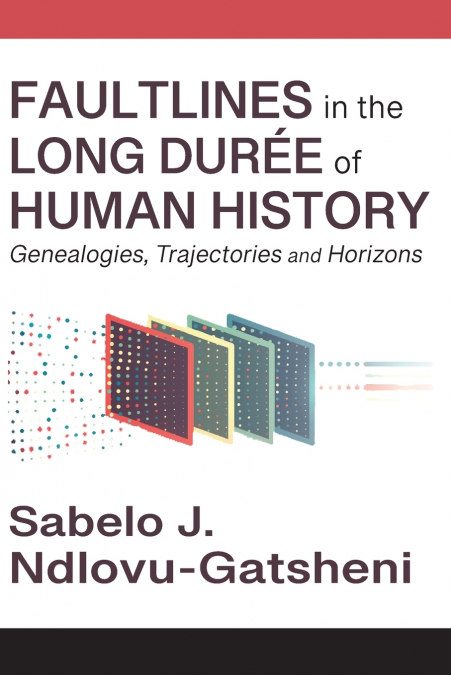
Why do human beings ceaselessly draw lines between those who belong and those who do not? In this urgent and ambitious book, Sabelo J. Ndlovu-Gatsheni argues that the division between insider and outsider is at once the oldest and the most contemporary of human inventions-a dialectic rather than a mere distinction, in which the two terms produce and presuppose one another. Ranging across the long durée of human history, from the founding myths and hospitality ethics of pre-colonial societies to the abyssal lines of the present, he shows how a fluid grammar of incorporation was hardened by modernity/coloniality into a permanent, racialised, and hereditary line dividing the human from the less-than-human. Extending V. Y. Mudimbe’s meditation on African fault lines and his own concept of the epistemic line, Ndlovu- Gatsheni gathers the colour line of Du Bois, the abyssal thinking of Santos, the coloniality of being, and the gender line into a single intersecting architecture. He confronts the most lethal manifestations of our conjuncture: Trumpism and the deportation regime, the genocide in Gaza, and the anti-foreigner violence captured in the South African chant of abahambe. Yet this is no melancholic catalogue of injuries. Refusing both nostalgia and despair, the book reaches towards the pluriverse-a world in which many worlds fit, where the migrant is reimagined as the harbinger of a shared and breathable planet. The line was drawn by human hands; by human hands it can be unlearned.'This is a masterpiece from Africa’s most important decolonial thinker... [it] covers one of the blind spots of decolonial theory: the differences and transformations between the structures of domination from pre-colonial times to the present... Anyone interested in the mutations of... faultlines... must read this book!!' - Ramon Grosfoguel, Emeritus Professor at University of California, Berkeley'Faultlines arrives ready to fight. It steps into a global political arena where inequality and uncertainty have bolstered divides... [and] beautifully braids multiple cases... to illustrate how race, religion, gender, and nationality are now stockades used to categorically exclude peoples from a collective future. It... offers guidance on how unsettling knowledges can erode these barriers for the benefit of a common humanity.' - Loren B Landau, Professor of Migration and Development, University of Oxford and University of the Witwatersrand'In this ground-breaking analysis... Sabelo J. Ndlovu-Gatsheni not only illuminates the constitutive mutuality between the genealogies and contemporary trajectories of exclusion but also advances a compelling vision of pluriversal futures... It is an insightful and timely read... It is a must read!' - Inocent Moyo, Professor and National Research Foundation (NRF) SARCHI Chair on Borders and the African Continental Free Trade Area, University of Zululand'This is a tour de force through one of the most pressing problems of our time... Africa’s foremost decolonial thinker Sabelo J. Ndlovu-Gatsheni offers a powerful tool to understand the history of the inclusive-exclusive present... A must-read for anyone who wants to understand the deep underbelly of ’us’ and ’them.’' - Stefan Ouma, Professor of Geography and Director of the Institute of African Studies, University of Bayreuth