Failed

Failed

Mark Weisbrot

61,22 €
IVA incluido
Consulta disponibilidad
Editorial:
Oxford University Press
Año de edición:
2015
Materia
Economía monetaria
ISBN:
9780195170184

Selecciona una librería:

  • Librería Samer Atenea
  • Librería Aciertas (Toledo)
  • Kálamo Books
  • Librería Perelló (Valencia)
  • Librería Elías (Asturias)
  • Donde los libros
  • Librería Kolima (Madrid)
  • Librería Proteo (Málaga)

Why has the Eurozone ended up with an unemployment rate more than twice that of the United States more than six years after the collapse of Lehman Brothers? Why did the vast majority of low- and middle-income countries suffer a prolonged economic slowdown in the last two decades of the 20th century? What was the role of the International Monetary Fund in these economic failures? Why was Latin America able to achieve substantial poverty reduction in the 21st century after more than two decades without any progress? Failed analyzes these questions, explaining why these important economic developments of recent years have been widely misunderstood and in some cases almost completely ignored. First, in the Eurozone, Mark Weisbrot argues that the European authorities’ political agenda, which included shrinking the welfare state, reducing health care, pension, and other social spending, and reducing the bargaining power of labor played a very important role in prolonging the Eurozone’s financial crisis and pushing it into years of recession and mass unemployment. This conclusion is based not only on public statements of European officials, but also on thousands of pages of documentation from consultations between the IMF and European governments after 2008. The second central theme of Failed is that there are always practical alternatives to prolonged economic failure. Drawing on the history of other financial crises, recessions, and recoveries, Weisbrot argues that regardless of initial conditions, there have been and remain economically feasible choices for governments of the Eurozone to greatly reduce unemployment-including the hardest hit, crisis-ridden country of Greece. The long-term economic failure of developing countries, its social consequences, as well as the subsequent recovery in the first decade of the 21st century, constitute the third part of the book’s narrative, one that has previously gotten too little attention. We see why the International Monetary Fund has lost influence in middle income countries. Failed also examines the economic causes and consequences of Latin America’s 'second independence' and rebound in the twenty-first century, as well as the challenges that lie ahead.

Artículos relacionados

  • The Principles Governing Wealth & Finance
    MARVEN BILLS
    Many people want to improve their well-being, happiness, and opportunities by managing their wealth and finances effectively. However, this is not an easy task, as it requires knowledge, skills, and discipline. There are some basic guidelines that can help us achieve our financial goals, increase our income, save and invest wisely, and use our resources for good purposes. These...
    Disponible

    32,29 €

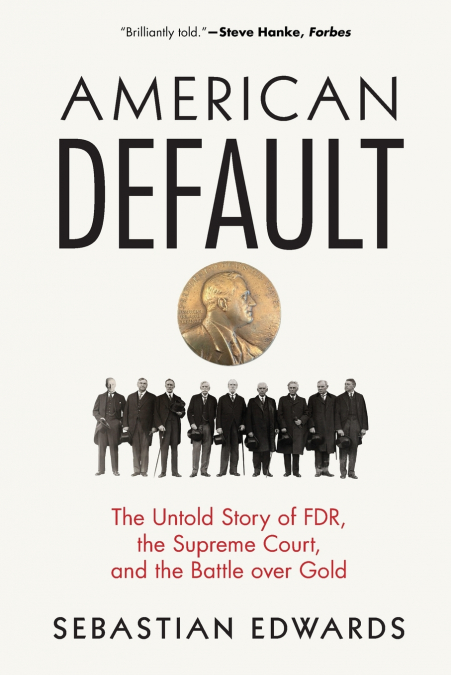
  • American Default
    Sebastian Edwards
    The untold story of how FDR did the unthinkable to save the American economyThe American economy is strong in large part because nobody believes that America would ever default on its debt. Yet in 1933, Franklin D. Roosevelt did just that, when in a bid to pull the country out of depression, he depreciated the US dollar in relation to gold, effectively annulling all debt contra...
    Disponible

    26,48 €

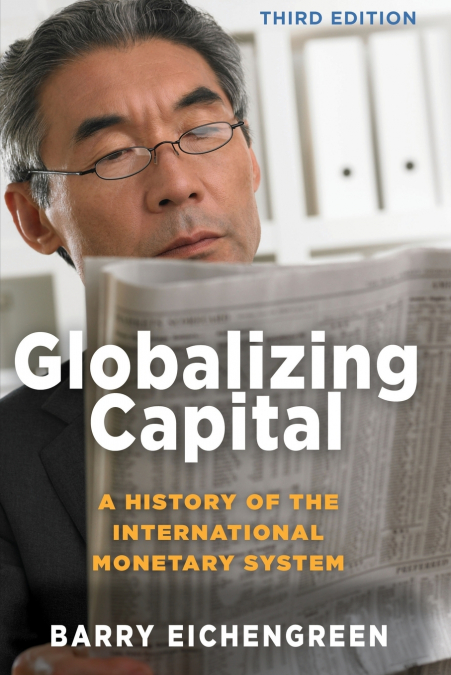
  • Globalizing Capital
    Barry Eichengreen
    Essential reading for understanding the international economy-now thoroughly updatedLucid, accessible, and provocative, and now thoroughly updated to cover recent events that have shaken the global economy, Globalizing Capital is an indispensable account of the past 150 years of international monetary and financial history-from the classical gold standard to today’s post-Bretto...
    Disponible

    43,05 €

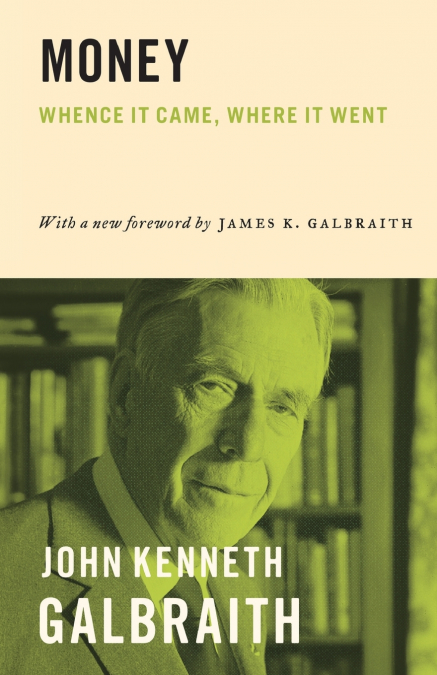
  • Money
    John Kenneth Galbraith
    Money is nothing more than what is commonly exchanged for goods or services, so why has understanding it become so complicated? In Money, renowned economist John Kenneth Galbraith cuts through the confusions surrounding the subject to present a compelling and accessible account of a topic that affects us all. He tells the fascinating story of money, the key factors that shaped ...
    Disponible

    37,12 €

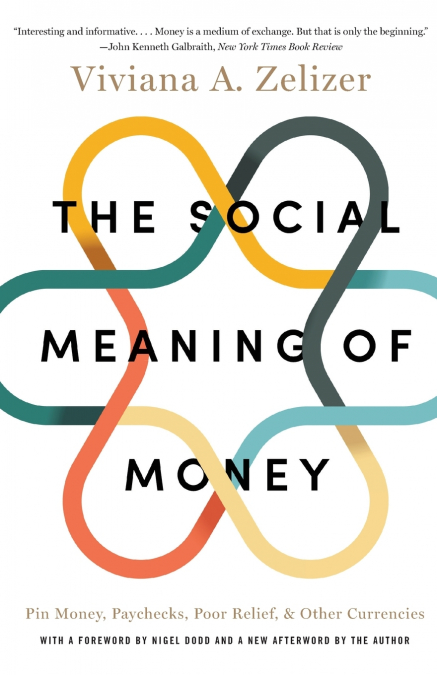
  • The Social Meaning of Money
    Viviana A. Zelizer
    A dollar is a dollar—or so most of us believe. Indeed, it is part of the ideology of our time that money is a single, impersonal instrument that impoverishes social life by reducing relations to cold, hard cash. After all, it’s just money. Or is it? Distinguished social scientist and prize-winning author Viviana Zelizer argues against this conventional wisdom. She shows how peo...
    Disponible

    33,29 €

  • Debt-Free Living
    SREEKUMAR V T / V T SREEKUMAR
    'Debt-Free Living: A Guide to Managing and Eliminating Debt' is a comprehensive resource for anyone looking to take control of their finances and achieve freedom from debt. This book provides practical advice, strategies, and tools for managing debt, creating a budget, saving money, and building wealth.Readers will learn how to assess their financial situation, set realistic go...