Evaluating

Evaluating

Ernest R. House / Ernest RHouse

74,01 €
IVA incluido
Disponible
Editorial:
Emerald Publishing Ltd
Año de edición:
2014
Materia
Educación pedagogía
ISBN:
9781623969158
74,01 €
IVA incluido
Disponible

Selecciona una librería:

  • Librería Samer Atenea
  • Librería Aciertas (Toledo)
  • Kálamo Books
  • Librería Perelló (Valencia)
  • Librería Elías (Asturias)
  • Donde los libros
  • Librería Kolima (Madrid)
  • Librería Proteo (Málaga)

A volume in Evaluation and SocietySeries Editors, Jennifer C. Greene, University of Illinois at Urbana-Champaignand Stewart I. Donaldson, Claremont Graduate UniversityIn this book, Ernie House reframes how we think about evaluation by reconsidering three keyconcepts of values, biases, and practical wisdom. The first part of the book reconstructs coreevaluation concepts, with a focus on the origins of our values and biases. The second partexplores how we handle values and biases in practice, and the third shows how we learn practicalwisdom and use it in evaluations.Value is the central concept in this volume, yet it’s a fuzzy concept. In Part I, Ernie clarifies theconcept of value by addressing basic questions: What are values? Where do they come from?Why do we have them? Why is our conception so confused? How do we handle values in evaluations?In Part II, another central concept is added, that of biases. Prominent evaluation frameworkshave focused on biases, including Campbell and Stanley’s (1963) framework for validatingcausal inferences and Scriven’s (1972) conception of objectivity, which is achieved by correcting for biases in general. In addition,research on thought processes has made progress by focusing on cognitive biases (Kahneman, 2011). Even so, through a case example,Ernie demonstrates that the concept of biases is under-appreciated and not well engaged in evaluation practice.The third important concept, featured in Part III, is practical wisdom, which is the knowledge that evaluators acquire through experience.Practical wisdom informs what we do, possibly as much as theory. Experienced evaluators often conduct evaluations in similarways, regardless of their theory, because practical wisdom determines much of what they do. Ernie provides concrete examples of practicalwisdom and how we employ it. Throughout the book, he draws on the empirical research on thinking processes, especially Kahneman’sThinking Fast and Slow (2011).This book will be of interest and relevance to all evaluation scholars and practitioners, as it thoughtfully engages core constructs of thefield. The book can also well serve as a supplementary text in multiple evaluation courses,as it offers valuable conceptual and practical perspectives on our craft.

Artículos relacionados

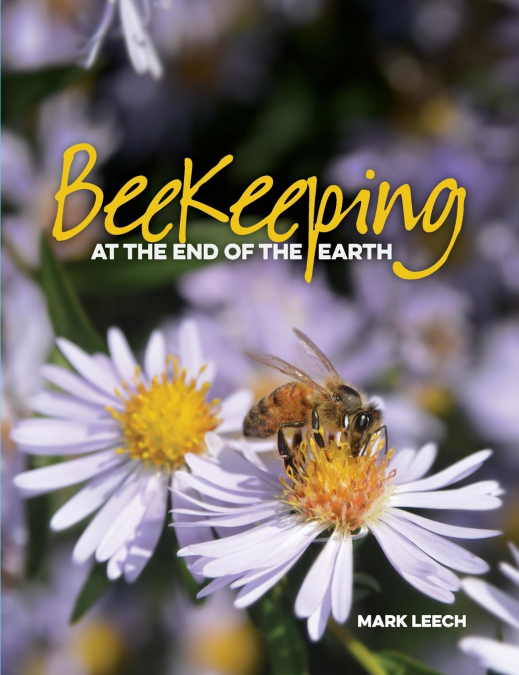
  • Beekeeping At The End Of The Earth
    Mark David Leech
    Beekeeping at the End of the Earth, an essential read for learning about beekeeping in a cool temperate climate with a focus on Tasmania our island home.  One hundred beekeepers one hundred different ways to keep bees.Beekeeping At The End Of The Earth is a practical insight into cool climate beekeeping with a focus on Tasmania, our island home.Richly illustrated with unique di...
    Disponible

    45,16 €

  • Be the One for Kids
    Ryan Sheehy
    One person can make a difference.That person can be you. “I want to show others that one person can make the difference in a child’s life. I want all educators, parents, coaches, and everyone in between to know they have power to Be the One for Kids.” —Ryan Sheehy If you ever feel like you’re all alone or think that no one gets you, just imagine how your students feel. Kids wan...
    Disponible

    27,99 €

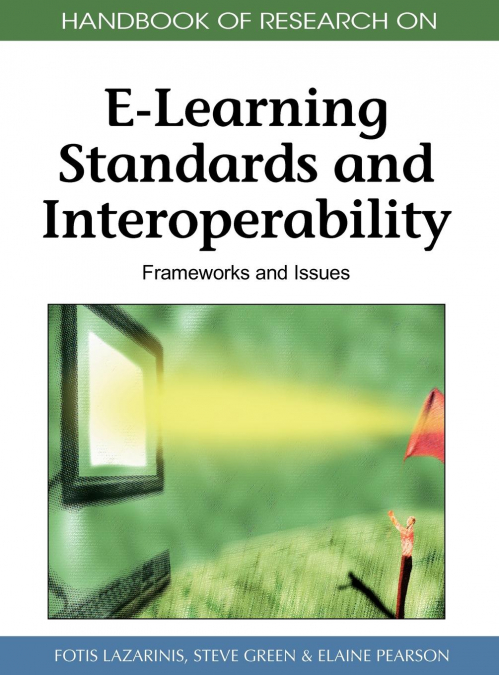
  • Handbook of Research on E-Learning Standards and Interoperability
    As the e-learning industry continues to expand and the methods and tools necessary to create and maintain content and infrastructure applications become more complicated, there is an inherent need for these applications to interoperate and exchange data in order to better support the needs of learners and educators. Handbook of Research on E-Learning Standards and Interoperabil...
  • Teaching in the Knowledge Society
    Antonio Cartelli
    ...
  • Enhancing Learning Through Human Computer Interaction
    Elspeth McKay
    ...
  • Learning Objects for Instruction
    Pamela Taylor Northrup
    ...

Otros libros del autor

  • Evaluating
    Ernest R. House / Ernest RHouse
    By Ernest R. House, University of Colorado at BoulderA volume in Evaluation and SocietySeries Editors, Jennifer C. Greene, University of Illinois at Urbana-Champaignand Stewart I. Donaldson, Claremont Graduate UniversityIn this book, Ernie House reframes how we think about evaluation by reconsidering three keyconcepts of values, biases, and practical wisdom. The first part of t...
  • Evaluating with Validity (PB)
    Ernest R. House / Ernest RHouse
    This reissued book is one of the key works that influenced and shaped the contemporary evaluation field. The book developed a new, expanded conception of the validity of evaluation studies, based on broad criteria of truth, beauty, and justice. It also presented a widely-used typology of evaluation approaches and critiqued these approaches with the validity criteria. Its long t...
    Disponible

    67,82 €

  • Regression to the Mean
    Ernest R. House / Ernest RHouse
    Evaluation politics is one of the most critical, yet least understood aspects of evaluation. Tosucceed, evaluators must grasp the politics of their situation, lest their work be derailed. Thisengrossing novel illuminates the politics and ethics of evaluation, even as it entertains. PaulReeder, an experienced (and all too human) evaluator, must unravel political, ethical, andtec...
    Disponible

    73,61 €

  • Regression to the Mean
    Ernest R. House / Ernest RHouse
    Evaluation politics is one of the most critical, yet least understood aspects of evaluation. Tosucceed, evaluators must grasp the politics of their situation, lest their work be derailed. Thisengrossing novel illuminates the politics and ethics of evaluation, even as it entertains. PaulReeder, an experienced (and all too human) evaluator, must unravel political, ethical, andtec...