 Librería Samer Atenea
 Kálamo Books
 Librería Elías (Asturias)
 Librería Kolima (Madrid)
 Librería Proteo (Málaga)
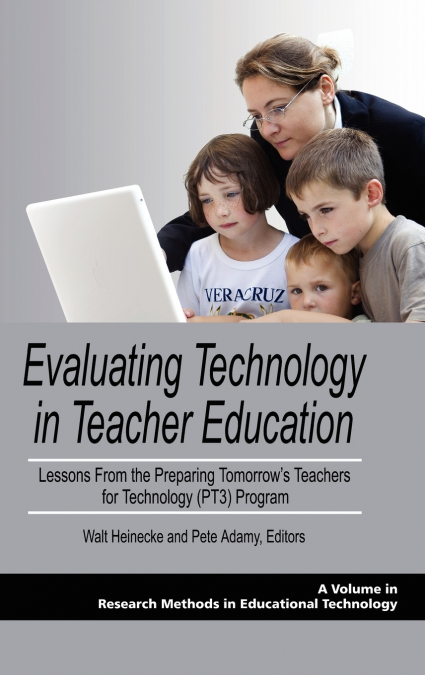
A volume in Research Methods in Educational TechnologySeries Editor Walter F. Heinecke, University of VirginiaOverall we come away from this project with a renewed sense of the complexityof evaluating the implementation and impact of technology inteacher education. In the post-PT3 period the federal government turned tolarge-scale experimental and quasi-experimental evaluations of educationaltechnology but these have produced little in the way of understandingwhat types of technology work in various content areas under various conditions.PT3 and its approach to evaluation can be viewed as the pioneeringperiod of educational technology evaluation in teacher education. It was atime when evaluators were just beginning to develop appropriate standardsthat could be used as evaluation criteria. It was a time when the accumulatedwisdom of the evaluation field with regards to the primacy of mixedmethodsand multiple indicators of outcomes was just beginning to takehold. PT3 evaluators understood the importance of treading the linebetween summative and formative evaluation, and the relationship of evaluationto the improvement of educational practice.In a world where the policymakers now clamor for simple quantitativeevaluations linking teacher preparation to pupil achievement scores, we arereminded that the causal chain from teacher preparation to inservice performanceand student achievement is fraught with externalities, complexitiesand a less than equal playing field. Collectively we still have not figured outhow technology may be adding value to education beyond any potentialimpact on superficial standardized test scores. We have as a nation,ignored the call of cognitive psychologists who in 2000 called for a newframe of reference for learner-centered, community-centered, assessment-centered and content-centered educational processes. They understoodthat the high stakes accountability systems hinder educationalinnovation and the release of technology’s potential to unlock new ways ofknowing and learning.Looking back now on the accomplishments of the PT3 program withinour current political context, we see a need for more nuanced evaluationmodels that examine the relationship between pedagogy and technologyintegration, with a realization that teacher preparation programs will vary intheir approaches to both. Some will focus on skills-based approaches,others on the relationship between pedagogical content knowledge andtechnology integration. The PT3 program served as an important incubatorand test-bed of appropriate evaluation practice; we are already lookingback at the program for lessons on how to move forward. We hope thisvolume may serve as a reminder of lessons for the future.