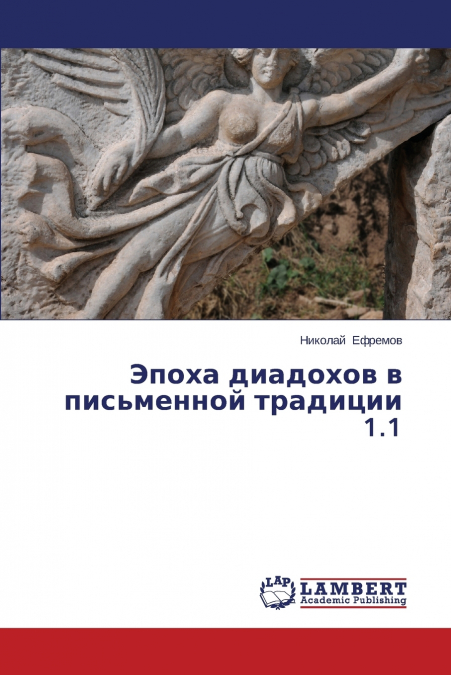

Epokha Diadokhov V Pis’mennoy Traditsii 1.1

Epokha Diadokhov V Pis’mennoy Traditsii 1.1

Efremov Nikolay

132,77 €
IVA incluido
Disponible
Editorial:
KS OmniScriptum Publishing
Año de edición:
2014
Materia
Filosofía occidental: antigua, hasta c. 500
ISBN:
9783659511103
132,77 €
IVA incluido
Disponible

Selecciona una librería:

  • Librería Samer Atenea
  • Librería Aciertas (Toledo)
  • Kálamo Books
  • Librería Perelló (Valencia)
  • Librería Elías (Asturias)
  • Donde los libros
  • Librería Kolima (Madrid)
  • Librería Proteo (Málaga)

Ibo oni (diadokhi) byli stol’ doblestny i takoe vnushali k sebe pochtenie, chto kazhdogo iz nikh mozhno bylo prinyat’ za tsarya: vse oni byli tak krasivy i statny, stol’ko v nikh bylo moshchi i uma, chto tot, kto ikh ne znal, mog podumat’, chto zdes’ sobralsya luchshiy svet ne odnogo naroda, a vsego mira. I nikogda do togo vremeni Makedoniya, da i nikakoy drugoy narod ne proizvodili podobnogo sotsvetiya stol’ slavnykh muzhey; snachala Filipp, a zatem Aleksandr podbirali ikh s takim tshchaniem, chto, kazalos’, oni izbrany ne tol’ko kak soratniki, no skoree kak [vozmozhnye] priemniki ikh vlasti. Kto ne stanet divit’sya tomu, chto s takimi spodvizhnikami byl pobezhdyen ves’ mir, raz makedonskim voyskom komandovali ne prosto polkovodtsy, a tsari ? Nikogda i nigde ne nashlos’ by ravnykh im, esli by oni ne vstupili v bor’bu drug s drugom, i Makedoniya imela by mnogo Aleksandrov vmesto odnogo, esli by sud’ba ne pobudila ikh k sopernichestvu k doblesti na ikh vseobshchuyu pogibel’. Iust., XIII. 1, 10-15)
Artículos relacionados

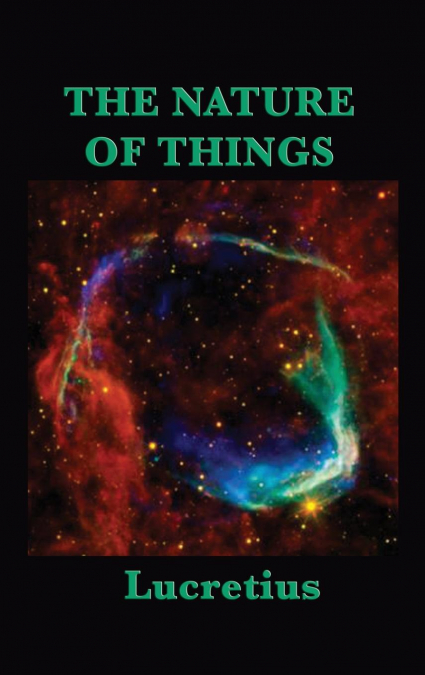
  • The Nature of Things
    Lucretius Lucretius
    De rerum natura (On the Nature of Things) is a 1st century BC didactic poem by the Roman poet and philosopher Lucretius with the goal of explaining Epicurean philosophy to a Roman audience. Lucretius presents the principles of atomism; the nature of the mind and soul; explanations of sensation and thought; the development of the world and its phenomena; and explains a variety o...
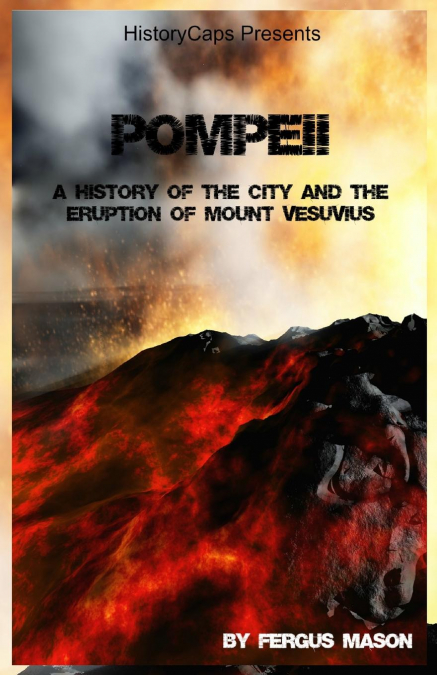
  • Pompeii
    Fergus Mason
    Pompeii was one of most advanced cities of its time; it had a complex water system, gymnasium, and an amphitheater. Despite it's advancements, there was one thing it wasn't ready for: Mount Vesuvius—the volcano that led to its ultimate doom.  The 79 AD eruption of Mount Vesuvius was one of the worst disasters in all of European history. In a near instant, over 15,000 p...
    Disponible

    10,36 €

  • Middle Platonism and Neoplatonism, Volume 1
    Stephen Gersh
    'It is generally agreed that those types of philosophy that are loosely called ’Platonic’ and ’Neoplatonic’ played a crucial role in the history of European culture during the centuries between antiquity and the Renaissance. However, until now no scholar has attempted to describe the evolution of these forms of thought in a single comprehensive academic study.' So writes Stephe...
  • Middle Platonism and Neoplatonism, Volume 2
    Stephen Gersh
    It is generally agreed that those types of philosophy that are loosely called 'Platonic' and 'Neoplatonic' played a crucial role in the history of European culture during the centuries between antiquity and the Middle Ages. However, until now no scholar has attempted to describe the evolution of these forms of thought in a single comprehensive academic study. Middle Platonism a...
  • Porphyry’s Commentary on Ptolemy’s Harmonics
    Andrew Barker
    ...
    Disponible

    77,17 €

  • The Roots of Platonism
    John Dillon
    ...
    Disponible

    25,29 €