 Librería Samer Atenea
 Kálamo Books
 Librería Elías (Asturias)
 Librería Kolima (Madrid)
 Librería Proteo (Málaga)
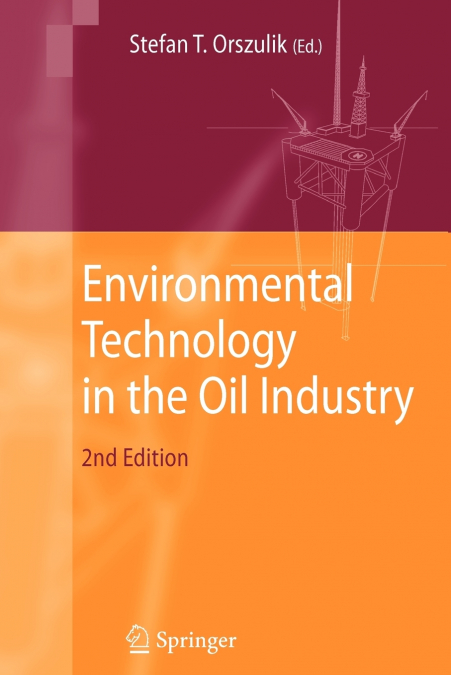
Chapter 1: General Introduction, A. Ahnell and H. O’Leary 1. Environmental Technology 2. The Beginning 3. The Environmental Effects of the Oil Industry 3.1. Air Emissions 3.2. Water Management 3.3. Waste Management 4. Technology used in the Oil Industry 4.1. Pollution Control 4.2. Pollution Prevention 5. Oil Industry Future: Design for the Environment 5.1. Design out the production problems 6. Summary References Chapter 2: Environmental control technology for Oilfield Processes, A.K. Wojtanowicz 1. Introduction 2. Environmental-control Technology 3. Evolution of Environmentally Controlled Oilfield Processes 3.1. Scope and Characteristics of Oilfield ECT 3.2. Methodology of ECT design 4. ECT Analysis of Drilling Process 4.1. Mechanisms of Drilling Waste Discharge 4.2. Sources of Drilling Waste Toxicity 4.3. Waste Generation Mechanisms in Petroleum Production 4.4. Sources of Toxicity in Produced water References Chapter 3: Environmental Control of Well Integrity, A.K. Wojtanowicz 1. Introduction 2. Mechanism of Cement Seal Failures 3. Improved Cementing for Annular Integrity 4. Cement Pulsation after Placement 5. Integrity of Injection Wells 6. Measurements of Well Integrity 7. Sustained Casinghead Pressure 7.1. Rig Methods for SCP Isolation 7.2. Rig-less technology for SCP isolation References Chapter 4: Environmental Control of Drilling Fluids and Produced Water, A.K. Wojtanowicz 1. Control of Drilling Fluid Volume 1.1. Control of Mud Dispersibility 1.2. Improved Solids Control - Closed Loop Systems 1.3. Dewatering of Drilling Fluids: ’dry’ drilling location 2. Control of Drilling Fluid Toxicity 2.1. Drilling FluidToxicity Testing 2.2. Low-Toxicity Substitutes 2.3. Synthetic Base Drilling Fluids 2.4. Source Separation - Drill Cuttings De-oiling 3. Control of Produced Water Volume 3.1. Source Reduction - water shut-off technology 3.2. Source Separation - downhole oil/gas/water separation 3.3. Source Reduction with downhole water sink 4. Control of Produced Water Pollutants 4.1. Oil-free water from DWS drainage-production systems 4.2. Deoiling of produced water 4.3. Removal of dissolved organics from produced water 4.4. Produced water salinity reduction References Chapter 5: Oilfield Waste Disposal Control, A.K. Wojtanowicz 1. Introduction 2. Oilfield Waste Disposal to Land 2.1. Impact of oilfield pit contaminants 2.2. Oilfield pit sampling and evaluation 2.3. Oilfield pit closure: Liquid Phase 2.4. Oilfield pit closure: Solid Phase 3. Subsurface waste disposal to wells 3.1. Description of slurry injection process of muds and cuttings 3.2. Slurry fracture injection of muds and cuttings 3.3. Properties of Injected Slurries 3.4. Environmental Implications of Subsurface Slurry Injection 3.5. Periodic Injection to Multiple Fractures References Chapter 6: Drilling and production discharges in the marine environment, A.B. Doyle, S.S.R. Pappworth and D.D. Caudle 1. Introduction 2. Nature of Offshore Discharges 2.1. Produced Water 2.2. Drilling Waste 2.3. Magnitude of Waste Discharges 2.4. Accidental Discharges 2.5. Wastes that Require Handling During Site Abandonment 3. Potential Impacts on the Environment 3.1. Introduction 3.2. Potential Impacts from Produced Water 3.3. Potential Impacts from Drilling Waste 3.4. Potential Impacts from Treating