Inicio > Sociedad y ciencias sociales > Educación pedagogía > English as a Language of Teaching and Learning for Community Secondary Schools in Tanzania
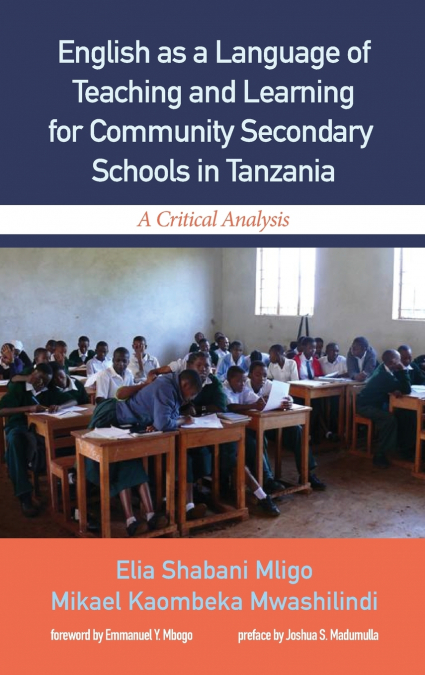
English as a Language of Teaching and Learning for Community Secondary Schools in Tanzania

English as a Language of Teaching and Learning for Community Secondary Schools in Tanzania

Elia Shabani Mligo / Mikael Kaombeka Mwashilindi / Mikael Mwashilindi

21,12 €
IVA incluido
Disponible
Editorial:
Wipf and Stock Publishers
Año de edición:
2017
Materia
Educación pedagogía
ISBN:
9781532618758
21,12 €
IVA incluido
Disponible

Selecciona una librería:

  • Librería Samer Atenea
  • Librería Aciertas (Toledo)
  • Kálamo Books
  • Librería Perelló (Valencia)
  • Librería Elías (Asturias)
  • Donde los libros
  • Librería Kolima (Madrid)
  • Librería Proteo (Málaga)

This book examines the challenges posed by English, a foreign language, as a language of teaching and learning for community secondary schools in Tanzania in terms of academic performance. The book probes the necessity for having two languages of instruction in the Tanzanian educational system. While Kiswahili, the native language, is predominantly understood by the majority of people, the discussion in this book indicates that most students in community secondary schools in Tanzania are incompetent in understanding, writing, listening, reading, and speaking English, a language they use in learning and doing their examinations, especially in the early stages of their secondary studies. The incompetence in the above-mentioned skills is mostly caused by their inability to cope with the abrupt transition in the languages of instruction from their pre-primary and primary school study [Kiswahili] to secondary school study [English]. Moreover, most teachers are unable to use the English language as a means to impart knowledge or facilitate learning to their students, leading them to code-switching and code-mixing. This book poses a challenge to countries whose students pass through a transition from one language of instruction to another in their educational systems, helping them to make appropriate decisions in regard to the appropriate language of teaching and learning.


Artículos relacionados

  • Beekeeping At The End Of The Earth
    Mark David Leech
    Beekeeping at the End of the Earth, an essential read for learning about beekeeping in a cool temperate climate with a focus on Tasmania our island home.  One hundred beekeepers one hundred different ways to keep bees.Beekeeping At The End Of The Earth is a practical insight into cool climate beekeeping with a focus on Tasmania, our island home.Richly illustrated with unique di...
    Disponible

    45,16 €

  • Be the One for Kids
    Ryan Sheehy
    One person can make a difference.That person can be you. “I want to show others that one person can make the difference in a child’s life. I want all educators, parents, coaches, and everyone in between to know they have power to Be the One for Kids.” —Ryan Sheehy If you ever feel like you’re all alone or think that no one gets you, just imagine how your students feel. Kids wan...
    Disponible

    27,99 €

  • Handbook of Research on E-Learning Standards and Interoperability
    As the e-learning industry continues to expand and the methods and tools necessary to create and maintain content and infrastructure applications become more complicated, there is an inherent need for these applications to interoperate and exchange data in order to better support the needs of learners and educators. Handbook of Research on E-Learning Standards and Interoperabil...
  • Teaching in the Knowledge Society
    Antonio Cartelli
    ...
  • Enhancing Learning Through Human Computer Interaction
    Elspeth McKay
    ...
  • Learning Objects for Instruction
    Pamela Taylor Northrup
    ...

Otros libros del autor

  • English as a Language of Teaching and Learning for Community Secondary Schools in Tanzania
    Elia Shabani Mligo / Mikael Kaombeka Mwashilindi / Mikael Mwashilindi
    This book examines the challenges posed by English, a foreign language, as a language of teaching and learning for community secondary schools in Tanzania in terms of academic performance. The book probes the necessity for having two languages of instruction in the Tanzanian educational system. While Kiswahili, the native language, is predominantly understood by the majority of...