Inicio > > Ciencias de la computación > Inteligencia artificial > Dynamic Network Representation Based on Latent Factorization of Tensors
Dynamic Network Representation Based on Latent Factorization of Tensors

Dynamic Network Representation Based on Latent Factorization of Tensors

Hao Wu / Xin Luo / Xuke Wu

48,47 €
IVA incluido
Disponible
Editorial:
Springer Nature B.V.
Año de edición:
2023
Materia
Inteligencia artificial
ISBN:
9789811989353
48,47 €
IVA incluido
Disponible

Selecciona una librería:

  • Librería Samer Atenea
  • Librería Aciertas (Toledo)
  • Kálamo Books
  • Librería Perelló (Valencia)
  • Librería Elías (Asturias)
  • Donde los libros
  • Librería Kolima (Madrid)
  • Librería Proteo (Málaga)

A dynamic network is frequently encountered in various real industrial applications, such as the Internet of Things. It is composed of numerous nodes and large-scale dynamic real-time interactions among them, where each node indicates a specified entity, each directed link indicates a real-time interaction, and the strength of an interaction can be quantified as the weight of a link. As the involved nodes increase drastically, it becomes impossible to observe their full interactions at each time slot, making a resultant dynamic network High Dimensional and Incomplete (HDI). An HDI dynamic network with directed and weighted links, despite its HDI nature, contains rich knowledge regarding involved nodes’ various behavior patterns. Therefore, it is essential to study how to build efficient and effective representation learning models for acquiring useful knowledge.In this book, we first model a dynamic network into an HDI tensor and present the basic latent factorization of tensors (LFT) model. Then, we propose four representative LFT-based network representation methods. The first method integrates the short-time bias, long-time bias and preprocessing bias to precisely represent the volatility of network data. The second method utilizes a proportion-al-integral-derivative controller to construct an adjusted instance error to achieve a higher convergence rate. The third method considers the non-negativity of fluctuating network data by constraining latent features to be non-negative and incorporating the extended linear bias. The fourth method adopts an alternating direction method of multipliers framework to build a learning model for implementing representation to dynamic networks with high preciseness and efficiency.

Artículos relacionados

  • Artificial Cognition Systems
    ...
    Disponible

    125,44 €

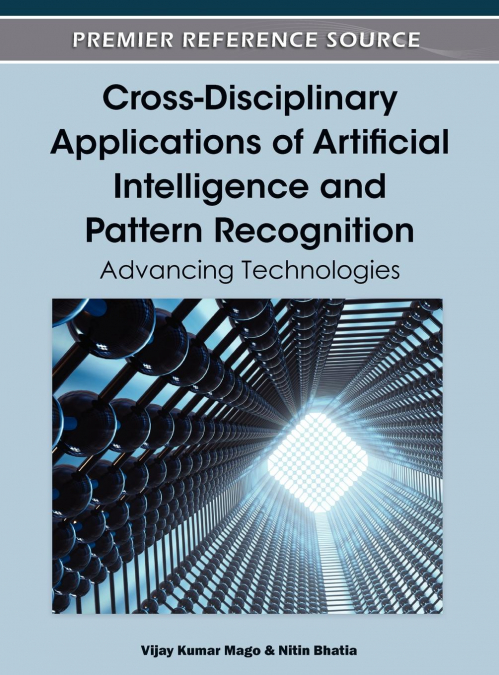
  • Cross-Disciplinary Applications of Artificial Intelligence and Pattern Recognition
    Vijay Kumar Mago
    The need for intelligent machines in areas such as medical diagnostics, biometric security systems, and image processing motivates researchers to develop and explore new techniques, algorithms, and applications in this evolving field. Cross-Disciplinary Applications of Artificial Intelligence and Pattern Recognition: Advancing Technologies provides a common platform for researc...
    Disponible

    257,39 €

  • Emerging Applications of Natural Language Processing
    Over the last few years, the area of Natural Language Processing has drastically grown in recognition, not only within the research and development community, but also with industry professionals. As NLP continues to be discussed and researched, certain areas continue to grow and mature. As a result, the need for advanced research and information is in high demand. Emerging App...
    Disponible

    256,06 €

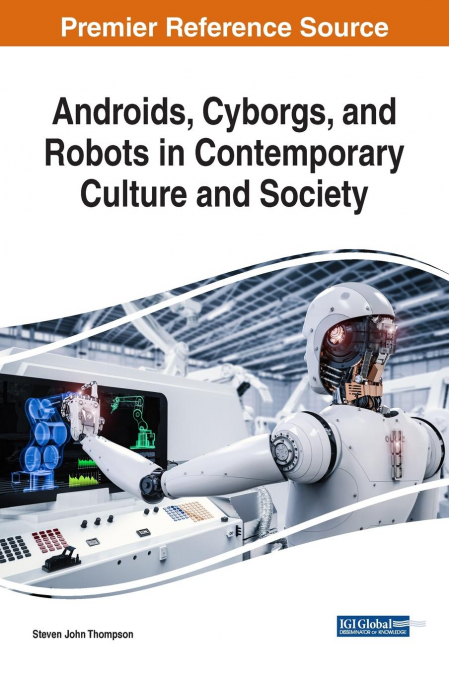
  • Androids, Cyborgs, and Robots in Contemporary Culture and Society
    Steven John Thompson
    Mankind’s dependence on artificial intelligence and robotics is increasing rapidly as technology becomes more advanced. Finding a way to seamlessly intertwine these two worlds will help boost productivity in society and aid in a variety of ways in modern civilization. Androids, Cyborgs, and Robots in Contemporary Culture and Society is an essential scholarly resource that delve...
    Disponible

    268,90 €

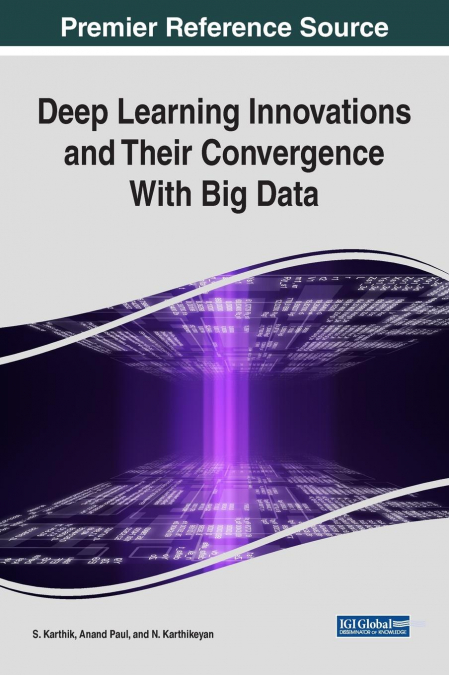
  • Deep Learning Innovations and Their Convergence With Big Data
    The expansion of digital data has transformed various sectors of business such as healthcare, industrial manufacturing, and transportation. A new way of solving business problems has emerged through the use of machine learning techniques in conjunction with big data analytics. Deep Learning Innovations and Their Convergence With Big Data is a pivotal reference for the latest sc...
    Disponible

    268,78 €

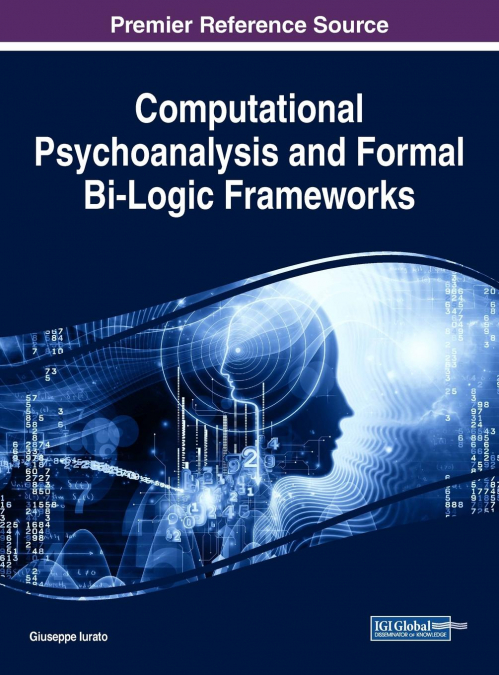
  • Computational Psychoanalysis and Formal Bi-Logic Frameworks
    Giuseppe Iurato
    Computational psychoanalysis is a new field stemming from Freudian psychoanalysis. The new area aims to understand the primary formal structures and running mechanisms of the unconscious while implementing them into computer sciences. Computational Psychoanalysis and Formal Bi-Logic Frameworks provides emerging information on this new field which uses psychoanalysis and the unc...
    Disponible

    282,18 €

Otros libros del autor

  • Dynamic Network Representation Based on Latent Factorization of Tensors
    Hao Wu / Xin Luo / Xuke Wu
    A dynamic network is frequently encountered in various real industrial applications, such as the Internet of Things. It is composed of numerous nodes and large-scale dynamic real-time interactions among them, where each node indicates a specified entity, each directed link indicates a real-time interaction, and the strength of an interaction can be quantified as the weight of a...
    Disponible

    61,82 €