Librería Samer Atenea
 Kálamo Books
 Librería Elías (Asturias)
 Librería Kolima (Madrid)
 Librería Proteo (Málaga)
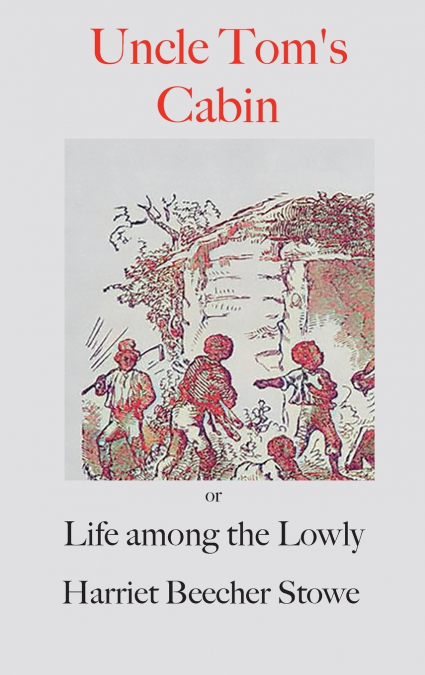
Dred: A Tale of the Great Dismal Swamp is the second popular novel from American author Harriet Beecher Stowe. It was first published in two volumes by Phillips, Sampson and Company in 1856. Although it enjoyed better initial sales than her previous, and more famous, novel Uncle Tom’s Cabin, it was ultimately less popular. Dred was of a more documentary nature whereas Uncle Tom’s Cabin had much stronger characters.The response to Stowe’s first work greatly impacted her second anti-slavery novel. Uncle Tom’s Cabin drew criticism from abolitionists and African-American authors for the passive martyrdom of Uncle Tom and endorsement of colonization as the solution to slavery. Dred, by contrast, introduces a black revolutionary character who is presented as an heir to the American revolution rather than a problem to be expatriated. Dred can thus be placed within an African-American literary tradition as well as a political revision of the sentimental novel (see David Walker’s Appeal (1829) and Frederick Douglass’s The Heroic Slave (1852)).Dred himself is a composite of Denmark Vesey and Nat Turner, two real leaders of slave insurrections. Stowe included a copy of Nat Turner’s famous confessions as an appendix to the novel.One often-overlooked subplot involves Judge Clayton, who issues a proslavery opinion that absolves the man who attacked Cora’s slave Milly of liability. This judge was constrained by the law from providing relief; this fits with Stowe’s belief that law and judges-and religious leaders, too-could not be expected to help end slavery. It was humane sentiments rather than the rule of law that would be the lever for antislavery action.The novel is also interesting in the historical context of runaway slave communities surviving for a long time in swamp areas. Swamps were places where runaway slaves could hide, and therefore became a taboo subject, particularly in the south. (wikipedis.org)About the AuthorHarriet Beecher Stowe (1811-1896) was an American author, abolitionist, and social reformer best known for her novel Uncle Tom’s Cabin. Born in Litchfield, Connecticut, into a prominent religious family, she was deeply influenced by her father, Lyman Beecher, a well-known Congregationalist minister, and by the strong intellectual environment of her siblings. Education, moral responsibility, and religious faith played a central role in shaping her worldview from an early age.Stowe wrote Uncle Tom’s Cabin in response to the Fugitive Slave Act of 1850, which required escaped enslaved people to be returned to their enslavers. Published in 1852, the novel vividly portrayed the brutal realities of slavery and the humanity of enslaved African Americans, reaching an enormous audience in the United States and abroad. The book had an immediate cultural impact, intensifying anti-slavery sentiment in the North and provoking outrage in the South, and it is often credited with helping to fuel the tensions that led to the American Civil War.Beyond her most famous novel, Stowe was a prolific writer who produced essays, short stories, travel writing, and additional novels addressing social issues such as women’s rights and morality. Though her work has since been criticized for racial stereotypes common to her time, her influence on American literature and social reform remains significant. Harriet Beecher Stowe is remembered as a powerful example of how literature can shape public opinion and inspire social change.