 Librería Samer Atenea
 Kálamo Books
 Librería Elías (Asturias)
 Librería Kolima (Madrid)
 Librería Proteo (Málaga)
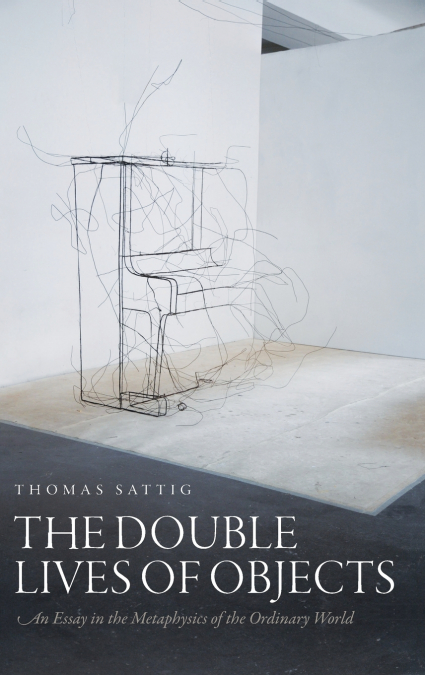
Thomas Sattig develops and defends a novel philosophical picture of ordinary objects, such as persons, tables, trees, and mountains. His theory carves a middle way between the two accounts that have dominated traditional metaphysics of material objects, namely, classical mereology and Aristotelian hylomorphism. It answers metaphysical, semantical, and psychological questions in a unified framework: What is the nature of ordinary objects? How do we speak about such objects? And how do we conceive of them? The core thesis is that ordinary objects lead double lives: they are compounds of matter and form; and since their matter and form have different qualitative profiles, ordinary objects can be described differently from different conceptual perspectives. A philosophical theory of ordinary objects faces the hard task of saving our common-sense conception of objects from a wide range of hard problems that present our familiar worldview as internally inconsistent and as incompatible with plausible metaphysical principles. The book argues that the proposed theory does a better job than its rivals in saving the appearances. The key that unlocks each problem is that seemingly inconsistent judgements about objects are really consistent because they manifest different perspectives on the same double-layered objects. Many long-standing philosophical mysteries about ordinary objects dissolve, once we realize that they lead double lives. The theory contributes to a wide variety of philosophical debates, including those about parts and composition, persistence, coincidence and constitution, personal identity, modality de re, the grounding problem, determinism, vague objects, the problem of the many, and relativistic metaphysics.