
Inicio > Sociedad y ciencias sociales > Sociedad y cultura: general > Digital Innovation and the Future of Work
Digital Innovation and the Future of Work

Digital Innovation and the Future of Work

Matti Vartiaine

175,78 €
IVA incluido
Consulta disponibilidad
Editorial:
Taylor & Francis Ltd
Año de edición:
2020
Materia
Sociedad y cultura: general
ISBN:
9788770222204

Selecciona una librería:

  • Librería Samer Atenea
  • Librería Aciertas (Toledo)
  • Kálamo Books
  • Librería Perelló (Valencia)
  • Librería Elías (Asturias)
  • Donde los libros
  • Librería Kolima (Madrid)
  • Librería Proteo (Málaga)

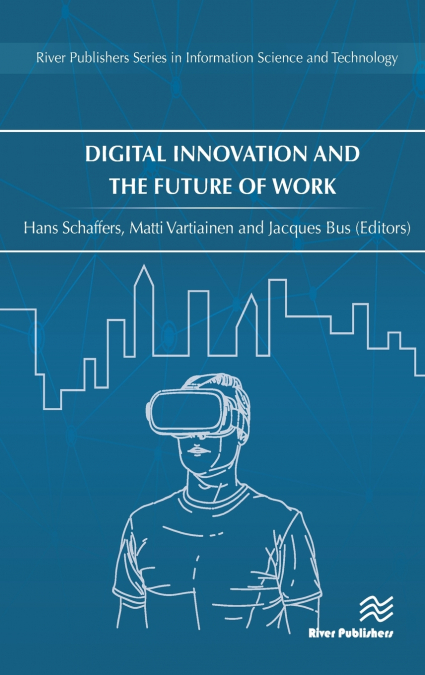
The concept of digitalization captures the widespread adoption of digital technologies in our lives, in the structure and functioning of organizations and in the transformation of our economy and society. Digital technologies for data processing and communication underly high-impact innovations including the Internet of Things, wireless multimedia, artificial intelligence, big data, enterprise platforms, social networks and blockchain. These digital innovations not only bring new opportunities for prosperity and wellbeing but also affect our behaviors, activities, and daily lives. They enable and shape new forms of production and new working practices in sectors such as manufacturing, healthcare, logistics and supply chains, energy, and public and business services. Digital innovations are not purely technological but form part of comprehensive systemic innovations of a sociotechnical and networked nature, requiring the alignment of technology, processes, organizations, and humans. Examples are platform-based work, customer driven value creating networks, and urban public service systems. Building on widespread networking, algorithmic decisions and sharing of personal data, these innovations raise intensive societal and ethical debates regarding key issues such as data sovereignty and privacy intrusion, business models based on data surveillance and negative externalization, quality of work and jobs, and market dominance versus regulation. In this context, this book focuses on the implications of digitalization for the domain of work. The book studies the changing nature of work as well as new forms of digitally enabled organizations, work practices and cooperation. The book sheds light on the technological, economic, and political forces shaping the new world of work and on the prospects for human-centric and responsible innovations. To this end, the book brings together a number of studies in five major topics: 1. The evolution of digital technology impacting ways of working; 2. The role of artificial intelligence in new ways of working; 3. Transformation of work, jobs and employment; 4. Digitalization and need for skills and competencies; and 5. New forms of decentralized working and cooperation.


Artículos relacionados

  • The Gandhian Iceberg
    Chris D Moore-Backman
    The Gandhian Iceberg presents a bold, new interpretation of Gandhian nonviolence from the rare perspective of an author who is equal parts writer, scholar, and frontlines practitioner. The book faces the current crisis of climate change and the intensification of social unrest around the world, and calls for a new convergence of serious, spiritually-rooted US nonviolence activi...
    Disponible

    11,52 €

  • Contemporary Developments in Child Protection
    Nigel Parton
    Volume 1 "Policy Changes and Challenges" takes as its central theme the ongoing and challenging issues which child protection agencies have to address and the policy and practice initiatives that are developed to try and address these. The volume includes papers on: the relationship between the decline in the rate of ‘unnatural’ deaths and the growth of concern about child abus...
  • Diversity in Information Technology Education
    Goran Trajkovski
    ...
  • Model-Driven Software Development
    Model-driven software development (MDSD) drastically alters the software development process, characterized by a high degree of innovation and productivity. However, quality assurance application in the domain of software models and model-driven software development is still in an emergent phase. Model-Driven Software Development: Integrating Quality Assurance provides in-depth...
  • Evidence-Based Practice in Nursing Informatics
    Andrew Chasin
    Because of the constant advances and dynamics within the nascent field of nursing informatics, many nurses struggle in practice as they continue to try and apply habitual communication practices in the new environment without any critical reflection on, and adaptation of, those practices. Evidence-Based Practice in Nursing Informatics: Concepts and Applications serves as a valu...
  • Actor-Network Theory and Technology Innovation
    Arthur Tatnall
    About 25 years ago, the first developments of ANT (Actor-Network Theory) took place, but it wasn’t until much later that researchers began to take it seriously. In the late 1990s, ANT began to take hold in the scientific community as a new and exciting approach to socio-technical research and social theory. Actor-Network Theory and Technology Innovation: Advancements and New Co...