Digenetic Trematodes of Indian Marine Fishes

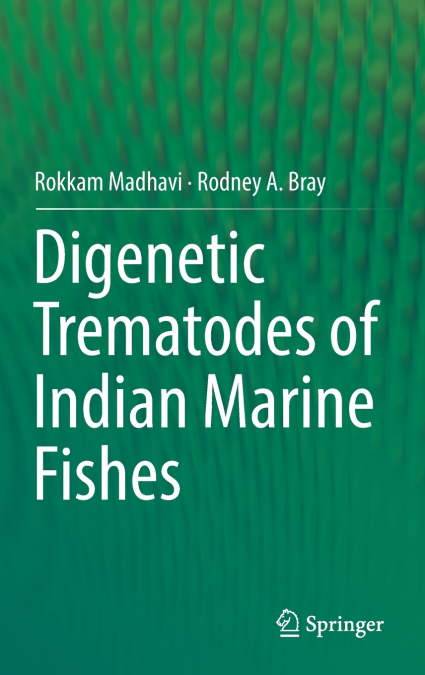
Digenetic Trematodes of Indian Marine Fishes

Rodney A. Bray / Rodney ABray / Rokkam Madhavi

210,06 €
IVA incluido
Consulta disponibilidad
Editorial:
Springer Nature B.V.
Año de edición:
2018
Materia
Biología marina
ISBN:
9789402415339

Selecciona una librería:

  • Librería Samer Atenea
  • Librería Aciertas (Toledo)
  • Kálamo Books
  • Librería Perelló (Valencia)
  • Librería Elías (Asturias)
  • Donde los libros
  • Librería Kolima (Madrid)
  • Librería Proteo (Málaga)

This book is the first to explore in detail the systematics and taxonomy of the digenean fauna of fish in Indian marine waters. It includes morphological descriptions of 648 species in 190 genera and 30 families. The figures from the original publications are enhanced and made more attractive. Each description is accompanied by information on hosts and distribution. Digenetic trematodes, usually known as Digeneans, are the most diverse group of metazoan parasites of marine fishes. They are parasitic flatworms (Phylum Platyhelminthes) with a complex life-cycle and as adults inhabit mainly the alimentary system and associated organs, but also occur in the blood, under the scales, in the body cavity and in the gall and urinary bladders. Keys to families, genera and species are provided, except for a few large and controversial genera, where morphological characters are insufficient for identification. Although there is extensive literature on Digeneans, it is scattered and largely in obscure local journals. Bringing together most of the primary literature on the subject, this book provides a primer for further study and a starting point for the use of modern molecular methods for the fauna of this region. Unique in its scope, it is a valuable resource for students, professional parasitologists and ecologists as well as fishery and wildlife biologists.
Artículos relacionados

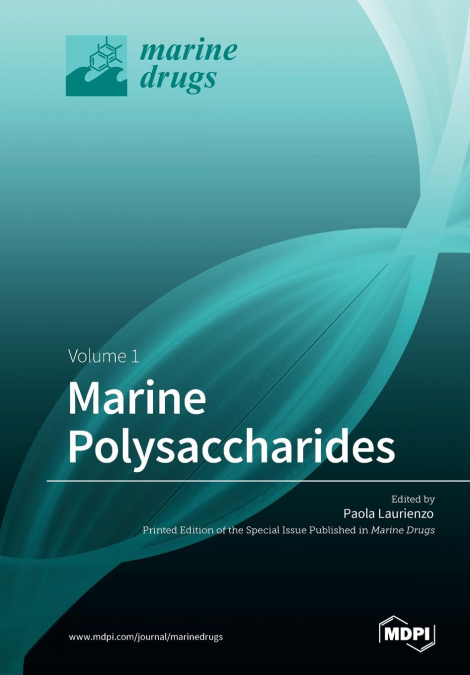
  • Marine Polysaccharides Volume 1
    Paola Laurienzo
    The field of marine polysaccharides is constantly evolving, due to progress in the discovery and production of new marine polysaccharides. Seaweed remains the most abundant source of polysaccharides, but recent advances in biotechnology have allowed the production of large quantities of polysaccharides from a variety of micro-algae, by controlling growth conditions and tailorin...
    Disponible

    75,60 €

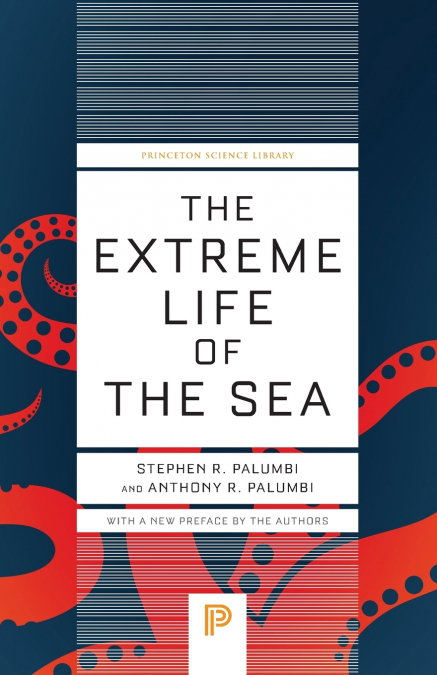
  • The Extreme Life of the Sea
    Anthony R. Palumbi / Stephen R. Palumbi
    A thrilling tour of the sea’s most extreme species, coauthored by one of the world’s leading marine scientistsThe ocean teems with life that thrives under difficult situations in unusual environments. The Extreme Life of the Sea takes readers to the absolute limits of the ocean world-the fastest and deepest, the hottest and oldest creatures of the oceans. It dives into the icy ...
    Disponible

    23,83 €

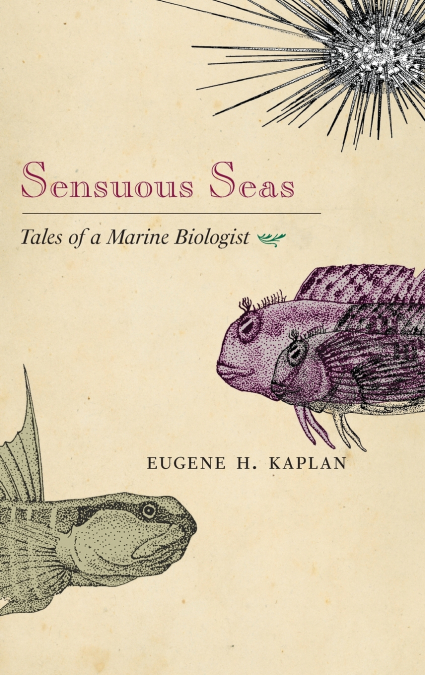
  • Sensuous Seas
    Eugene H. Kaplan
    Learning marine biology from a textbook is one thing. But take readers to the bottom of the sea in a submarine to discover living fossils or to coral reefs to observe a day in the life of an octopus, and the sea and its splendors come into focus, in brilliant colors and with immediacy. In Sensuous Seas, Eugene Kaplan offers readers an irresistibly irreverent voyage to the worl...
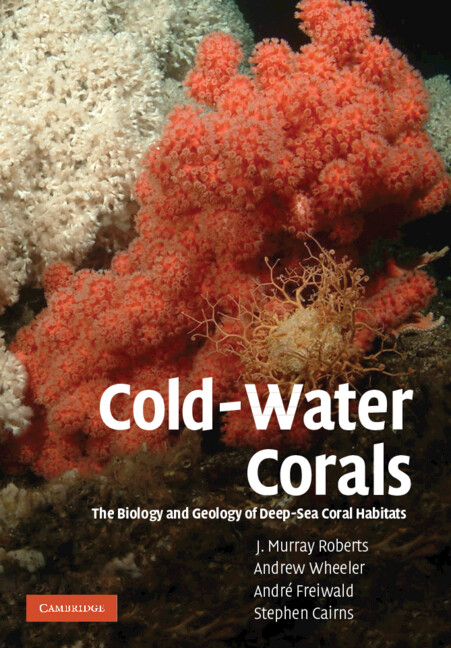
  • Cold-Water Corals
    André Freiwald / Andrew Wheeler / J. Murray Roberts
    ...
    Disponible

    86,12 €

  • Shark
    David Owen
    A superlative study of our planet’s dominant predator for millions of years. A major and fully indexed contribution to the preservation of this amazing creature, now much threatened by human activity - with losses from overfishing, pollution, and the destruction of their habitat.Although scientific knowledge of sharks is increasing rapidly, the author shows that there is still ...
    Disponible

    43,01 €

  • Marine Metabolites in Disease Management, VOL 1
    In recent years, the exploration of marine ecosystems has unveiled a plethora of bioactive compounds with remarkable therapeutic potential. The oceans, covering over 70% of the Earth’s surface, are a rich source of biodiversity, harbouring organisms that have evolved unique biochemical pathways to survive in extreme conditions. These marine metabolites, produced by marine micro...