Desiring the Good

Desiring the Good

Katja Maria Vogt

141,30 €
IVA incluido
Consulta disponibilidad
Editorial:
Oxford University Press
Año de edición:
2017
Materia
Ética y filosofía moral
ISBN:
9780190692476

Selecciona una librería:

  • Librería Samer Atenea
  • Librería Aciertas (Toledo)
  • Kálamo Books
  • Librería Perelló (Valencia)
  • Librería Elías (Asturias)
  • Donde los libros
  • Librería Kolima (Madrid)
  • Librería Proteo (Málaga)

Desiring the Good defends a novel and distinctive approach in ethics that is inspired by ancient philosophy. Ethics, according to this approach, starts from one question and its most immediate answer: 'what is the good for human beings?'--'a well-going human life.' Ethics thus conceived is broader than moral philosophy. It includes a range of topics in psychology and metaphysics. Plato’s Philebus is the ancestor of this approach. Its first premise, defended in Book I of Aristotle’s Nicomachean Ethics, is that the final agential good is the good human life. Though Aristotle introduces this premise while analyzing human activities, it is absent from approaches in the theory of action that self-identify as Aristotelian. This absence, Vogt argues, is a deep and far-reaching mistake, one that can be traced back to Elizabeth Anscombe’s influential proposals. And yet, the book is Anscombian in spirit. It engages with ancient texts in order to contribute to philosophy today, and it takes questions about the human mind to be prior to, and relevant to, substantive normative matters. In this spirit, Desiring the Good puts forward a new version of the Guise of the Good, namely that desire to have one’s life go well shapes and sustains mid- and small-scale motivations. A theory of good human lives, it is argued, must make room for a plurality of good lives. Along these lines, the book lays out a non-relativist version of Protagoras’s Measure Doctrine and defends a new kind of realism about good human lives.
Artículos relacionados

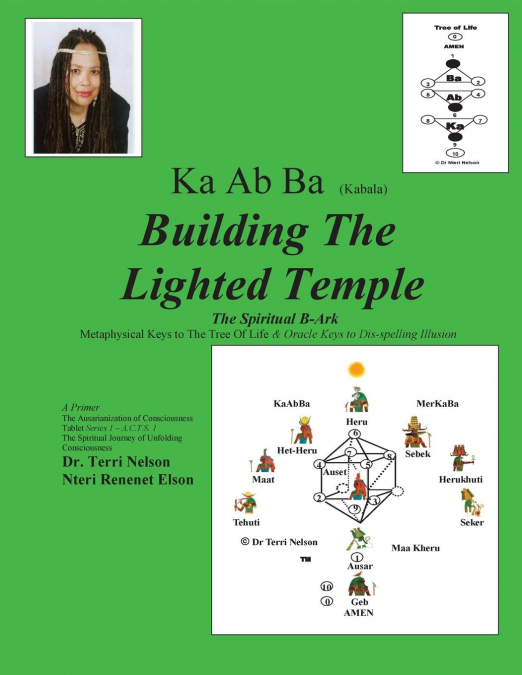
  • Ka Ab Ba Building The Lighted Temple
    Dr Terri R. Nelson / Dr Terri RNelson
    The book KaAbBa Building The Lighted Temple/Metaphysical Keys to the Tree of Life draws a circle that is inclusive of the Afrikan origin of the Ancient Kemetic/Egyptian wisdom. It reveals the undeniable root and link of Ancient Africa to all the religious systems that would develop worldwide. This book is explosive in its power to convey the meaning of KaAbBa, the Medu Neter  (...
    Disponible

    37,41 €

  • Technoethics and the Evolving Knowledge Society
    Rocci Luppicini
    Recently, there has been a major push to rediscover the ethical dimension of technology across the sciences, social sciences, and humanities. Technoethics and the Evolving Knowledge Society: Ethical Issues in Technological Design, Research, Development, and Innovation examines human processes and practices connected to technology embedded within social, political, and moral sph...
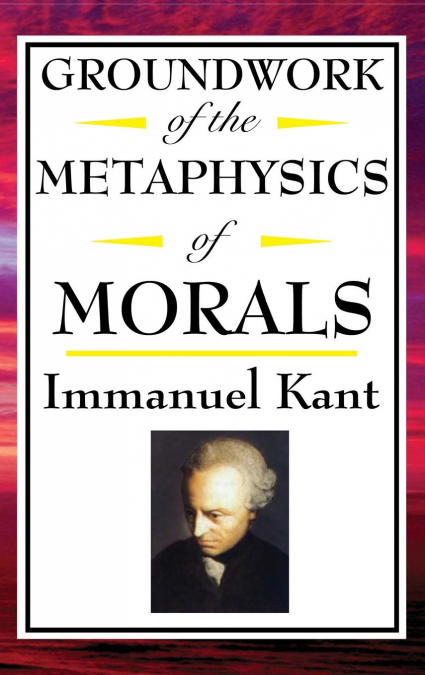
  • Kant
    Immanuel Kant
    Kant’s Groundwork of the Metaphysics of Morals is one of the most important works in modern moral philosophy. It belongs beside Plato, Aristotle, Machiavelli, and Hobbes. Here Kant sets out to articulate and defend the Categorical Imperative - the fundamental principle that underlies moral reasoning - and to lay the foundation for a comprehensive account of justice and human vi...
  • On the Duty of Civil Disobedience
    HENRY DAVID THOREAU
    Civil Disobedience argues that citizens should not permit their governments to overrule their consciences, and that they have a duty to avoid allowing their acquiescence to enable the government to make them the agents of injustice. Thoreau was motivated in part by his disgust with slavery and the Mexican-American War, but the sentiments he expresses here are just as pertinent ...
  • Beyond Good and Evil
    Friedrich Nietzsche
    Nietzsche, though primarily a philosopher, wrote widely on art, philology, history, religion, tragedy, culture, and science.  In 1886, at the height of his powers, he published Beyond Good and Evil.  Here he examines much of the best of human thought--dogmatic philosophy, Judeo-Christian morality, science and democracy – and finds it lacking.  Rejecting “slave-morality” he pres...
  • Beyond Good and Evil
    Friedrich Nietzsche
    Nietzsche, though primarily a philosopher, wrote widely on art, philology, history, religion, tragedy, culture, and science.  In 1886, at the height of his powers, he published Beyond Good and Evil.  Here he examines much of the best of human thought--dogmatic philosophy, Judeo-Christian morality, science and democracy – and finds it lacking.  Rejecting “slave-morality” he pres...
    Disponible

    9,99 €

Otros libros del autor

  • Belief and Truth
    Katja Maria Vogt
    Katja Maria Vogt’s Belief and Truth: A Skeptic Reading of Plato explores a Socratic intuition about the difference between belief and knowledge. Beliefs -- doxai -- are deficient cognitive attitudes. In believing something, one accepts some content as true without knowing that it is true; one holds something to be true that could turn out to be false. Since our actions reflect ...
    Disponible

    69,71 €

  • Law, Reason, and the Cosmic City
    Katja Maria Vogt
    ...
    Disponible

    76,11 €