 Librería Samer Atenea
 Kálamo Books
 Librería Elías (Asturias)
 Librería Kolima (Madrid)
 Librería Proteo (Málaga)
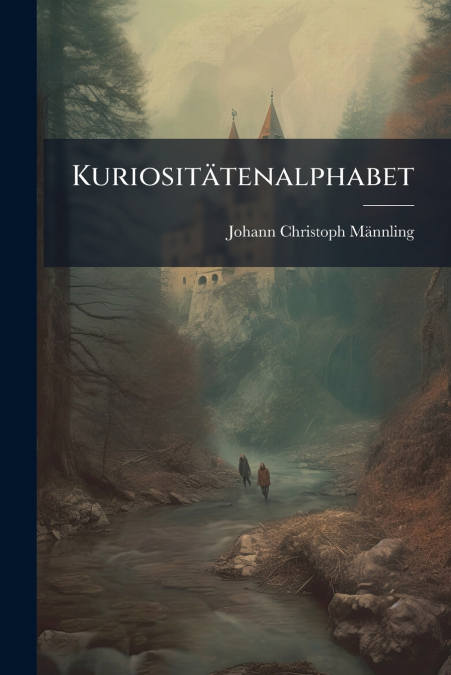
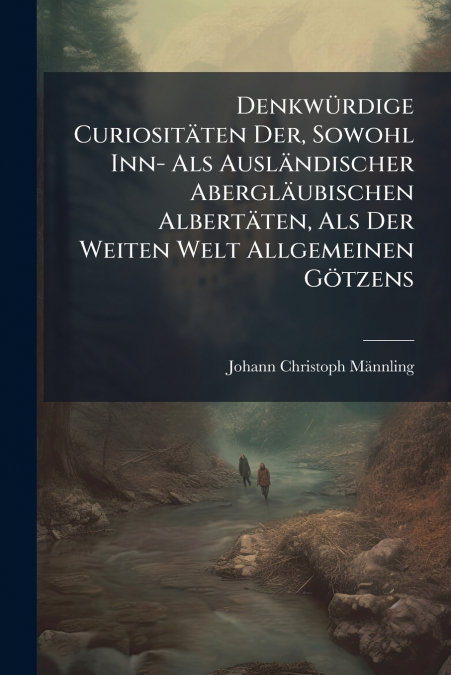
'Denkwürdige Curiositäten Der, Sowohl Inn- Als Ausländischer Abergläubischen Albertäten, Als Der Weiten Welt Allgemeinen Götzens' explores noteworthy and curious superstitions, both domestic and foreign, along with idolatrous practices prevalent throughout the world. Authored by Johann Christoph Männling, this work delves into the diverse tapestry of human beliefs and their manifestations in various cultures. The book provides a historical perspective on folklore and mythology, examining how superstitious beliefs and idolatry have shaped societies and influenced human behavior. It offers insights into the origins and evolution of these practices, shedding light on the cultural and societal contexts in which they emerged. A valuable resource for those interested in the history of religion, folklore, and the study of human beliefs, the book presents a detailed account of various superstitions and idolatrous customs.This work has been selected by scholars as being culturally important, and is part of the knowledge base of civilization as we know it. This work was reproduced from the original artifact, and remains as true to the original work as possible. Therefore, you will see the original copyright references, library stamps (as most of these works have been housed in our most important libraries around the world), and other notations in the work.This work is in the public domain in the United States of America, and possibly other nations. Within the United States, you may freely copy and distribute this work, as no entity (individual or corporate) has a copyright on the body of the work.As a reproduction of a historical artifact, this work may contain missing or blurred pages, poor pictures, errant marks, etc. Scholars believe, and we concur, that this work is important enough to be preserved, reproduced, and made generally available to the public. We appreciate your support of the preservation process, and thank you for being an important part of keeping this knowledge alive and relevant.