
Inicio > Sociedad y ciencias sociales > Educación pedagogía > Democratising English Language Research Education in the Face of Eurocentric Knowledge Transfer
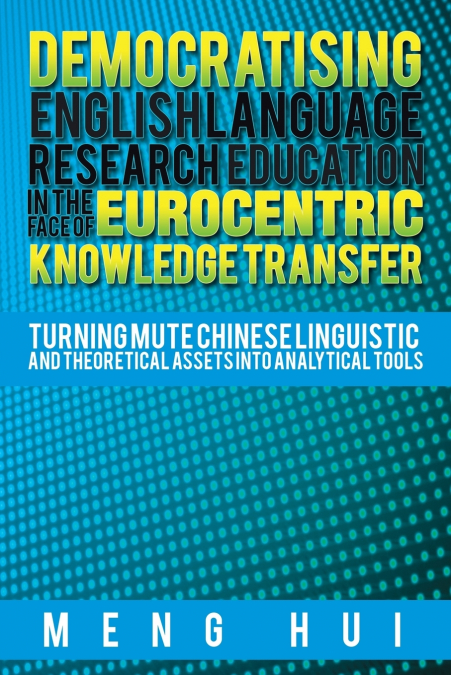
Democratising English Language Research Education in the Face of Eurocentric Knowledge Transfer

Democratising English Language Research Education in the Face of Eurocentric Knowledge Transfer

Democratising English Language Research Education in the Face of Eurocentric Knowledge Transfer

Meng Hui

19,68 €
IVA incluido
Disponible
Editorial:
AuthorHouse
Año de edición:
2015
Materia
Educación pedagogía
ISBN:
9781496967176
19,68 €
IVA incluido
Disponible

Selecciona una librería:

  • Librería Samer Atenea
  • Librería Aciertas (Toledo)
  • Kálamo Books
  • Librería Perelló (Valencia)
  • Librería Elías (Asturias)
  • Donde los libros
  • Librería Kolima (Madrid)
  • Librería Proteo (Málaga)

The number of Chinese research students studying in Australian universities is growing (Bradley, 2008). They are supposed to adapt to the new academic culture and their own intellectual assets are marginalised or even ignored (Singh, 2009, 2010; Singh & Han, 2009, 2010). Being situated in an academic environment which is Eurocentric, hierarchical, and largely dominated by the Western or Euro-American theory, in most cases, these students have to keep their own intellectual assets silent. This is another representation of Eurocentric knowledge diffusion (Alatas, 2006; Connell, 2007). However, despite all these unfavourable situations, some Chinese international research students have used some Chinese intellectual assets while doing research in Australia (Han, 2006; Han & Zhao, 2008; Singh & Han, 2009, 2010). Informed by Ranciere’s concepts of democracy (1991, 2006a, 2007b, 2009c) and mute speech (1999, 2007b, 2010a), this study makes original contribution to knowledge through (i) advancing a claim for, and an approach to democratising Australian research education and (ii) developing the 'mute speech' pedagogy which might help engaging non-Western theoretical knowledge in this process.

Artículos relacionados

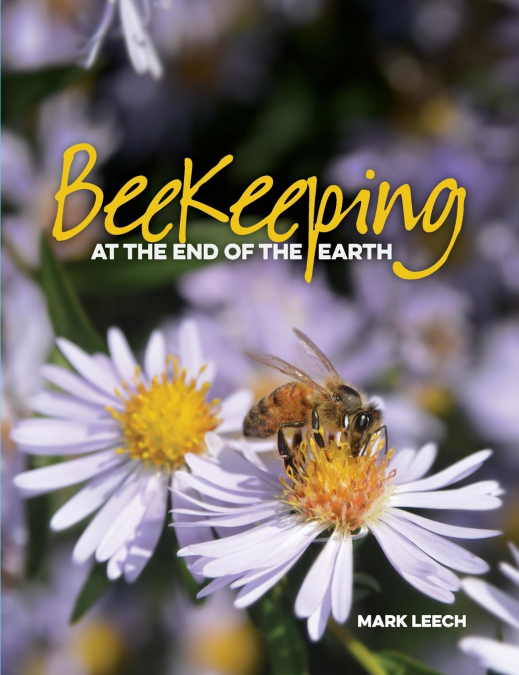
  • Beekeeping At The End Of The Earth
    Mark David Leech
    Beekeeping at the End of the Earth, an essential read for learning about beekeeping in a cool temperate climate with a focus on Tasmania our island home.  One hundred beekeepers one hundred different ways to keep bees.Beekeeping At The End Of The Earth is a practical insight into cool climate beekeeping with a focus on Tasmania, our island home.Richly illustrated with unique di...
    Disponible

    45,16 €

  • Be the One for Kids
    Ryan Sheehy
    One person can make a difference.That person can be you. “I want to show others that one person can make the difference in a child’s life. I want all educators, parents, coaches, and everyone in between to know they have power to Be the One for Kids.” —Ryan Sheehy If you ever feel like you’re all alone or think that no one gets you, just imagine how your students feel. Kids wan...
    Disponible

    27,99 €

  • Handbook of Research on E-Learning Standards and Interoperability
    As the e-learning industry continues to expand and the methods and tools necessary to create and maintain content and infrastructure applications become more complicated, there is an inherent need for these applications to interoperate and exchange data in order to better support the needs of learners and educators. Handbook of Research on E-Learning Standards and Interoperabil...
  • Teaching in the Knowledge Society
    Antonio Cartelli
    ...
  • Enhancing Learning Through Human Computer Interaction
    Elspeth McKay
    ...
  • Learning Objects for Instruction
    Pamela Taylor Northrup
    ...