Inicio > Sociedad y ciencias sociales > Política y gobierno > Dangerous Language - Esperanto under Hitler and Stalin
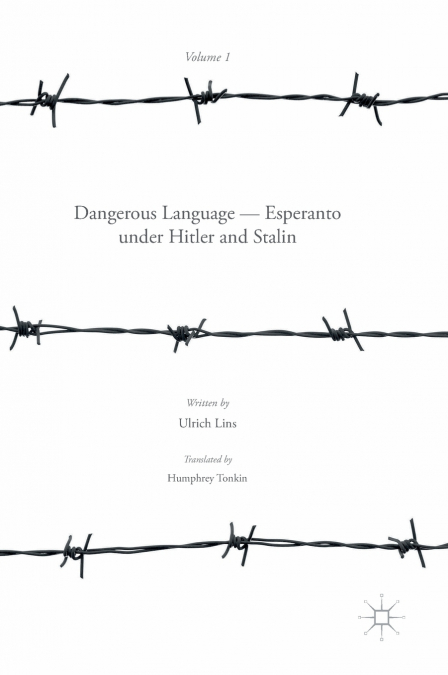
Dangerous Language - Esperanto under Hitler and Stalin

Dangerous Language - Esperanto under Hitler and Stalin

Ulrich Lins / Humphrey Tonkin

146,08 €
IVA incluido
Disponible
Editorial:
Springer Nature B.V.
Año de edición:
2020
Materia
Política y gobierno
ISBN:
9781349715053
146,08 €
IVA incluido
Disponible

Selecciona una librería:

  • Librería Samer Atenea
  • Librería Aciertas (Toledo)
  • Kálamo Books
  • Librería Perelló (Valencia)
  • Librería Elías (Asturias)
  • Donde los libros
  • Librería Kolima (Madrid)
  • Librería Proteo (Málaga)

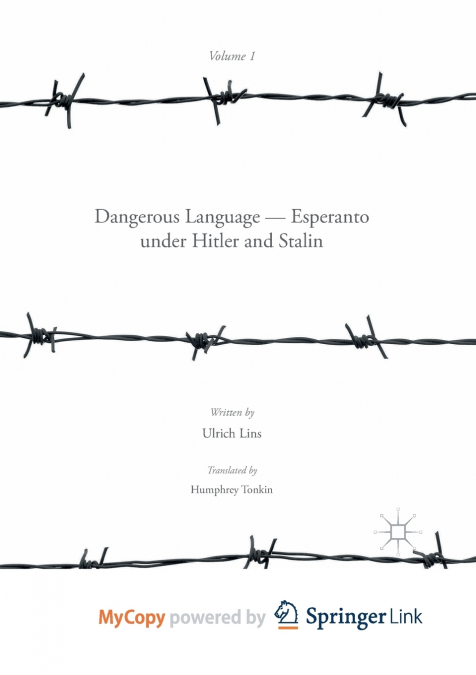
This is Volume 1 of Dangerous Language. This book examines the rise of the international language Esperanto, launched in 1887 as a proposed solution to national conflicts and a path to a more tolerant world. The chapters in this volume chart the emergence of Esperanto as an answer to a widespread democratic desire for direct person-to-person international communication regardless of political boundaries. Its early success was limited, mostly because of the Czarist regime’s suspicion of direct communication with foreigners, and, later, similar suspicion by dictatorial regimes generally. As speakers of a 'dangerous language,' its adepts were harassed and persecuted, especially in Germany and the Soviet Union. This book argues that the fate of Esperanto over the 130 years of its existence serves as a barometer to measure the degree to which regimes tolerate spontaneous personal contact with other countries and allow the pursuit of self-education outside prescribed national or ideological constraints. This book will appeal to a wide readership, including linguists, historians, political scientists and others interested in the history of the twentieth century from the unusual perspective of language. This volume is complemented by the sister volume Dangerous Language - Esperanto and the Decline of Stalinism which offers a concentration on the Cold War history of Esperanto in Eastern Europe.
Artículos relacionados

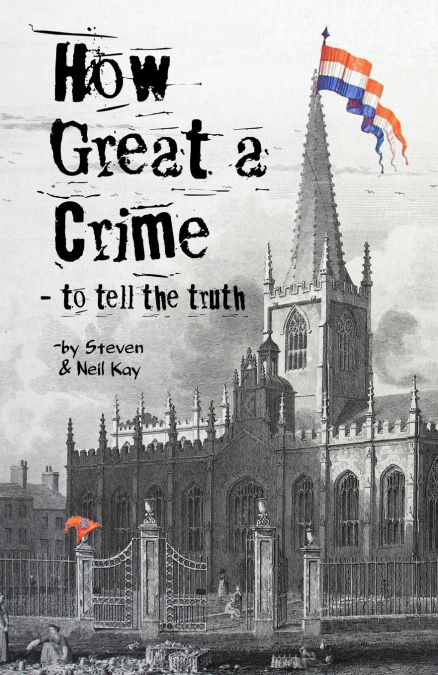
  • How Great a Crime - to tell the truth
    Neil Kay / Steven Kay
    Joseph Gales was one of the all-time great Sheffielders – forget Joe Cocker, Jessica Ennis-Hill, Sean Bean or Michael Palin. These are all minnows compared to Joseph Gales – and their stories are boring besides that of the Galeses. The Galeses story has been forgotten and has not been brought together in one place before – it is not just something dredged up from history – an i...
    Disponible

    10,33 €

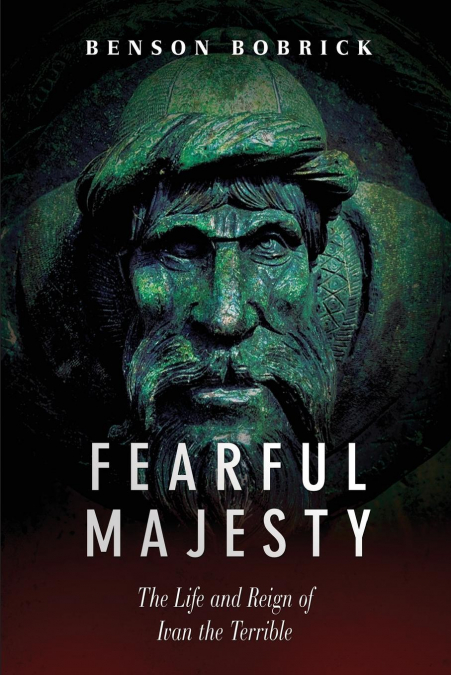
  • Fearful Majesty
    Benson Bobrick
    Ivan the Terrible - the name evokes the legend of a cruel and dangerously insane tyrant. Fearful Majesty explores that legend and exposes the man, his nature, and his time.This acclaimed biography of one of Russia’s most important and tyrannical rulers is not only a rich, readable biography, it is also surprisingly timely, revealing how many of the issues Russia faces today hav...
    Disponible

    19,27 €

  • Economic Optimization of Innovation & Risk
    Robert Shuler
    A Theory of Crash Rate for Private & Public Projects with Critical or non-Critical systems.Analyzing & managing risk has been a quest for 5000 years, and is essential to everything from water supplies, finance, and agriculture to computers and space travel. At last there is a quantitative theory and a simple equation that allows you to: - choose your failure rate - get there...
    Disponible

    13,02 €

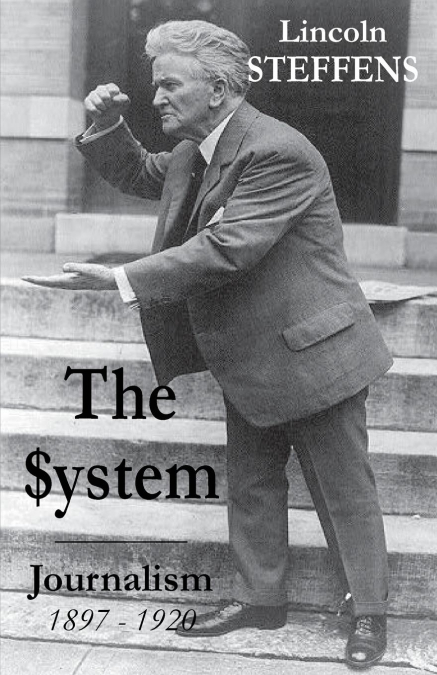
  • The System
    Lincoln Steffens
    The 'muckraker' Lincoln Steffens dug deep into business criminality and political corruption in a powerful series of articles written for McClure's magazine. Establishment newspapers and 'System' politicians dismissed his work as just another example of the decrepit modern journalism that could never pass for genuine writing. But Steffens' dogged quest for truth and justice set...
    Disponible

    23,66 €

  • Digital Activism in Asia Reader
    The digital turn might as well be marked as an Asian turn. From flash-mobs in Taiwan to feminist mobilisations in India, from hybrid media strategies of Syrian activists to cultural protests in Thailand, we see the emergence of political acts that transform the citizen from being a beneficiary of change to becoming an agent of change. In co-shaping these changes, what the digit...
    Disponible

    22,19 €

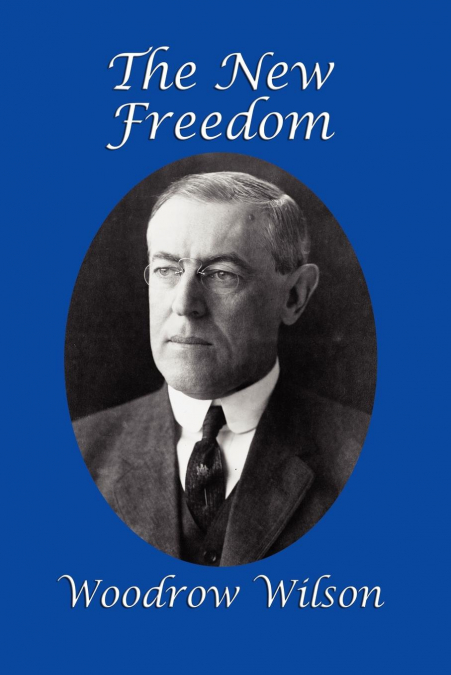
  • The New Freedom
    Woodrow Wilson
    In 1912, Woodrow Wilson was the Democratic nominee for President of the United States. He campaigned against the Republican incumbent, William Howard Taft, and Taft’s predecessor, Theodore Roosevelt, who had split off from the Republican Party to form his own Progressive, or Bull Moose, Party. Much of the campaign focused on the US economy, particularly the candidates’ views of...
    Disponible

    8,67 €

Otros libros del autor

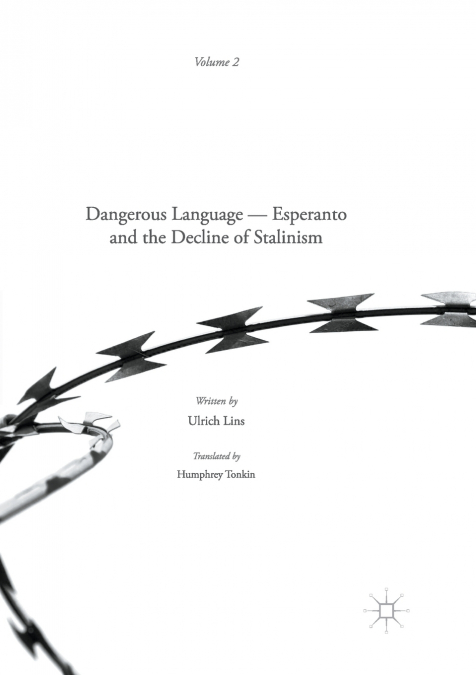
  • Dangerous Language - Esperanto and the Decline of Stalinism
    Ulrich Lins / Humphrey Tonkin
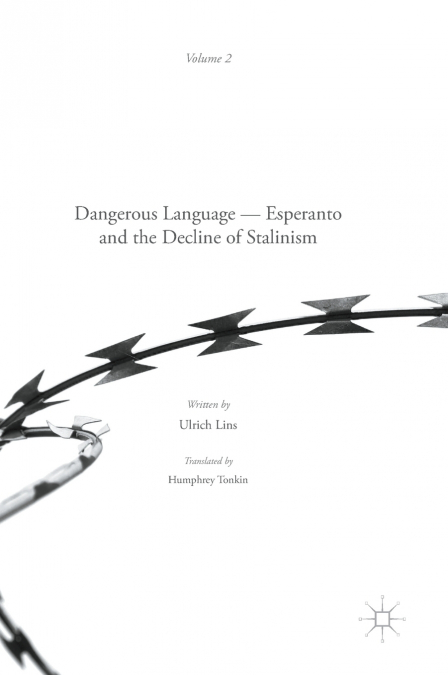
    This is Volume 2 of Dangerous Language. This book examines the rise of the international language Esperanto, launched in 1887 as a proposed a solution to national conflicts and a path to a more tolerant world. The chapters in this volume examine the position of Esperanto in Eastern Europe during the Cold War; in particular it explores Stalin’s final years and the gradual re-eme...
    Disponible

    35,89 €

  • Dangerous Language - Esperanto under Hitler and Stalin
    Ulrich Lins / Humphrey Tonkin
    This is Volume 1 of Dangerous Language. This book examines the rise of the international language Esperanto, launched in 1887 as a proposed solution to national conflicts and a path to a more tolerant world. The chapters in this volume chart the emergence of Esperanto as an answer to a widespread democratic desire for direct person-to-person international communication regardle...
  • Dangerous Language - Esperanto and the Decline of Stalinism
    Ulrich Lins / Humphrey Tonkin
    This is Volume 2 of Dangerous Language. This book examines the rise of the international language Esperanto, launched in 1887 as a proposed a solution to national conflicts and a path to a more tolerant world. The chapters in this volume examine the position of Esperanto in Eastern Europe during the Cold War; in particular it explores Stalin’s final years and the gradual re-eme...
  • Dangerous Language - Esperanto under Hitler and Stalin
    Ulrich Lins / Humphrey Tonkin
    This is Volume 1 of Dangerous Language. This book examines the rise of the international language Esperanto, launched in 1887 as a proposed solution to national conflicts and a path to a more tolerant world. The chapters in this volume chart the emergence of Esperanto as an answer to a widespread democratic desire for direct person-to-person international communication regardle...
    Disponible

    47,91 €