Cultural Logics and Global Economies

Cultural Logics and Global Economies

Edward F. Fischer / Edward FFischer

40,31 €
IVA incluido
Disponible
Editorial:
Univ of Chicago behalf of University of Texas
Año de edición:
2001
Materia
Sociedad y cultura: general
ISBN:
9780292725348
40,31 €
IVA incluido
Disponible

Selecciona una librería:

  • Librería Samer Atenea
  • Librería Aciertas (Toledo)
  • Kálamo Books
  • Librería Perelló (Valencia)
  • Librería Elías (Asturias)
  • Donde los libros
  • Librería Kolima (Madrid)
  • Librería Proteo (Málaga)

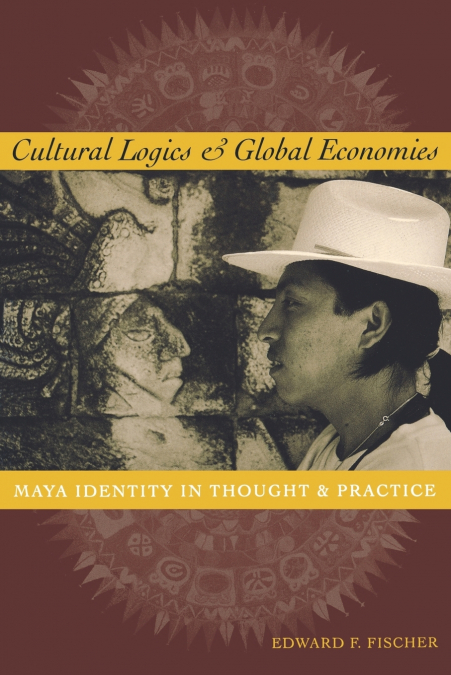
A Choice Outstanding Academic Book, 2002 As ideas, goods, and people move with increasing ease and speed across national boundaries and geographic distances, the economic changes and technological advances that enable this globalization are also paradoxically contributing to the balkanization of states, ethnic groups, and special interest movements. Exploring how this process is playing out in Guatemala, this book presents an innovative synthesis of the local and global factors that have led Guatemala’s indigenous Maya peoples to assert and defend their cultural identity and distinctiveness within the dominant Hispanic society. Drawing on recent theories from cognitive studies, interpretive ethnography, and political economy, Edward F. Fischer looks at individual Maya activists and local cultures, as well as changing national and international power relations, to understand how ethnic identities are constructed and expressed in the modern world. At the global level, he shows how structural shifts in international relations have opened new venues of ethnic expression for Guatemala’s majority Maya population. At the local level, he examines the processes of identity construction in two Kaqchikel Maya towns, Tecpán and Patzún, and shows how divergent local norms result in different conceptions and expressions of Maya-ness, which nonetheless share certain fundamental similarities with the larger pan-Maya project. Tying these levels of analysis together, Fischer argues that open-ended Maya 'cultural logics' condition the ways in which Maya individuals (national leaders and rural masses alike) creatively express their identity in a rapidly changing world.

Artículos relacionados

  • The Gandhian Iceberg
    Chris D Moore-Backman
    The Gandhian Iceberg presents a bold, new interpretation of Gandhian nonviolence from the rare perspective of an author who is equal parts writer, scholar, and frontlines practitioner. The book faces the current crisis of climate change and the intensification of social unrest around the world, and calls for a new convergence of serious, spiritually-rooted US nonviolence activi...
    Disponible

    11,52 €

  • Contemporary Developments in Child Protection
    Nigel Parton
    Volume 1 "Policy Changes and Challenges" takes as its central theme the ongoing and challenging issues which child protection agencies have to address and the policy and practice initiatives that are developed to try and address these. The volume includes papers on: the relationship between the decline in the rate of ‘unnatural’ deaths and the growth of concern about child abus...
  • Diversity in Information Technology Education
    Goran Trajkovski
    ...
  • Model-Driven Software Development
    Model-driven software development (MDSD) drastically alters the software development process, characterized by a high degree of innovation and productivity. However, quality assurance application in the domain of software models and model-driven software development is still in an emergent phase. Model-Driven Software Development: Integrating Quality Assurance provides in-depth...
  • Evidence-Based Practice in Nursing Informatics
    Andrew Chasin
    Because of the constant advances and dynamics within the nascent field of nursing informatics, many nurses struggle in practice as they continue to try and apply habitual communication practices in the new environment without any critical reflection on, and adaptation of, those practices. Evidence-Based Practice in Nursing Informatics: Concepts and Applications serves as a valu...
  • Actor-Network Theory and Technology Innovation
    Arthur Tatnall
    About 25 years ago, the first developments of ANT (Actor-Network Theory) took place, but it wasn’t until much later that researchers began to take it seriously. In the late 1990s, ANT began to take hold in the scientific community as a new and exciting approach to socio-technical research and social theory. Actor-Network Theory and Technology Innovation: Advancements and New Co...