Inicio > Tecnología, ingeniería, agricultura > Agricultura y explotación agropecuaria > Cultivo de Arroz (Oryza Sativa L.) con Nitrógeno de Liberación Controlada
Cultivo de Arroz (Oryza Sativa L.) con Nitrógeno de Liberación Controlada

Cultivo de Arroz (Oryza Sativa L.) con Nitrógeno de Liberación Controlada

Jean Carlos Acosta Vargas

44,36 €
IVA incluido
Disponible
Editorial:
Eliva Press
Año de edición:
2024
Materia
Agricultura y explotación agropecuaria
ISBN:
9789999319614
44,36 €
IVA incluido
Disponible

Selecciona una librería:

  • Librería Samer Atenea
  • Librería Aciertas (Toledo)
  • Kálamo Books
  • Librería Perelló (Valencia)
  • Librería Elías (Asturias)
  • Donde los libros
  • Librería Kolima (Madrid)
  • Librería Proteo (Málaga)

Se evaluó el rendimiento del cultivo de arroz (Oryza sativa L.), utilizando fertilizante de liberación controlada (Nitroxtend + S), el área de estudio fue de dos hectáreas y se realizó un mecanizado primario solo con rastra en enero del 2023. Se estableció un diseño experimental factorial simple en bloques al azar, con cuatro tratamientos con diferentes porcentajes de fertilizante nitrogenado, T1 (0%N) de fertilizantes nitrogenados; T2 (50%N); T3 (100%N); y T4 (150%N), los porcentajes de las aplicaciones nitrogenadas se realizaron de acuerdo con lo indicado por un ingeniero agrónomo, basados en el análisis químico del suelo antes de la preparación y en el seguimiento semanal al cultivo. En la investigación se evaluó la disponibilidad de nitrógeno (N) en el suelo tomando muestras antes de aplicar el abono por el método del carbono orgánico, el seguimiento fenológico al cultivo se realizó en las etapas de geminación, inicio de macolla, máximo macollamiento, embuchamiento, espigado y floración, además, por medio de aforadores de 50 x 50 cm se evaluó el rendimiento y se comparó con lo cosechado en la combinada John Deere 4425. El análisis estadístico se realizó mediante Análisis de Varianza (ANOVA), Test de Fisher LSD y diagramas de caja y bigotes. Mientras que el análisis tecno económico se realizó en base a la producción y al costo de operación entre los 4 planes de fertilización. Los resultados mostraron que los ciclos fenológicos varían respecto al tiempo en los diferentes tratamientos, Además de presentar diferencias estadísticamente significativas en alturas y el número de macollas en cada etapa fonológica, estos efectos conllevaron que los tratamientos T1 (0%N) y T2 (50%N) terminaran su ciclo fenológico con 15 días antes que los tratamientos T3 (100%N) y T4 (150%N), debido al estrés nutricional. Se evidenció que en cosecha T3 (100%N) presentó el mayor rendimiento con 9,48 t/ha, T2 (50%N) y T4 (150%N) presentaron 7,19 y 7,91 t/ha, respectivamente, no tuvieron diferencias estadísticamente significativas, y el rendimiento más bajo se registró en T1 (0%N) con 5,86 t/ha.
Artículos relacionados

  • Australia and the Origins of Agriculture
    Rupert Gerritsen
    In this work the author explores issues of the origin of agriculture in Australia such as the “failure” of agriculture to develop indigenously, and its “failure” to diffuse into Australia, despite contact with Indonesian (Macassan) agriculturalists or New Guinean horticulturalists. Although not always explicitly stated or recognised, significant differences probably exist in th...
    Disponible

    106,78 €

  • Microbial Cultures and Enzymes in Dairy Technology
    Microorganisms are an integral part of the fermentation process in food products and help to improve sensory and textural properties of the products. As such, it is vital to explore the current uses of microorganisms in the dairy industry. Microbial Cultures and Enzymes in Dairy Technology is a critical scholarly resource that explores multidisciplinary uses of cultures and enz...
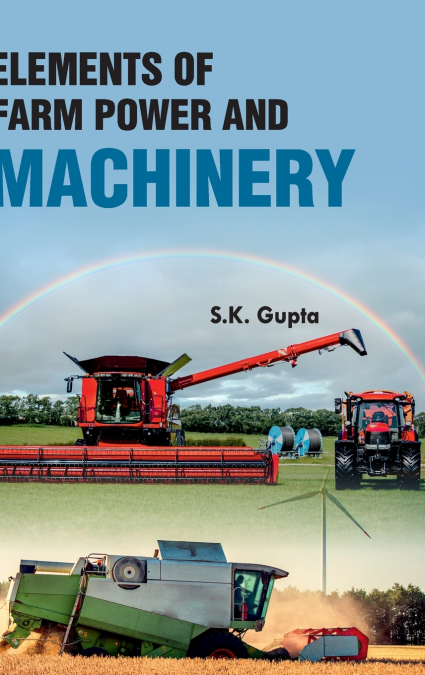
  • Elements of Farm Power and Machinery
    S K Gupta
    Farm mechanization has played a vital role in increasing production, productivity and profitability of farm enterprise. It is mainly attributed to timeliness in farm operations and reduction in application of various inputs through their precise metering, application and higher use efficiencies. Being one of the most important elements of modern agriculture, farm power and mach...
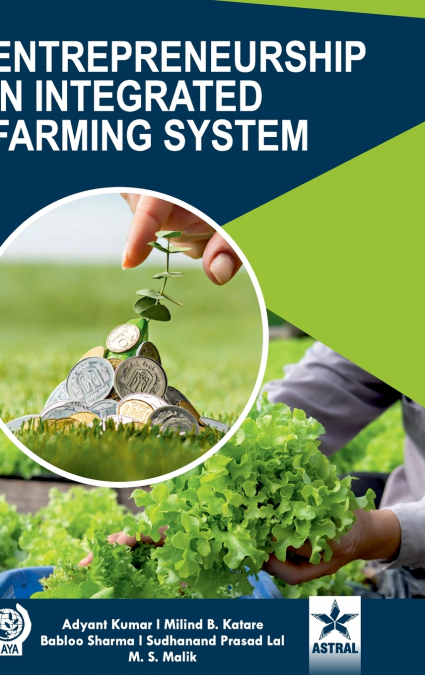
  • Entrepreneurship in Integrated Farming System
    The book deals with the essential information regarding entrepreneurial development of integrated farming system models throughout the country, where agriculture and allied components are extensively presented under the same umbrella in a sustainable way. This book will be of immense use in imparting knowledge on diversified and suitable IFS models based research findings and p...
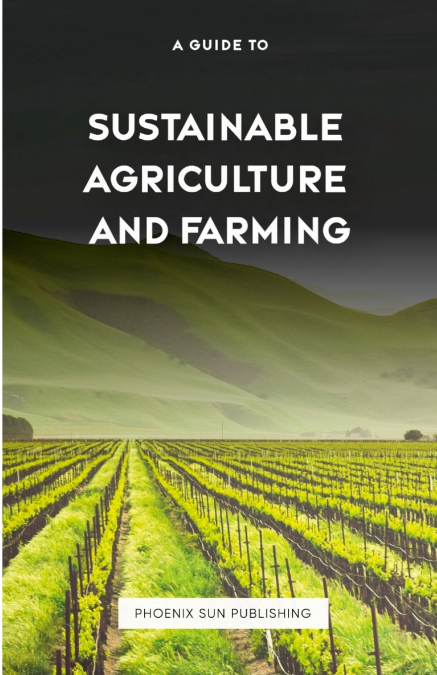
  • The Guide to Sustainable Agriculture and Farming
    PS Publishing
    'The Guide to Sustainable Agriculture and Farming' is an essential resource for anyone interested in sustainable and regenerative farming practices. From understanding the environmental and social impacts of conventional agriculture to exploring innovative solutions for sustainable farming, this book offers a comprehensive and inspiring guide to creating a healthier and more su...
    Disponible

    14,06 €

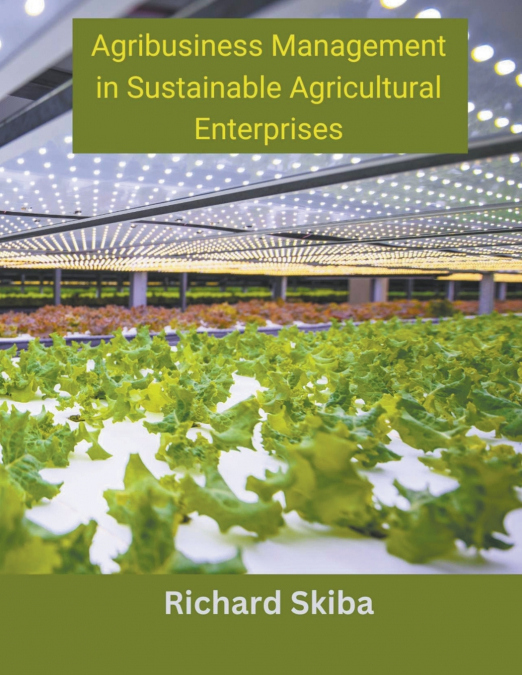
  • Agribusiness Management in Sustainable Agricultural Enterprises
    Richard Skiba
    This book provides a comprehensive overview of sustainable agriculture practices and strategies aimed at improving land use, implementing renewable energy and recycling systems, managing climate risks, developing workplace policies for sustainability, and applying effective agribusiness management practices.Part 1 introduces various approaches to sustainable agriculture, includ...
    Disponible

    30,41 €