 Librería Samer Atenea
 Kálamo Books
 Librería Elías (Asturias)
 Librería Kolima (Madrid)
 Librería Proteo (Málaga)
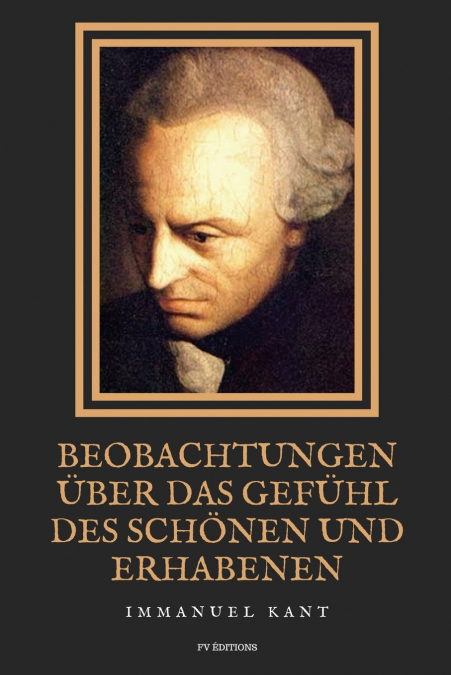
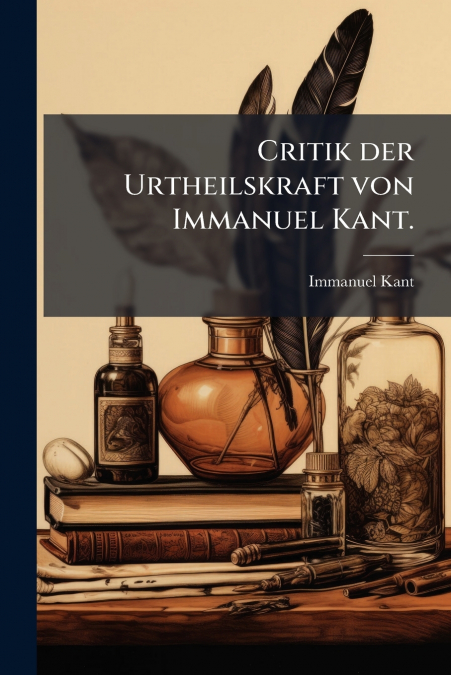
Critik der Urtheilskraft (Critique of Judgment) ist das dritte der drei großen Werke der 'Kritischen Philosophie' Immanuel Kants. Veröffentlicht im Jahr 1790, überbrückt es die Kluft zwischen der 'Kritik der reinen Vernunft', die sich mit dem Verstand und dem Erkennen befasst, und der 'Kritik der praktischen Vernunft', die sich mit Moralität und dem Willen auseinandersetzt. Kants Untersuchung des Urteilsvermögens konzentriert sich auf ästhetische Erfahrung und teleologische Urteile in der Natur. Das Werk untersucht die Prinzipien, die unseren Urteilen über Schönheit und Erhabenheit zugrunde liegen, und analysiert, wie wir die Natur als zweckmäßig und organisiert wahrnehmen. Kants bahnbrechende Analyse der Ästhetik hat tiefgreifende Auswirkungen auf die Kunsttheorie, die Literaturkritik und das Verständnis menschlicher Erkenntnis. Die 'Critik der Urtheilskraft' bleibt ein Eckpfeiler der philosophischen Ästhetik und bietet bis heute wertvolle Einblicke in die menschliche Erfahrung von Schönheit, Zweckmäßigkeit und Erkenntnis.This work has been selected by scholars as being culturally important, and is part of the knowledge base of civilization as we know it. This work was reproduced from the original artifact, and remains as true to the original work as possible. Therefore, you will see the original copyright references, library stamps (as most of these works have been housed in our most important libraries around the world), and other notations in the work.This work is in the public domain in the United States of America, and possibly other nations. Within the United States, you may freely copy and distribute this work, as no entity (individual or corporate) has a copyright on the body of the work.As a reproduction of a historical artifact, this work may contain missing or blurred pages, poor pictures, errant marks, etc. Scholars believe, and we concur, that this work is important enough to be preserved, reproduced, and made generally available to the public. We appreciate your support of the preservation process, and thank you for being an important part of keeping this knowledge alive and relevant.