 Librería Samer Atenea
 Kálamo Books
 Librería Elías (Asturias)
 Librería Kolima (Madrid)
 Librería Proteo (Málaga)
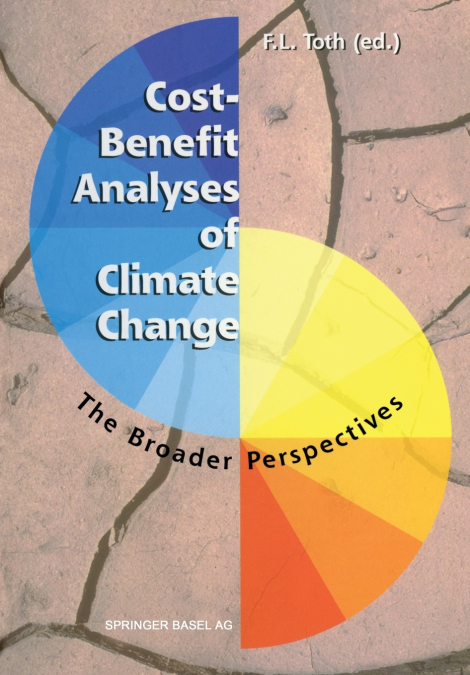
I: Models, concepts, and policy instruments.- Beyond costs and benefits of climate change: A workshop overview.- 1. Introduction.- 2. An increasing scope of integration.- 2.1. Cost and benefit estimates.- Benefits.- Costs.- 2.2. Integrated cost/benefit studies.- 2.3. Towards integrated climate-economy models.- 3. Integrated assessments: Simulation models.- 3.1. Fully integrated models.- 3.2. Partially integrated models.- 4. Integrated assessments: Optimization models.- 4.1. Fully integrated models.- Global single-region, aggregated models.- Global multi-region, aggregated models.- Sectorally disaggregated models.- 4.2. Partially integrated assessments.- 5. Layout for the book.- 6. Closing remarks.- First principles and the economic comparison of regulatory alternatives in global change.- 1. Introduction.- 2. Taxes versus standards versus marketable permits under uncertainty.- 3. Marketable permits versus joint implementation under certainty.- 4. Concluding remarks.- Dynamics of policy instruments and the willingness to participate in an international agreement.- 1. Introduction.- 2. Impacts of different kinds of policy instruments.- 2.1 Taxes.- 2.2 Tradable permits.- 2.3 Joint implementation.- 3. Participation in an international agreement to mitigate greenhouse gases emissions.- 4. Need for future research activities.- Global warming and the insurance industry.- 1. Introduction.- 2. Increasing disaster losses.- 3. Indications of climate change.- 4. Climate change predictions.- 5. Economic effects of climate change.- 6. Conclusions for the insurance industry.- II. Stabilization targets, costs, and technologies.- European stabilization targets: What do they bring, how much do they cost?.- 1. European stabilization targets: The leading climate change policy.- 2. Lack of knowledge about the realistic costs of reducing CO2 emissions.- 3. What are the additional costs of CO2 mitigation in the next 10 to 50 years?.- 4. Final suggestions for research.- Climate protection and the economy of prevention.- 1. Global scenarios: Wide range of conceivable ’energy futures’.- 1.1 Rising energy consumption is not a matter of fate, but political will.- 1.2 Climate protection policies avoid grave future risks - and are cost-effective.- 2. European Union: Risk minimization is financable.- 3. Germany: Room for manoeuvre and deficits in implementation.- 3.1 Business-as-usual versus climate protection and risk minimization: The scenarios of the German Bundestag’s Climate Study Commission.- Scenario definition.- Analysis of scenario findings.- 3.2 Instruments of climate protection and risk minimization policy.- 4. Outlook.- The value of advanced energy technologies in stabilizing atmospheric CO2.- 1. Introduction.- 2. The economics of CO2 consideration ceilings.- 3. Energy, agriculture, land-use, and economy.- 4. Implications of stabilizing the atmosphere at 550 ppmv.- 5. The value of enhanced technology.- 6. Technology and protocols to stabilize the atmosphere.- 7. Conclusions.- Policy context: Follow-up of the Berlin climate conference.- 1. Introduction.- 2. The Berlin Conference.- 3. Forthcoming events.- The implications of including sulfate aerosols on scenarios of admissible greenhouse gas emissions.- 1. Introduction.- 2. Climate window - base case.- 3. Climate window including aerosols.- 4. Conclusions.- The tolerable windows approach to climate control: Optimization, risks, and perspectives.- 1. Introduction.- 2. The philosophy of the Tolerable Windows Approach (TWA).- 3. A simple example: The WBGU scenario.- 4. Optimization of cumulative emissions.- 4.1 Mathematics of optimal control.- 4.2 Realization of optimal solutions.- 5. Including uncertainties: Risk analysis.- 6. Conclusions.- Appendix 1: List of participants.- Appendix 2: Workshop program.