Inicio > Sociedad y ciencias sociales > Sociología y antropología > Antropología > Corpus de lucernas antiguas - bronce, plomo e hierro - halladas en la Península Ibérica e Islas Baleares
Corpus de lucernas antiguas - bronce, plomo e hierro - halladas en la Península Ibérica e Islas Baleares

Corpus de lucernas antiguas - bronce, plomo e hierro - halladas en la Península Ibérica e Islas Baleares

Salvador F. Pozo

105,68 €
IVA incluido
Disponible
Editorial:
British Archaeological Reports (Oxford) Ltd
Año de edición:
2026
Materia
Antropología
ISBN:
9781407363233
105,68 €
IVA incluido
Disponible

Selecciona una librería:

  • Librería Samer Atenea

  • Kálamo Books
  • Librería Elías (Asturias)
  • Librería Kolima (Madrid)
  • Librería Proteo (Málaga)

El presente trabajo recopila las lucernas metálicas -bronce, plomo e hierro- halladas en la Península Ibérica e islas Baleares, abarcando un arco cronológico desde el S. IV a. e. (lámparas fenicio-púnicas) hasta el S. VI d. e. (época bajo-imperial y bizantina). Se sigue la tipología de J. Bussière -lámparas cerámicas de Argelia- para el material fenicio-púnico; las clasificaciones convencionales de las lucernas romanas son las clasificaciones de S. Loeschcke (Vindobona/Windonissa), D. Iványi (Pannonia) y N. Valenza Mele (lámparas del Museo Archeologico Nazionale di Napoli procedentes de Pompeya y Herculanum). Los documentos de la Antigüedad Tardía - paleocristianos y bizantinos - se inscriben en el cuadro tipológico establecido por M. Xanthopoulou. El repertorio de la Hispania romana forma un conjunto heterogéneo y de gran calidad artística, comprende los hallazgos de las diversas provincias: Baetica, Lusitania y Tarraconense. La mayoría de las piezas carecen de contexto arqueológico, de algunas incluso desconocemos su procedencia.This work presents metal lamps (bronze, lead, and iron) found in the Iberian Peninsula and the Balearic Islands, covering a chronological period from the 4th century BC (Phoenician-Punic lamps) to the 6th century AD (Late Imperial and Byzantine periods). The typology of J. Bussière - ceramic lamps from Algeria - is followed for the Phoenician-Punic material; the conventional classifications of Roman lamps are those of S. Loeschcke (Vindobona/Windonissa), D. Iványi (Pannonia), and N. Valenze Mele (lamps from the National Archaeological Museum of Naples found in Pompeii and Herculaneum); the late antique material (early Christian and Byzantine) is included in the typological framework of M. Xanthopoulou. The repertoire of Roman Hispania forms a heterogeneous collection of high artistic quality, encompassing finds from various provinces: Baetica, Lusitania, and Tarragona. Most pieces lack an archaeological context, and some possess no known provenance.


Artículos relacionados

  • The jewish community in new england
    Keith Warwick
    The purpose of The Jewish Community in New England is to inform readers about the Jewish community in each of the six New England States: Rhode Island, Connecticut, Maine, Massachusetts, New Hampshire, and Vermont. Factual, inspirational, and poetic, it serves as a scholarly guide to institutions of Jewish life in this dynamic American region. Stocked with valuable information ...
  • Warfare in the Russian arctic
    Alexander K Nefedkin / Richard L Bland
    Alexander Nefedkin’s highly original new book, translated by the noted American scholar Richard L. Bland, is devoted to the understudied topic of the military and military-political history of Chukotka, the far northeastern region of the Russian Federation, separated from Alaska by Bering Strait. This study is based on primary sources, including archaeological, folkloric, and d...
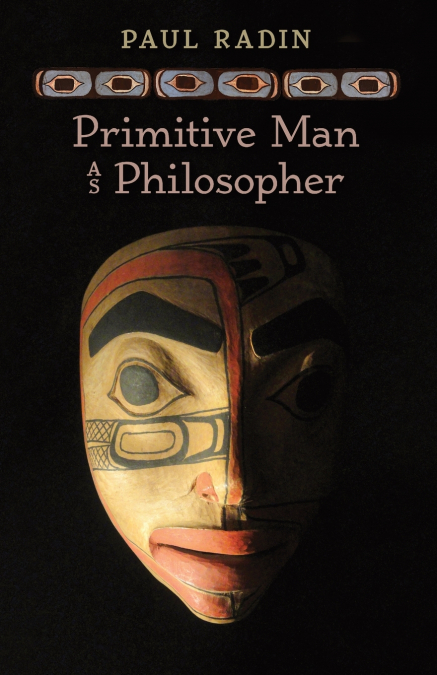
  • Primitive Man as Philosopher
    Paul Radin
    First published in 1927, Primitive Man as Philosopher represents a landmark in early anthropological studies. In this work, Paul Radin demonstrates the problematic nature of distinguishing between 'primitive' and 'civilized' cultures. He traces such ideas as the nature of Goodness and Truth, the meaning of life, and the reality of death across various cultures, highlighting how...
    Disponible

    26,72 €

  • The Economics of Population Growth
    Julian Lincoln Simon
    Comparison with stationary and very fast rates of population growth shows modern population grwoth to have long-run positive effects on the standards of living. This is Julian Simon’s contention, and he provides support for its validity in both more and less-developed countries. He notes that since each person constitutes a burden in the short run, whether population growth is ...
    Disponible

    167,62 €

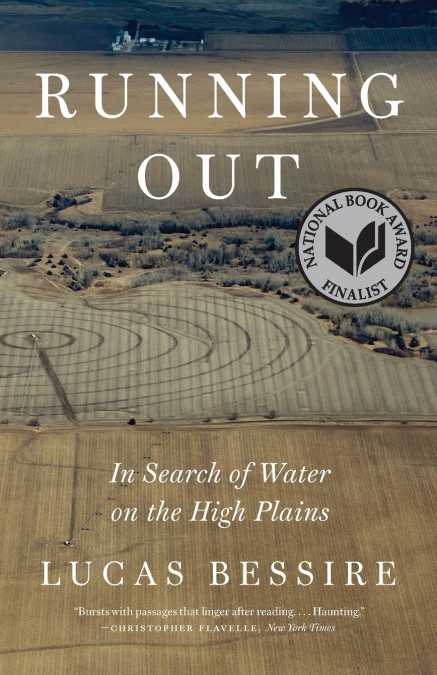
  • Running Out
    Lucas Bessire
    Finalist for the National Book AwardAn intimate reckoning with aquifer depletion in America’s heartlandThe Ogallala aquifer has nourished life on the American Great Plains for millennia. But less than a century of unsustainable irrigation farming has taxed much of the aquifer beyond repair. The imminent depletion of the Ogallala and other aquifers around the world is a defining...
    Disponible

    26,07 €

  • The Nation and Its Fragments
    Partha Chatterjee
    In this book, the prominent theorist Partha Chatterjee looks at the creative and powerful results of the nationalist imagination in Asia and Africa that are posited not on identity but on difference with the nationalism propagated by the West. Arguing that scholars have been mistaken in equating political nationalism with nationalism as such, he shows how anticolonialist nation...
    Disponible

    79,38 €