Inicio > Sociedad y ciencias sociales > Educación pedagogía > Conversational Forms of Instruction and Message Layer Design
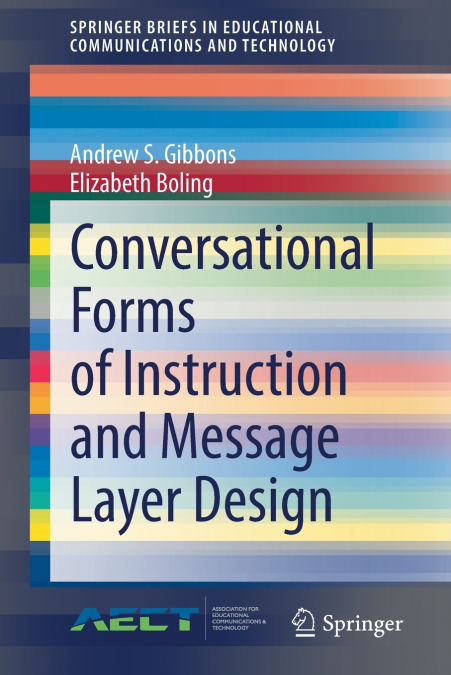
Conversational Forms of Instruction and Message Layer Design

Conversational Forms of Instruction and Message Layer Design

Andrew S. Gibbons / Elizabeth Boling

80,29 €
IVA incluido
Disponible
Editorial:
Springer Nature B.V.
Año de edición:
2021
Materia
Educación pedagogía
ISBN:
9783030842192
80,29 €
IVA incluido
Disponible

Selecciona una librería:

  • Librería Samer Atenea
  • Librería Aciertas (Toledo)
  • Kálamo Books
  • Librería Perelló (Valencia)
  • Librería Elías (Asturias)
  • Donde los libros
  • Librería Kolima (Madrid)
  • Librería Proteo (Málaga)

This book examines the theoretical basis of one of the functional layers-the message layer-of an architectural theory of instructional design. The architectural theory (Gibbons, 2003; Gibbons & Rogers, 2009; Gibbons, 2014) identifies seven functions carried out during instruction that correspond with designable strata, or layers. The architectural theory proposes that for each layer there exists a specialized body of design languages, constructs, questions, tools, practices, processes, a professional community, and most especially, bodies of design theory. It also proposes that design knowledge from other design fields, many of which approach design from the same functional perspective, can be appropriated for the further development of knowledge within the instructional technology field. A robust literature from disparate fields supplies relevant theory for message layer design. This book builds the case for validation of the message layer by bringing together work from instructional theory, conversation theory, research in the  learning sciences, intelligent tutoring system research, and K-12 education. Within this literature, the authors demonstrate the existence of the message as a structural abstraction: an independently designable entity. They trace the development of the message construct historically, showing that it has remained remarkably stable over time, independent of changing psychological, educational, and technological conventions. 

Artículos relacionados

  • Beekeeping At The End Of The Earth
    Mark David Leech
    Beekeeping at the End of the Earth, an essential read for learning about beekeeping in a cool temperate climate with a focus on Tasmania our island home.  One hundred beekeepers one hundred different ways to keep bees.Beekeeping At The End Of The Earth is a practical insight into cool climate beekeeping with a focus on Tasmania, our island home.Richly illustrated with unique di...
    Disponible

    45,16 €

  • Be the One for Kids
    Ryan Sheehy
    One person can make a difference.That person can be you. “I want to show others that one person can make the difference in a child’s life. I want all educators, parents, coaches, and everyone in between to know they have power to Be the One for Kids.” —Ryan Sheehy If you ever feel like you’re all alone or think that no one gets you, just imagine how your students feel. Kids wan...
    Disponible

    27,99 €

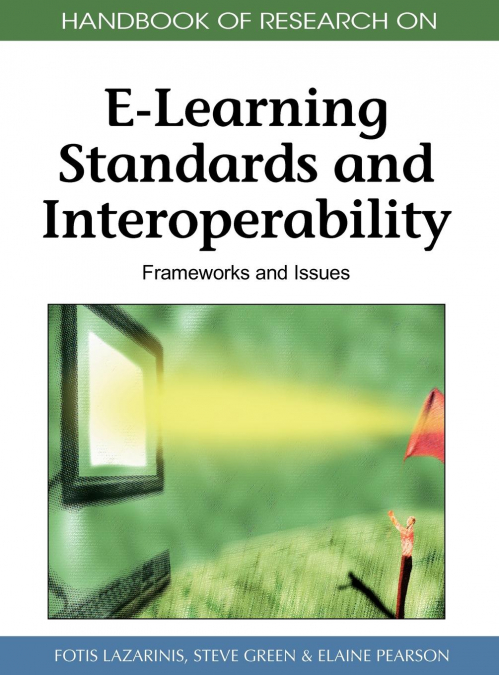
  • Handbook of Research on E-Learning Standards and Interoperability
    As the e-learning industry continues to expand and the methods and tools necessary to create and maintain content and infrastructure applications become more complicated, there is an inherent need for these applications to interoperate and exchange data in order to better support the needs of learners and educators. Handbook of Research on E-Learning Standards and Interoperabil...
    Disponible

    348,32 €

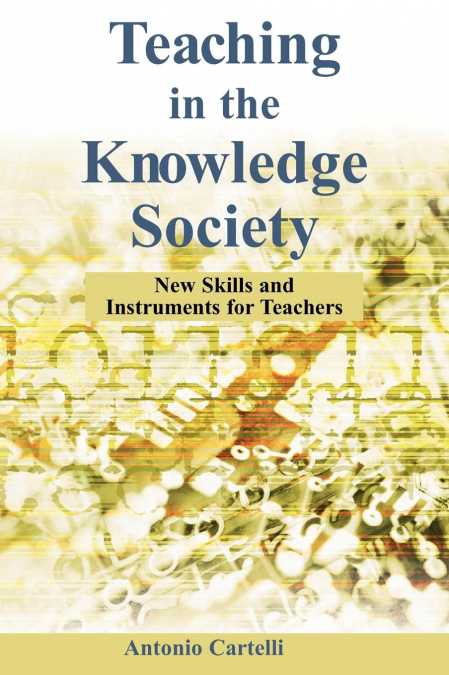
  • Teaching in the Knowledge Society
    Antonio Cartelli
    ...
    Disponible

    112,08 €

  • Enhancing Learning Through Human Computer Interaction
    Elspeth McKay
    ...
    Disponible

    216,52 €

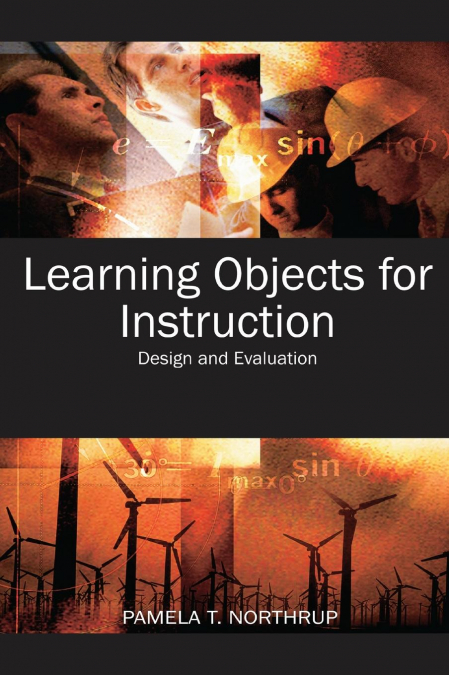
  • Learning Objects for Instruction
    Pamela Taylor Northrup
    ...
    Disponible

    125,22 €